
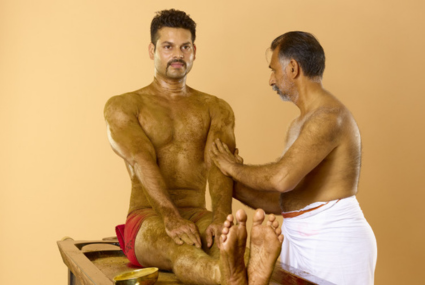
Kidney Disease
Kidney diseases often result from toxin accumulation, poor metabolism, or chronic conditions like diabetes and hypertension. Ayurveda identifies imbalances in the body's doshas, particularly Kapha and Vata, as contributing factors to renal dysfunction. Treatments focus on cleansing therapies such as Panchakarma to eliminate toxins, along with herbal formulations like Punarnava, Gokshura, and Varuna to strengthen kidney function and reduce fluid retention. A kidney-friendly Ayurvedic diet and lifestyle adjustments are prescribed to minimise stress on the kidneys. These integrative therapies help slow disease progression, alleviate symptoms, and improve overall vitality and well-being
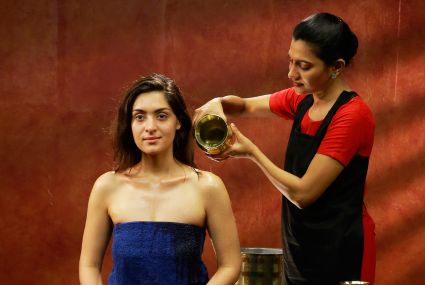
Urinary Tract Infection Treatment
Urinary Tract Infection (UTI) is commonly linked to an imbalance of Pitta dosha, leading to symptoms like burning sensation, frequent urination, and pelvic discomfort. Ayurveda treats UTIs with herbs such as Gokshura, Punarnava, and Chandana, which possess diuretic, antibacterial, and cooling properties. Panchakarma therapies like Virechana (purgation) help eliminate toxins that aggravate the urinary system. A Pitta-pacifying diet with ample hydration, coconut water, and barley water is recommended to soothe inflammation. Personalized treatment plans also include lifestyle modifications to strengthen the urinary tract and prevent recurrent infections, ensuring holistic recovery and long-term wellness.
Urinary Incontinence Management
Urinary incontinence is a condition characterized by loss of voluntary control over urination, leading to accidental leakage. It can affect individuals of all ages but is more common in elderly people and women, especially after childbirth or menopause. Types of urinary incontinence include stress incontinence (leakage during coughing, sneezing, or physical activity), urge incontinence (sudden, intense urge to urinate), overflow incontinence (incomplete bladder emptying), and functional incontinence. Common symptoms include leakage of urine, frequent urination, urgency, nocturia (frequent urination at night), and a feeling of incomplete bladder control. Risk factors include aging, childbirth, hormonal changes, obesity, neurological disorders, diabetes, urinary tract infections, and weak pelvic floor muscles. In Ayurveda, urinary incontinence is understood as a disorder of Vata dosha, especially Apana Vata, which governs the normal functioning of the bladder and urinary control. Weakness of pelvic muscles, nerve dysfunction, and depletion of tissues (Dhatu Kshaya) contribute to loss of bladder control. Ayurvedic management focuses on strengthening the bladder, improving nerve function, and balancing Vata. Treatment includes Vasti (medicated enema therapy), which is highly effective in regulating Apana Vata and improving control over urination. Internal herbal medicines help in strengthening urinary function and improving muscle tone. Commonly used herbs include Gokshura, Ashwagandha, Bala, Shatavari, and Guduchi. External therapies such as Abhyanga (medicated oil massage) and mild Swedana (sudation therapy) help in improving circulation and nerve strength. Local treatments around the pelvic region may also be beneficial. Simple pelvic floor exercises and gentle yoga practices can support bladder control. Diet should include nourishing, warm, and easily digestible foods that help balance Vata. Avoid excessive caffeine, alcohol, spicy foods, and cold or dry foods that may aggravate symptoms. Lifestyle modifications such as maintaining a healthy weight, regular bladder training, avoiding delayed urination, managing stress, and ensuring proper sleep are essential for better control. This holistic Ayurvedic approach, including Vasti therapy, helps in improving bladder strength, reducing leakage, and enhancing overall quality of life.
When the Urinary System Calls for Care: An Ayurvedic Path to Kidney Wellness and Sustained Urinary Health
Urinary and kidney conditions represent substantial public health concerns affecting urinary function, kidney health, sexual and reproductive function, and broader quality of life. The spectrum is broad — from common acute urinary tract infections through chronic conditions like kidney stones, benign prostatic hyperplasia, urinary incontinence, and progressive chronic kidney disease.
Common urinary and kidney conditions include:
- Urinary tract infections (UTI) — Common acute and recurrent infections
- Kidney stones (Mutrashmari) — Common painful condition affecting up to 12% of population
- Benign Prostatic Hyperplasia (BPH) — Common in aging men (50% by age 60, 90% by age 85)
- Chronic Kidney Disease (CKD) — Progressive kidney function decline
- Diabetic nephropathy — Leading cause of CKD globally
- Urinary incontinence — Substantial impact on quality of life
- Overactive bladder
- Urinary retention (Mutraghata)
- Dysuria (Mutrakrichra) — Painful or difficult urination
- Glomerulonephritis (supportive care)
- Interstitial nephritis (supportive care)
- Chronic prostatitis
- Recurrent UTIs
- Hematuria (with appropriate evaluation)
- Bladder dysfunction
- Pelvic floor dysfunction with urinary dimensions
- Stress incontinence
- Urge incontinence
- Neurogenic bladder (supportive care)
- Post-surgical urological recovery
- Erectile dysfunction with urological dimensions
Modern medical management has substantially advanced with comprehensive evidence-based framework including specialized urology and nephrology evaluation, antibiotics for UTIs, comprehensive stone management (medical expulsive therapy, ESWL, ureteroscopy, PCNL), alpha-blockers and 5-alpha reductase inhibitors for BPH, surgical interventions when indicated (TURP, prostatectomy, sling procedures), anticholinergics and beta-3 agonists for overactive bladder, ACE inhibitors/ARBs and SGLT2 inhibitors for CKD with substantial recent advances, dialysis and transplantation for advanced CKD, and comprehensive supportive care.
Classical Ayurveda addresses urinary and kidney conditions through the comprehensive Mutravaha Srotas Chikitsa framework — recognition of the sophisticated channel system carrying urinary function with substantial classical literature in Charaka Samhita, Sushruta Samhita, and Ashtanga Hridaya providing detailed framework. The classical understanding centers on Mutravaha Srotas (urinary channels) with main organs Basti (urinary bladder) and Medhra (urogenital tract); Apana Vata governing downward movement and elimination; broader doshic dimensions; and the comprehensive framework for urinary and kidney health.
The therapeutic framework provides comprehensive approach through Nidana Parivarjana; Vasti Chikitsa as cornerstone considered gold-standard for urinary disorders with multiple types including specialized Uttarabasti; Mutrala (diuretic) therapy with classical herbs; Ashmari Bhedana for stone-breaking therapy; comprehensive herbal therapy with Punarnava, Gokshura, Varuna leading; comprehensive lifestyle integration; and absolute coordination with continued urology and nephrology care including continued essential medications which must never be discontinued without specialist guidance.
What is Urinary & Kidney Care in Ayurveda?
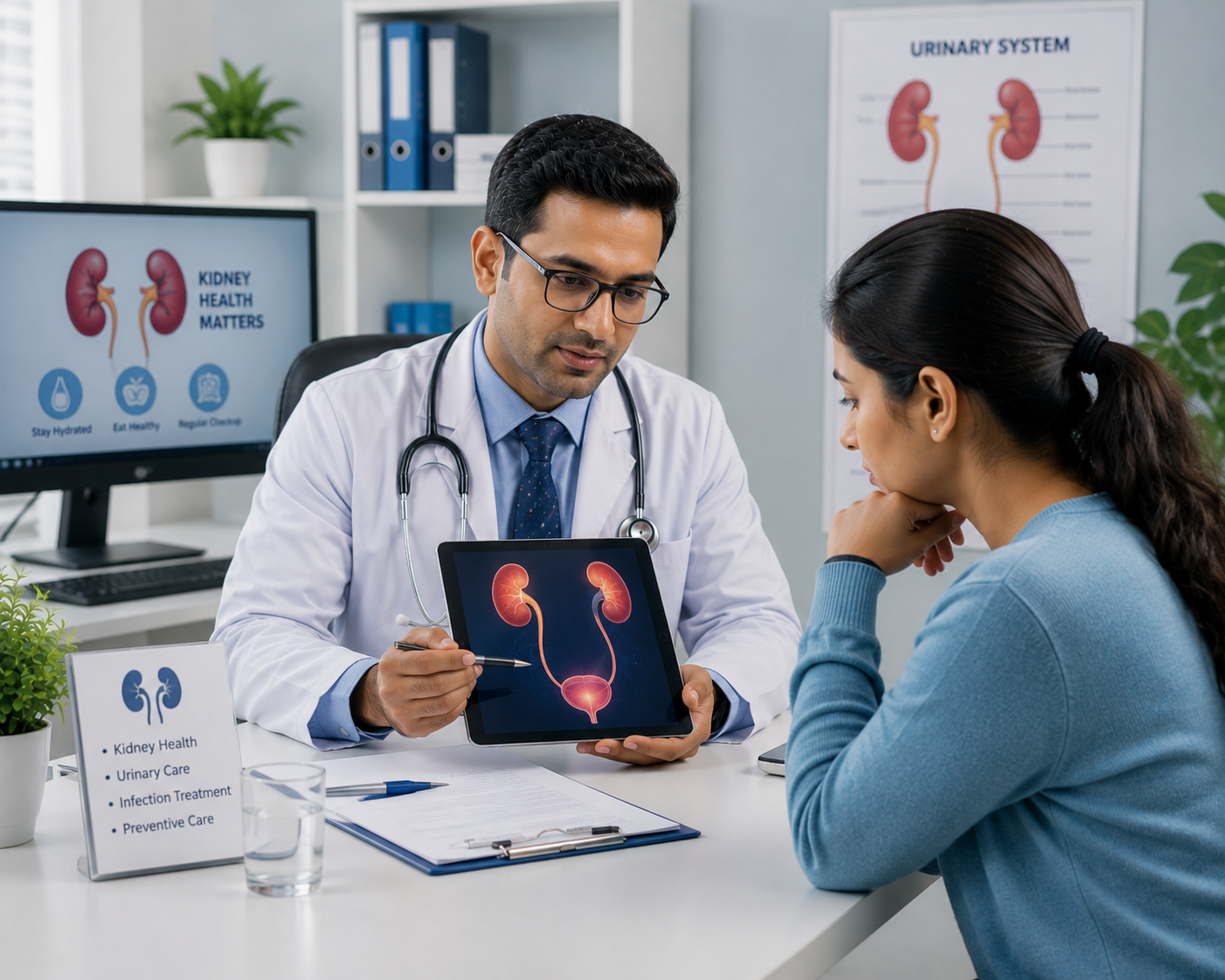
Urinary and kidney care in Ayurveda — known classically as Mutravaha Srotas Chikitsa (treatment of urinary channels) — represents the comprehensive Ayurvedic framework for urinary health, kidney function support, and management of urinary and kidney conditions.
Definition and characteristics:
- Classical comprehensive urinary and kidney care framework
- Centered on Mutravaha Srotas (urinary channels)
- Substantial classical literature foundation
- Comprehensive preventive and therapeutic approach
- Both acute and chronic urinary and kidney condition applications
- Integration with continued conventional urology and nephrology care
Scope of conditions addressed:
Acute urinary conditions:
- Urinary tract infections (UTIs) — acute and recurrent
- Acute pyelonephritis (supportive)
- Acute cystitis
Stone disease:
- Kidney stones (Mutrashmari) — calcium oxalate, calcium phosphate, uric acid, struvite, cystine
- Ureteric stones
- Bladder stones
- Recurrent stone disease
Prostate conditions:
- Benign Prostatic Hyperplasia (BPH)
- Chronic prostatitis
Chronic kidney disease:
- Chronic Kidney Disease (CKD) — various stages
- Diabetic nephropathy
- Hypertensive nephropathy
- Glomerulonephritis (supportive)
- Interstitial nephritis (supportive)
- Polycystic kidney disease (supportive)
Bladder dysfunction:
- Urinary incontinence — stress, urge, mixed, overflow
- Overactive bladder
- Urinary retention (Mutraghata)
- Neurogenic bladder (supportive)
- Interstitial cystitis (supportive)
Urinary symptoms:
- Dysuria (Mutrakrichra) — painful urination
- Frequency
- Urgency
- Nocturia
- Hematuria (with appropriate evaluation)
Other urological:
- Pelvic floor dysfunction
- Post-surgical urological recovery
- Erectile dysfunction with urological dimensions
- Male infertility with urological dimensions
Common features across conditions:
- Pain (dysuria, flank pain, suprapubic pain)
- Burning
- Frequency and urgency
- Incomplete emptying
- Urinary retention
- Incontinence
- Hematuria
- Substantial quality of life impact
Modern medical management:
- Specialized urology and nephrology evaluation
- Antibiotics for UTIs
- Comprehensive stone management (medical and procedural)
- Alpha-blockers and 5-alpha reductase inhibitors for BPH
- Surgical interventions when indicated
- Anticholinergics and beta-3 agonists for overactive bladder
- ACE inhibitors/ARBs and SGLT2 inhibitors for CKD
- Dialysis and transplantation for advanced CKD
Understanding Mutravaha Srotas and Apana Vata: The Ayurvedic Framework for Urinary Health
The Ayurvedic understanding of urinary and kidney health sits within the comprehensive Mutravaha Srotas framework with substantial classical literature providing sophisticated framework for urinary function and dysfunction.
Key concepts:
Mutravaha Srotas (Urinary Channels): Classical recognition of the comprehensive channel system carrying urinary function. Main organs identified include:
- Basti (urinary bladder) — primary storage organ
- Medhra (urogenital tract region)
- Vrikka (kidneys) — recognized as part of broader system
Mutravaha Srotas patency essential for healthy urinary function.
Apana Vata as Central: Apana Vata is the sub-dosha governing:
- Downward movement and elimination
- Urination and defecation
- Menstruation and labor
- Sexual function
- Lower abdominal functions
Apana Vata balance is fundamental to urinary function.
Specific Doshic Dimensions:
Vata in Urinary System:
- Controls flow and excretion of urine
- Dysfunction produces obstruction, retention, dysuria with neuropathic dimensions
- Substantial role in BPH and chronic conditions
Pitta in Urinary System:
- Regulates urine color, heat, infection tendency
- Dysfunction produces inflammation, burning, infections
- Substantial role in UTIs and inflammatory conditions
Kapha in Urinary System:
- Maintains lubrication and stability
- Dysfunction produces stones, obstructions, heaviness
- Substantial role in stone disease and certain BPH patterns
Mutra Dhatu Framework: Mutra Dhatu (urinary tissue/urine) as classical concept — proper formation and elimination essential.
Vrikka Roga (Kidney Disorders): Classical recognition of kidney conditions with sophisticated clinical observation.
Prameha Connection: Substantial classical recognition of metabolic urinary disorders including diabetes-related conditions affecting urinary and kidney systems.
Specific Classical Conditions:
Mutrakrichra (Dysuria): Detailed classical framework with eight subtypes — comprehensive recognition of painful/difficult urination patterns.
Mutrashmari (Urinary Calculi): Detailed classical framework for stone disease with four subtypes (Vataja, Pittaja, Kaphaja, Shukraja) — sophisticated classical understanding anticipating modern stone composition recognition.
Mutraghata (Urinary Retention): Twelve classical subtypes — comprehensive framework for urinary obstruction patterns including substantial relevance to BPH (Vata-Kapha vitiation with Apana Vata dysfunction).
Mutratisara (Excessive Urination): Classical framework for polyuria patterns with Apana Vata weakness or Prameha connection.
Mutravaha Srotas Dushti: Comprehensive classical framework for channel dysfunction producing various urinary disorders.
Predisposing Factors Classical Ayurveda Identifies:
Aharaja (Dietary):
- Excess spicy, salty, sour foods (Pitta aggravation)
- Low water intake
- Excess protein or junk food
- Specific stone-promoting foods (high oxalate, high purine)
Viharaja (Lifestyle):
- Suppression of urine urge (Vegadharana) — substantial classical recognition
- Sedentary habits
- Irregular sleep cycle
- Prolonged sitting
Manasika (Mental):
- Stress and anxiety affecting Apana Vata
- Bladder-mind connection recognized classically
Metabolic:
- Diabetes (Prameha)
- Obesity
- Hypertension
- Dehydration disorders
Infective:
- Bacterial urinary infections
- Chronic inflammation
Aging:
- Natural Vata aggravation with aging
- Tissue weakness
This shapes the Ayurvedic approach to urinary and kidney care: comprehensive Nidana Parivarjana; Mutravaha Srotas optimization; Apana Vata regulation; dosha-specific approach matched to individual condition patterns; Vasti as cornerstone therapy; specialized Uttarabasti for selected applications; Mutrala (diuretic) therapy with classical herbs; Ashmari Bhedana for stone-breaking; comprehensive lifestyle integration; absolute coordination with continued urology and nephrology care.
The 3 Stages of Ayurvedic Treatment for Urinary and Kidney Conditions
1. Preparation (Purva Karma) — Typically 3-7 days
Comprehensive assessment including detailed urinary history (specific condition, duration, severity, current symptoms, recurrence patterns when applicable), current urology/nephrology evaluation and treatment context including all medications (antibiotics if applicable, alpha-blockers, 5-ARIs, anticholinergics, ACE inhibitors/ARBs, SGLT2 inhibitors, other essential medications), recent urinalysis and imaging when available, kidney function with attention to eGFR when CKD considerations apply, comorbidities particularly diabetes and hypertension, dietary patterns, lifestyle factors, fluid intake, and constitutional profile.
Urology and nephrology coordination essential — current treatment confirmed, sharing of treatment approach, continued essential medications confirmed throughout.
Critical screening:
- Stable current condition without acute deterioration requiring urgent care
- No acute severe UTI requiring urgent antimicrobial treatment
- No acute kidney injury
- No acute urinary retention requiring urgent catheterization
- No suspected obstructive uropathy requiring urgent intervention
- No severe symptomatic stone disease requiring urgent urology
- No hematuria of unclear etiology requiring evaluation
- Stable CKD stage when applicable without acute deterioration
Critical kidney function awareness throughout — All interventions considered with attention to current eGFR and CKD stage when CKD considerations apply; specific herbs and formulations require careful selection; certain interventions may be contraindicated in advanced disease.
Deepana-Pachana for digestive function. Initial constitutional support matched to specific condition. Initial dietary modifications — appropriate hydration, dosha-specific patterns, condition-specific considerations. Foundational lifestyle measures including never suppressing urinary urge, smoking cessation, alcohol moderation, NSAIDs avoidance in CKD given substantial kidney toxicity.
2. Core Treatment (Pradhana Karma) — Typically 14-21 days
Primary therapies focus on five coordinated lines:
Comprehensive Doshic-Specific Approach:
Pitta-predominant conditions (UTIs, burning, inflammation):
- Cooling herbs
- Anti-inflammatory therapies
- Blood purification approach
- Pitta-pacifying dietary integration
Vata-predominant conditions (pain, obstruction, BPH, neurogenic):
- Snehana (oleation)
- Vasti therapy as cornerstone
- Warm, nourishing diet
- Vata-pacifying approach
Kapha-predominant conditions (stones, heaviness, certain BPH patterns):
- Detoxification approach
- Channel-clearing herbs
- Mild fasting in selected cases
- Kapha-pacifying integration
Vasti Chikitsa as Cornerstone for Urinary Disorders:
- Vasti considered gold-standard therapy for urinary disorders with substantial classical use
- Multiple Vasti types:
- Ksheera Vasti (milk-based) — particularly valuable for soothing and nourishing
- Dashamoola Vasti — comprehensive Vata-pacifying
- Niruha Vasti — decoction-based cleansing
- Anuvasana Vasti — oil-based
- Yapana Vasti — nourishing for chronic conditions
- Matra Vasti — sustained gentle therapy
Uttarabasti as Specialized Urinary Therapy:
- Uttarabasti — specialized urethral/vesical/uterine administration of medicated oils or decoctions
- Substantial classical use for chronic urinary conditions including BPH, recurrent UTIs, chronic dysuria
- Direct local therapeutic effects
- Requires substantial specialized expertise and appropriate clinical infrastructure
Mutrala (Diuretic) Therapy with Classical Herbs:
- Gokshura (Tribulus terrestris) — foundational urinary herb with substantial classical use
- Punarnava (Boerhavia diffusa) — substantial classical kidney use
- Varuna (Crataeva nurvala) — classical urinary herb
- Pashanabheda (Bergenia ligulata) — particularly valuable for stones
- Chandraprabha Vati — comprehensive urogenital formulation
Ashmari Bhedana (Stone-Breaking Therapy):
- Classical lithotriptic approach for stone management
- Pashanabheda as foundational stone-breaking herb
- Varuna for stone management
- Gokshura for flushing
- Classical formulations including Pashanabheda preparations
- Coordination with urology essential — substantial stones often require procedural management
Comprehensive Herbal Therapy:
Foundational urinary-supportive herbs:
- Gokshura (Tribulus terrestris) — comprehensive urinary support
- Punarnava (Boerhavia diffusa) — substantial nephroprotective use
- Varuna (Crataeva nurvala) — classical genitourinary herb
- Pashanabheda (Bergenia ligulata) — stone management
- Chandanadi — for Pitta-predominant patterns
- Coriander for urinary cooling
- Coconut water as classical urinary supportive
Classical formulations:
- Gokshuradi Guggulu — comprehensive urinary system formulation as foundational classical preparation
- Chandraprabha Vati — comprehensive urogenital classical formulation
- Varunadi Kashayam — specifically for urinary dysfunction
- Punarnavadi Mandura — particularly valuable for fluid balance and CKD-related anemia
- Punarnavadi Kashayam — for nephroprotection and fluid balance
- Trinapanchamoola Kashayam — for urinary support
- Specific Bhasma preparations matched to individual presentation
Comprehensive Lifestyle Integration with Continued Urology and Nephrology Care:
- Continued essential medications absolutely essential throughout
- Continued antibiotics for acute UTIs as prescribed
- Continued alpha-blockers and 5-ARIs for BPH
- Continued ACE inhibitors/ARBs and SGLT2 inhibitors for CKD — never discontinued
- Continued anticholinergics or beta-3 agonists for overactive bladder when prescribed
- Continued specialist appointments
- Adequate appropriate hydration
- Never suppressing urinary urge essential
- Smoking cessation absolutely essential
- Alcohol moderation
- NSAIDs absolute avoidance in CKD
3. Rejuvenation (Paschat Karma) — Continued home regimen
Sustained Mutravaha Srotas support, continued constitutional approach, continued lifestyle integration, continued recurrence prevention for recurrent UTIs and stone disease, periodic clinical follow-up, continued urology and nephrology coordination. Long-term framework — chronic urinary and kidney conditions require sustained comprehensive care with Ayurvedic supportive care providing ongoing value within continued essential treatment framework.
The 5 Core Therapies for Urinary and Kidney Conditions Explained
1. Vasti Chikitsa as Cornerstone Therapy for Urinary Disorders Vasti (medicated enema) Chikitsa represents the most clinically valuable Ayurvedic intervention for urinary and kidney conditions with substantial classical use considered gold-standard therapy for urinary disorders. Multiple Vasti types matched to individual needs: Ksheera Vasti (milk-based) — particularly valuable for soothing and nourishing applications with substantial classical use for Pitta-predominant inflammatory urinary conditions and broader soothing applications; Dashamoola Vasti — comprehensive Vata-pacifying with Dashamoola decoction for Vata-predominant urinary patterns including BPH; Niruha Vasti — decoction-based cleansing with appropriate medicated decoctions; Anuvasana Vasti — oil-based with substantial Vata-pacifying effects; Yapana Vasti — nourishing Vasti particularly valuable for chronic urinary conditions in elderly patients with substantial classical use; Matra Vasti — sustained gentle therapy for chronic conditions. Mechanisms: direct Apana Vata pacification through colon (seat of Vata); systemic urinary system supportive effects; broader constitutional benefits. Specific indications: BPH and prostate conditions with substantial classical use, chronic dysuria, chronic urinary retention, neurogenic bladder supportive, recurrent UTI prevention (with appropriate selection), broader chronic urinary conditions. Combined with continued essential treatments — Vasti complements rather than replaces continued specialist care including continued essential medications. WellnessLoka Kerala centres provide expert Vasti capability.
2. Uttarabasti as Specialized Urinary Therapy Uttarabasti represents the specialized classical Panchakarma procedure involving administration of medicated oils or decoctions through urethral, vesical, or uterine route — providing direct local therapeutic access to urinary and reproductive systems with substantial classical use for specific applications. Specific indications: chronic BPH with substantial classical use providing direct local prostatic and urinary effects; chronic recurrent UTIs; chronic dysuria; interstitial cystitis (supportive); chronic urethral conditions; specific gynecological applications through uterine route. Mechanisms: direct local action on urinary/reproductive tissues; bypassing systemic metabolism; sustained local therapeutic effects. Standard preparations: specific medicated oils matched to individual conditions including various formulations; specific medicated decoctions for specific applications. Critical requirements: substantial specialized practitioner expertise essential — Uttarabasti requires expert clinical skill; appropriate clinical infrastructure including sterile technique and specialized equipment; patient selection with appropriate evaluation; clear contraindications including pregnancy in inappropriate applications, active acute infections, urinary tract trauma, certain anatomical considerations. Conducted only in qualified Panchakarma facilities with substantial expertise. Continues alongside continued essential treatments. WellnessLoka Kerala centres provide expert Uttarabasti capability.
3. Comprehensive Mutrala (Diuretic) Therapy and Ashmari Bhedana (Stone-Breaking) Approach Mutrala (diuretic) therapy with classical Ayurvedic urinary-supportive herbs provides substantial value for urinary flow support, kidney function support, and broader urinary wellness with substantial classical use and emerging modern evidence. Foundational Mutrala herbs: Gokshura (Tribulus terrestris) — comprehensive urinary support with substantial classical use as foundational urinary herb providing diuretic effects, urinary tract supportive effects, and broader benefits; Punarnava (Boerhavia diffusa) — substantial classical kidney use with documented nephroprotective properties, anti-inflammatory effects, mild diuretic effects, and broader kidney support; Varuna (Crataeva nurvala) — classical genitourinary herb particularly valuable for chronic urinary conditions and stones; Pashanabheda (Bergenia ligulata) — particularly valuable for stone management with substantial classical lithotriptic use. Ashmari Bhedana (Stone-Breaking) Approach specifically for urinary calculi: Pashanabheda as cornerstone stone-breaking herb with substantial classical use; Varuna for stone management with documented effects; Gokshura for flushing and urinary support; specific classical lithotriptic formulations including various preparations matched to stone type and individual factors. Classical formulations: Gokshuradi Guggulu — comprehensive urinary system formulation as foundational classical preparation with substantial use across urinary conditions; Chandraprabha Vati — comprehensive urogenital classical formulation with substantial use for chronic urinary conditions, BPH, and broader applications; Varunadi Kashayam — specifically for urinary dysfunction; Punarnavadi Mandura — particularly valuable for fluid balance and CKD-related anemia. Critical kidney function awareness essential when CKD considerations apply — appropriate herb selection considering current eGFR and CKD stage. Critical coordination with continued urology care for stone disease — substantial stones often require procedural management (ESWL, ureteroscopy, PCNL); Ayurvedic stone-breaking therapy complements rather than replaces appropriate urological intervention when indicated. WellnessLoka centres provide authentic preparations with comprehensive kidney function awareness.
4. Comprehensive Constitutional Approach with Dosha-Specific Treatment Comprehensive constitutional approach with dosha-specific treatment matched to individual condition patterns provides foundation for sustained urinary and kidney care. Pitta-predominant approach for UTIs, burning, inflammatory conditions: cooling herbs including Chandana, Yashtimadhu, Shatavari, Amalaki; anti-inflammatory therapies; blood purification approach with appropriate herbs; Pitta-pacifying dietary integration — cooling, soothing foods; adequate hydration with coconut water classically valuable; avoiding spicy, fermented, fried, alcoholic foods. Vata-predominant approach for pain, obstruction, BPH, chronic conditions: Snehana (oleation) with appropriate oils; Vasti therapy as cornerstone; warm nourishing diet; Vata-pacifying integration; specific Vata Vyadhi-supportive herbs. Kapha-predominant approach for stones, heaviness, certain BPH patterns: detoxification approach with appropriate methods; channel-clearing herbs; mild fasting in selected cases; Kapha-pacifying integration — light, warm foods; reduced heavy/oily foods. Comprehensive nutritional approach: adequate appropriate hydration absolutely essential for all urinary conditions — typically 2-3 liters daily for stone prevention and broader urinary health (modified for specific conditions); coconut water as classical urinary supportive; barley water with substantial classical urinary use; Gokshura decoction for sustained urinary support; light warm easily digestible foods; specific dietary considerations matched to specific condition — calcium and oxalate considerations for stone disease, sodium restriction for hypertension and CKD, potassium and phosphorus considerations in advanced CKD, protein considerations in CKD. Foods generally avoided: excess salt, alcohol, excessive caffeine, spicy/oily foods in inflammatory conditions, specific stone-promoting foods (excessive oxalate-rich foods in oxalate stones, excessive purine in uric acid stones). Smoking cessation absolutely essential. NSAIDs absolute avoidance in CKD. WellnessLoka centres provide comprehensive constitutional integration.
5. Comprehensive Lifestyle Integration and Absolute Coordination with Continued Urology and Nephrology Care Comprehensive lifestyle integration with absolute coordination with continued urology and nephrology care provides foundation for sustained urinary and kidney condition management. Continued essential medications absolutely essential: continued antibiotics for acute UTIs as prescribed for appropriate duration; continued alpha-blockers (tamsulosin, alfuzosin, others) and 5-alpha reductase inhibitors (finasteride, dutasteride) for BPH; continued anticholinergics (oxybutynin, solifenacin, others) and beta-3 agonists (mirabegron) for overactive bladder; continued ACE inhibitors/ARBs for CKD with substantial nephroprotective evidence — never discontinued without nephrology guidance; continued SGLT2 inhibitors for CKD with substantial recent renal protection evidence; continued diabetes medications when applicable for diabetic nephropathy; continued antihypertensives for blood pressure control with target <130/80 in CKD; never discontinued or modified without specialist guidance. Critical lifestyle measures: never suppressing urinary urge (Vegadharana avoidance) — substantial classical recognition with substantial impact on urinary health; adequate appropriate hydration matched to specific condition and current kidney function; regular emptying patterns; proper toileting habits. Comprehensive recurrence prevention for recurrent UTIs: hydration optimization, post-coital voiding, proper toileting hygiene, cranberry-based approaches where appropriate, continued integrative support, identification and management of underlying factors. Comprehensive recurrence prevention for stone disease: substantial hydration (2-3+ liters daily), stone-type-specific dietary modifications, continued integrative support, regular monitoring, continued urology follow-up. Smoking cessation absolutely essential — substantial impact on bladder cancer risk and broader urinary health. NSAIDs absolute avoidance in CKD given substantial kidney toxicity. Awareness of nephrotoxic medications and supplements. Comprehensive blood pressure control for CKD with target <130/80. Diabetes optimization when applicable. Comprehensive cardiovascular risk reduction in CKD given substantial associations. Yoga and pelvic floor support when appropriate — substantial benefit for stress incontinence and broader pelvic floor health; specific yoga practices for pelvic region; pelvic floor exercises (Kegel exercises) for incontinence. Stress management — substantial impact on Apana Vata and urinary function. Sleep optimization. Continued specialist follow-up at appropriate intervals. Long-term framework: Chronic urinary and kidney conditions require sustained lifelong care with Ayurvedic supportive care providing ongoing value within continued essential treatment framework.
How Long Should an Ayurvedic Treatment Program for Urinary and Kidney Conditions Last?
| Duration | Therapeutic Benefit | |
| 7–14 days | Initial protocols, established Vasti, foundational interventions, dietary establishment | |
| 14–21 days | Comprehensive constitutional support, sustained therapy, integrated practices | |
| 21–28 days | Extended program with Uttarabasti when indicated and comprehensive constitutional rebuilding | |
| Continued home regimen |
|
The exact duration is decided after consultation with the Ayurvedic doctor in coordination with continued urology and nephrology care, based on specific condition, severity, comorbidities (particularly diabetes, hypertension, CKD considerations), and individual factors. Initial intensive retreat 14-28 days followed by sustained home regimen with periodic retreat visits annually. Recognition that most chronic urinary and kidney conditions are long-term requiring sustained comprehensive integrated approach over years — Ayurvedic supportive care provides ongoing complementary value within continued essential treatment framework.
Book Consultation
Benefits of an Ayurvedic Treatment Retreat for Urinary and Kidney Conditions
| Physical Benefits | Functional Benefits | Long-Term Impact |
| Better urinary function | Reduced urinary symptoms | Sustained urinary wellness |
| Better kidney function support | Better quality of life | Foundation for kidney protection |
| Reduced inflammation | Better sleep quality | Better long-term outcomes |
| Better overall vitality | Better daily comfort | Comprehensive integrative care framework |
Why Kerala is the Best Place for Urinary and Kidney Treatment
An Ayurvedic urinary and kidney treatment retreat in Kerala, India offers the most clinically authentic environment for comprehensive Mutravaha Srotas Chikitsa this complex condition spectrum fundamentally benefits from alongside continued essential urology and nephrology care.
- Experienced physicians with specific expertise in classical Mutravaha Srotas Chikitsa and the comprehensive urinary and kidney Ayurveda tradition
- BAMS and MD Ayurveda-certified doctors with specialised training across the broad spectrum of urinary and kidney conditions including UTIs, kidney stones, BPH, CKD, urinary incontinence, and broader urological conditions
- Specialised practitioner training in Vasti Chikitsa considered gold-standard for urinary disorders including comprehensive expertise across all Vasti types — Ksheera Vasti, Dashamoola Vasti, Niruha Vasti, Anuvasana Vasti, Yapana Vasti particularly valuable for chronic urinary conditions, Matra Vasti
- Specialised practitioner training in Uttarabasti — the specialized urethral/vesical therapy with substantial classical use for chronic urinary conditions including BPH, recurrent UTIs, and chronic dysuria requiring substantial specialized expertise and appropriate clinical infrastructure
- Comprehensive kidney function awareness throughout treatment essential for CKD patients with appropriate herb and intervention selection
- Authentic in-house preparation of foundational urinary herbs — Gokshura preparations, Punarnava preparations, Varuna preparations, Pashanabheda preparations — using authentic methods and fresh herbs
- Authentic in-house preparation of Gokshuradi Guggulu — the foundational classical urinary system formulation following classical methodology
- Authentic in-house preparation of Chandraprabha Vati — the comprehensive classical urogenital formulation with substantial use
- Authentic preparation of Punarnavadi Mandura — particularly valuable for fluid balance and CKD-related anemia dimensions
- In-house preparation of classical urinary and kidney formulations — Varunadi Kashayam, Punarnavadi Kashayam, Trinapanchamoola Kashayam, broader urinary preparations — using authentic methods and fresh herbs
- Authentic preparation of medicated oils for Vasti and Uttarabasti — Mahanarayana Taila, Sahacharadi Taila, specific specialized oils for Uttarabasti applications
- Proper facilities for comprehensive Vasti therapy with appropriate clinical infrastructure
- Proper facilities for Uttarabasti with appropriate sterile technique and specialized equipment essential for this specialized procedure
- Comprehensive blood pressure and blood sugar monitoring capability essential for patients with hypertension and diabetes considerations
- Capacity for kidney function awareness when CKD considerations apply with appropriate dietary preparation including CKD-stage specific meals when needed
- Long-established Kerala tradition of comprehensive Mutravaha Srotas Chikitsa
- Senior-friendly accommodation essential for older patients with BPH and broader age-related urinary conditions
- Capacity for urology emergency escalation with clear protocols for any acute concerns
- Coordination capability with continued urology and nephrology care including continued essential medications management
- Capacity for integrated cardiovascular and metabolic management given substantial associations
- Capacity for sustained long-term care relationships through chronic condition management
- Capacity for comprehensive lifestyle integration including hydration optimization, dietary integration matched to specific conditions, smoking cessation support, pelvic floor exercises when applicable
- Discretion and sensitivity throughout treatment
Sri Lanka offers complementary tropical healing environment with Ayurvedic expertise in chronic urinary conditions, while Bali provides wellness-oriented treatment retreats integrating Ayurvedic care with holistic wellness particularly valuable for early urinary conditions and broader lifestyle integration. For specialised Mutravaha Srotas Chikitsa with comprehensive Vasti and Uttarabasti capability and authentic Gokshuradi Guggulu, Chandraprabha Vati, and Punarnavadi Mandura preparation, Kerala offers the deepest tradition.
Urinary and Kidney Treatment Retreats by Location and Recommended Centres
Kerala, India — The most clinically authentic destination for classical Mutravaha Srotas Chikitsa with established tradition including comprehensive Vasti capability across all types essential for urinary disorders, specialised Uttarabasti capability with substantial classical use for chronic urinary conditions, authentic preparation of foundational urinary herbs (Gokshura, Punarnava, Varuna, Pashanabheda) and classical formulations (Gokshuradi Guggulu, Chandraprabha Vati, Punarnavadi Mandura, Varunadi Kashayam), comprehensive kidney function awareness when CKD considerations apply, blood pressure and blood sugar monitoring capability, senior-friendly accommodation, urology emergency escalation capability, and the deepest tradition of comprehensive Mutravaha Srotas Chikitsa. Alleppey • Kovalam • Kumarakom • Wayanad • Palakkad
Sri Lanka — Coastal Ayurveda treatment retreats with comprehensive supportive care for urinary conditions in serene tropical environment. Wadduwa • Weligama • Sigiriya • Kosgoda • Bentota
Bali, Indonesia — Wellness treatment retreats integrating Ayurvedic care with holistic wellness restructuring, particularly valuable for early urinary conditions, maintenance phases, and broader lifestyle integration. Ubud • Nusa Dua • Candidasa • Lovina
WellnessLoka connects you with verified centres across these destinations offering genuine Mutravaha Srotas Chikitsa expertise, comprehensive Vasti and Uttarabasti capability essential for urinary care, authentic classical urinary formulation preparation, comprehensive kidney function awareness, blood pressure and blood sugar monitoring capability, senior-friendly accommodation, urology emergency escalation capability, absolute commitment to coordination with continued urology and nephrology care including continued essential medications which must never be discontinued, and clear understanding of the integrative role.
Who Should Consider an Ayurvedic Urinary and Kidney Treatment Retreat
Critical foundation: All candidates must have established continued comprehensive urology and nephrology care when applicable; integrative care is strictly complementary, never replacement for essential treatment.
Patients with recurrent UTIs seeking comprehensive prevention — Comprehensive integrative approach for recurrence prevention alongside continued conventional management.
Patients with chronic dysuria (Mutrakrichra) — Comprehensive integrative approach.
Patients with kidney stones seeking comprehensive management — Comprehensive Ashmari Bhedana approach for stone management and recurrence prevention alongside continued urology care.
Patients with BPH seeking integrative approach — Comprehensive Mutraghata approach with Vasti and Uttarabasti particularly valuable alongside continued alpha-blockers and 5-ARIs.
Patients with chronic prostatitis — Comprehensive integrative supportive approach.
Patients with chronic kidney disease (CKD) — Comprehensive Punarnava-led nephroprotective approach with substantial kidney function awareness alongside continued essential medications.
Patients with diabetic nephropathy — Combined Madhumeha-Vrikka Roga approach alongside continued endocrinology and nephrology care.
Patients with urinary incontinence — Comprehensive integrative approach including pelvic floor support.
Patients with overactive bladder — Comprehensive integrative approach alongside continued anticholinergics or beta-3 agonists.
Patients with neurogenic bladder — Comprehensive supportive approach (with substantial coordination with continued neurology and urology care).
Patients post-urological surgery seeking recovery support — Comprehensive integrative recovery support.
Patients with combined urinary and metabolic conditions — Holistic integrative approach.
Patients with combined urinary and cardiovascular conditions — Comprehensive integrative approach given substantial associations.
Patients seeking constitutional approach — Comprehensive Mutravaha Srotas Chikitsa framework.
Patients with chronic stress contributing to urinary symptoms — Comprehensive Apana Vata regulation and stress management.
Patients seeking long-term integrative urinary wellness philosophy — Holistic approach.
Who Should Approach Treatment with Caution
Ayurvedic care for urinary and kidney conditions is genuinely valuable but appropriate medical evaluation and continued urology/nephrology coordination are essential. Ayurvedic retreat-based care should be deferred or replaced by urgent specialist care in cases involving:
Acute severe UTI — Requires urgent antibiotic treatment.
Acute pyelonephritis — Requires urgent management.
Acute kidney injury — Requires urgent nephrology management.
Acute urinary retention — Requires urgent catheterization and urology evaluation.
Suspected obstructive uropathy — Requires urgent intervention.
Severe symptomatic kidney stones — Requires urology evaluation; substantial stones often require procedural management (ESWL, ureteroscopy, PCNL).
Hematuria of unclear etiology — Requires urological evaluation to exclude malignancy and other conditions.
Suspected bladder or kidney cancer — Requires urgent oncology evaluation.
Suspected acute prostatitis — Requires antibiotic treatment.
Acute uremic symptoms in CKD — Severe nausea, mental status changes require urgent nephrology evaluation.
Severe hyperkalemia or electrolyte abnormalities in CKD — Require urgent management.
End-stage renal disease on dialysis — Requires specialized dialysis-aware care; substantially modified protocols required; coordination with dialysis team essential.
Recent kidney transplantation — Requires substantial caution and coordination with transplant team.
Pregnancy with urinary conditions — Requires specialized obstetric coordination.
Patients planning to discontinue antibiotics for acute UTI — Strongly discouraged — incomplete treatment substantially increases complications.
Patients planning to discontinue ACE inhibitors/ARBs, SGLT2 inhibitors, or BPH medications — Strongly discouraged without specialist guidance.
Patients with substantial unrealistic expectations — Honest counseling about realistic outcomes.
Patients without continued comprehensive urology/nephrology care — Integrative care must complement continued essential treatment.
Choosing the Right Treatment Retreat for Urinary and Kidney Conditions
Qualified physicians with Mutravaha Srotas Chikitsa expertise — BAMS or MD Ayurveda-credentialed doctors with specialised training across the broad urinary and kidney condition spectrum.
Specialised practitioner training in Vasti — Essential given centrality as gold-standard urinary therapy.
Specialised practitioner training in Uttarabasti — Essential for substantial Uttarabasti capability for chronic urinary conditions.
Comprehensive kidney function awareness — When CKD considerations apply.
Authentic in-house Gokshuradi Guggulu, Chandraprabha Vati, and Punarnavadi Mandura preparation — Following classical methodology essential given foundational role.
Authentic preparation of foundational urinary herbs and classical formulations — With quality assurance.
Proper Vasti and Uttarabasti facilities with appropriate clinical infrastructure — Essential.
Blood pressure and blood sugar monitoring capability — Essential for patients with comorbidities.
Senior-friendly accommodation — For older patients.
Urology emergency escalation capability — Clear protocols.
Coordination capability with continued urology and nephrology care — Essential including continued essential medications.
Capacity for sustained long-term care relationships — For chronic conditions.
Honest framing — Centres clearly understanding integrative role.
Clear continuity-of-care planning — Detailed home regimens and ongoing coordination.
How WellnessLoka Helps You Choose the Right Ayurveda Treatment Retreat for Urinary and Kidney Care
Choosing the right treatment retreat for urinary and kidney conditions benefits enormously from genuine guidance. Urinary and kidney conditions span substantial spectrum from common acute UTIs through chronic conditions like kidney stones, BPH, urinary incontinence, and progressive chronic kidney disease requiring substantial long-term care, with substantial individual variation in condition, severity, comorbidities, and treatment context. The right program depends on accurate identification of the specific Mutravaha Srotas pattern, appropriate therapy selection (particularly Vasti as cornerstone and Uttarabasti when indicated), comprehensive kidney function awareness when CKD considerations apply, and absolute coordination with continued essential urology and nephrology care including continued essential medications which must never be discontinued. WellnessLoka exists to ensure that patients can make this decision with full information, genuine guidance, and complete confidence.
Access to Verified Retreat Centres Every centre listed on WellnessLoka for urinary and kidney treatment has been independently assessed for physician credentials, specific expertise in classical Mutravaha Srotas Chikitsa across the broad urinary and kidney condition spectrum, depth of expertise in Vasti Chikitsa considered gold-standard for urinary disorders with comprehensive capability across all Vasti types including Ksheera Vasti, Dashamoola Vasti, Niruha Vasti, Anuvasana Vasti, Yapana Vasti particularly valuable for chronic urinary conditions, and Matra Vasti, specialised Uttarabasti capability with substantial classical use for chronic urinary conditions including BPH, recurrent UTIs, and chronic dysuria requiring substantial specialized expertise and appropriate clinical infrastructure essential for this specialized procedure, comprehensive kidney function awareness throughout treatment when CKD considerations apply with appropriate herb and intervention selection, authentic in-house preparation of Gokshuradi Guggulu — the foundational classical urinary system formulation, authentic in-house preparation of Chandraprabha Vati — the comprehensive classical urogenital formulation, authentic preparation of Punarnavadi Mandura — particularly valuable for fluid balance and CKD-related anemia, authentic preparation of foundational urinary herbs including Gokshura preparations, Punarnava preparations, Varuna preparations, Pashanabheda preparations, authentic preparation of classical urinary formulations including Varunadi Kashayam, Punarnavadi Kashayam, Trinapanchamoola Kashayam, authentic preparation of medicated oils for Vasti and Uttarabasti including Mahanarayana Taila, Sahacharadi Taila, specific specialized oils, proper Vasti facilities with appropriate clinical infrastructure, proper Uttarabasti facilities with appropriate sterile technique and specialized equipment, comprehensive blood pressure and blood sugar monitoring capability essential for patients with hypertension and diabetes considerations, capacity for kidney function-aware dietary preparation when CKD considerations apply, senior-friendly accommodation essential for older patients with BPH, capacity for urology emergency escalation with clear protocols, absolute commitment to coordination with continued urology and nephrology care including continued essential medications (ACE inhibitors/ARBs, SGLT2 inhibitors, alpha-blockers, 5-ARIs, anticholinergics, others) which must never be discontinued, and clear understanding of the integrative role. We list only centres where Mutravaha Srotas protocols are genuinely practised with classical depth and appropriate clinical infrastructure.
Free Pre-Retreat Consultation with Our Ayurvedic Doctor Before you choose a retreat, WellnessLoka offers a complimentary consultation with our in-house Ayurvedic consultant. This consultation reviews your specific urinary context (specific condition, duration, severity, current symptoms, recurrence patterns when applicable, prior treatments and response, current medications), prior urology and nephrology evaluation, recent urinalysis and imaging when available, kidney function with attention to eGFR when CKD considerations apply, comorbidities particularly diabetes and hypertension with substantial impact on urinary and kidney health, dietary patterns, hydration patterns, lifestyle factors, and constitutional profile. A critical part of this consultation is screening for any features warranting urgent specialist evaluation including acute severe UTI, acute kidney injury, acute urinary retention, suspected obstructive uropathy, severe symptomatic stones, hematuria of unclear etiology, or other concerning features that may make retreat-based care inappropriate currently. Based on the assessment, we match you with the retreat centre and program duration best suited for your specific clinical context. It is purely a guidance consultation.
Transparent Centre Comparison WellnessLoka provides clear, honest information about each listed centre — physician qualifications, Vasti and Uttarabasti capability, classical formulation preparation, kidney function awareness when applicable, monitoring capability, accommodation features, program structure, and pricing — allowing comparison across Kerala, Sri Lanka, and Bali with full clarity.
Best Price Guarantee Through our strong, long-standing relationships with partner centres, you benefit from exclusive partner pricing that is always lower than booking directly. You receive the most authentic care without paying more for it.
Retreats for Every Budget From luxury wellness resorts to affordable, authentic healing centres, WellnessLoka helps you find a urinary and kidney treatment retreat that aligns perfectly with your comfort level and budget — without ever compromising on the specialised Mutravaha Srotas Chikitsa expertise this condition spectrum fundamentally benefits from.
Treatment is in Expert Hands Once you arrive at your chosen retreat, your urinary and kidney treatment program is fully designed and managed by the qualified Ayurvedic physicians at that centre with deep training in classical Mutravaha Srotas Chikitsa and direct, hands-on familiarity with the specialised Vasti, Uttarabasti when applicable, and broader classical urinary therapies your program involves. Treatment unfolds under continuous qualified supervision with appropriate sensitivity to urinary condition dimensions and unwavering coordination with your continued essential urology and nephrology care including continued essential medications.
Local Support Team Our on-ground experts assist you at every step from first enquiry through retreat completion — resolving any issues and ensuring smooth, safe experience with appropriate sensitivity to urinary patient needs.
End-to-End Booking Support Full administrative and logistical support with appropriate sensitivity to urinary and kidney patient needs — ensuring smooth process so you focus entirely on preparing for your healing program.
Why Travellers Trust WellnessLoka WellnessLoka is rated 4.9? on Google, with verified reviews from wellness travellers from 28+ countries, backed by over a decade of expertise. Our dedicated support team is available 24×7 with appropriate sensitivity to urinary and kidney care complexity.
Begin Your Healing Journey
Urinary and kidney conditions represent substantial impact across daily life affecting urinary function, kidney health, sexual function, and broader wellbeing. Modern urology and nephrology have substantially advanced with comprehensive evidence-based framework including effective antibiotics, comprehensive stone management, alpha-blockers and 5-ARIs for BPH, ACE inhibitors/ARBs and substantial recent SGLT2 inhibitor advances for CKD, dialysis and transplantation for advanced disease, and comprehensive specialist care.
Classical Ayurvedic care offers genuinely meaningful integrative contributions through the Mutravaha Srotas Chikitsa framework with substantial classical literature describing detailed urinary disorder framework. The therapeutic framework centers on Vasti Chikitsa as cornerstone therapy considered gold-standard for urinary disorders with substantial classical use; Uttarabasti as specialized urinary therapy for chronic conditions; comprehensive Mutrala diuretic therapy and Ashmari Bhedana stone-breaking approach with classical herbs including Gokshura, Punarnava, Varuna, and Pashanabheda; comprehensive constitutional approach with dosha-specific treatment; comprehensive lifestyle integration and absolute coordination with continued urology and nephrology care.
Ayurvedic care complements rather than replaces continued essential urology and nephrology care for serious urinary and kidney conditions. Continued essential medications absolutely essential throughout integrative care — ACE inhibitors/ARBs, SGLT2 inhibitors, alpha-blockers, 5-ARIs, anticholinergics, antibiotics for UTIs, and other essential medications must never be discontinued without specialist guidance. Integrative Ayurvedic care provides meaningful supportive complementary value.
Whether you choose a treatment retreat in Kerala, Sri Lanka, or Bali — with Kerala offering particular depth in classical Mutravaha Srotas Chikitsa — Ayurvedic care for urinary and kidney conditions offers a thoughtful, deeply integrative path to enhanced urinary function, kidney support, symptom relief, and substantial quality of life enhancement alongside continued essential urology and nephrology care.


