

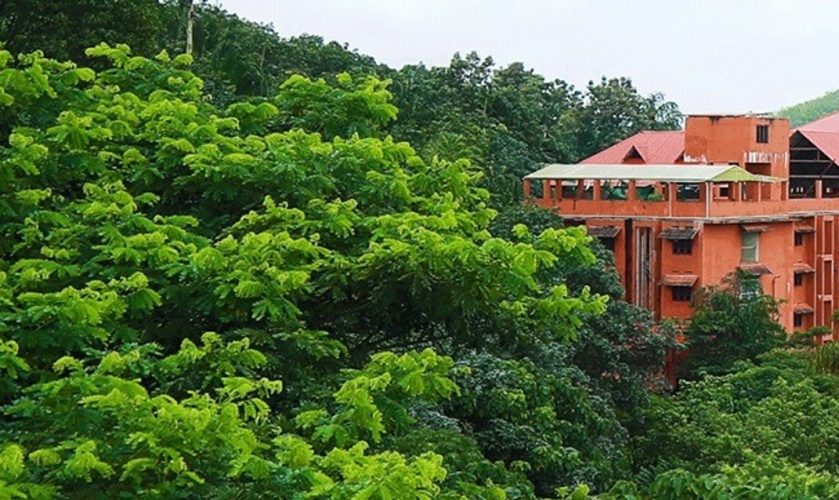
Ashtamgam Ayurveda Chikitsalayam
India/Kerala/Palakkad
Starting Rate Per Night: ₹ 3,000

Ashtamgam Ayurveda Chikitsalayam & Vidyapeedham is a distinguished centre for authentic Ayurvedic healing and classical education, located in the serene foothills of Nagalassery, Kerala. Established in 2011 under the...

When Burning Becomes a Pattern: An Ayurvedic Path to Recurrence-Free Urinary Health
For most people, a Urinary Tract Infection arrives without warning — a sudden burning on urination, a constant urge to go yet little coming out, lower abdominal pressure that won't settle, and the dawning recognition that something fundamental has shifted. For many women, the first UTI is also the start of a wearying lifetime relationship with the condition. The infection is treated with antibiotics, symptoms ease, life resumes — and then, weeks or months later, it returns. And returns. By their reproductive years, one in two women has experienced at least one UTI; nearly a third will face a recurrent pattern of two or more infections per year, with each course of antibiotics raising the stakes around resistance, gut microbiome disruption, and the next infection waiting in the wings.
Urinary Tract Infection is a clinical category, not a single condition. It encompasses cystitis (bladder infection — the most common presentation), urethritis (urethral infection), and pyelonephritis (kidney infection — the most serious form, often presenting with fever, flank pain, and systemic illness). Most are caused by Escherichia coli ascending from the perineum, though Klebsiella, Proteus, Enterococcus, and Staphylococcus saprophyticus also play significant roles. Modern medicine has a clear and important answer: targeted antibiotic therapy guided by urine culture for the acute infection, with prophylactic strategies for recurrent cases. Antibiotics work, they save lives in pyelonephritis, and they remain absolutely essential treatment in any acute infection. Where they reach their limit is the pattern — the underlying tendency that brings the next infection back even after the current one clears.
This is where Ayurveda offers a thoughtful, clinically grounded contribution. By understanding UTI as Mutrakriccha — a condition of difficult, burning urination driven by Pitta aggravation, Apana Vata disturbance, and Mutravaha Srotas vitiation — Ayurvedic care works on the layers that conventional medicine often cannot reach. It soothes the inflammatory burning through classical cooling herbs led by Chandana, Yashtimadhu, and Gokshura; restores the urinary tract environment to one less hospitable to recurrent infection; rebuilds the Ojas and immune resilience that recurrent illness depletes; addresses the metabolic, dietary, and lifestyle drivers that predispose to ascending infection; and sustains long-term urinary health through Rasayana. Used wisely — never replacing antibiotics in acute infection, never in pyelonephritis where conventional care is non-negotiable — it offers what may be the most meaningful answer available to the patient whose real question is not how to cure today's UTI but how to stop the cycle.
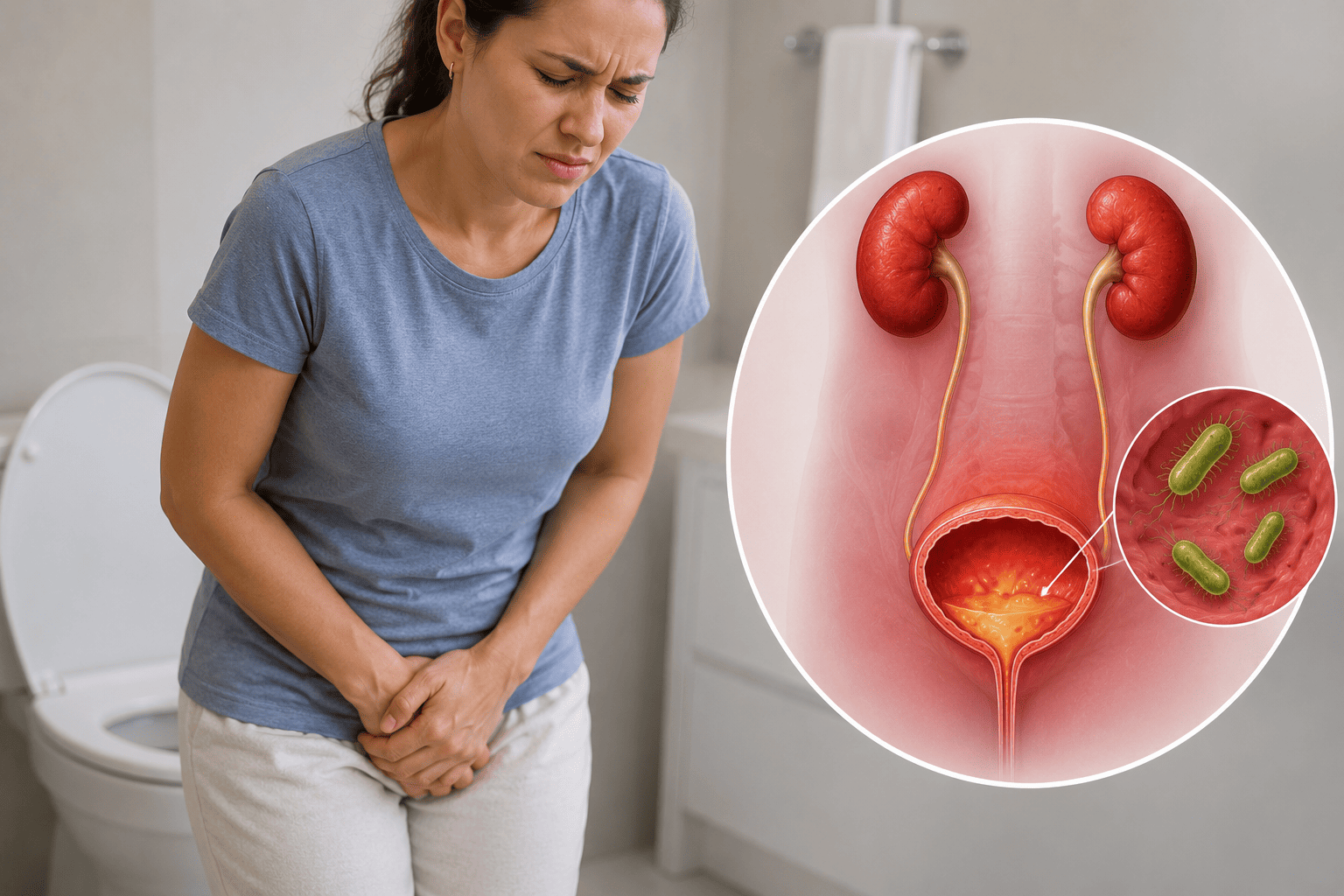
A Urinary Tract Infection treatment retreat is best understood as a comprehensive recovery and prevention program — a medically supervised, deeply personalised period of Ayurvedic care designed for patients in the inter-infection or post-infection phase, seeking to soothe lingering urinary irritation, restore urinary health, and meaningfully reduce the recurrence pattern that defines this condition for so many.
What is a Urinary Tract Infection?
A Urinary Tract Infection (UTI) is an infection involving any part of the urinary system — the urethra, bladder, ureters, or kidneys. It develops when bacteria, most commonly Escherichia coli from the gastrointestinal tract, enter the urinary tract through the urethra, ascend into the bladder, and in some cases continue upward to the kidneys. While most UTIs are simple and respond rapidly to antibiotic treatment, recurrent UTIs and complicated UTIs (those occurring with structural abnormalities, in pregnancy, in men, or in immunocompromised patients) require more careful clinical management.
UTIs are categorised by location and severity:
Cystitis (Bladder Infection) — The most common form, presenting with burning urination, frequency, urgency, suprapubic discomfort, and sometimes cloudy or strong-smelling urine. Typically uncomplicated in healthy non-pregnant women.
Urethritis (Urethral Infection) — Inflammation of the urethra, often presenting with burning urination and discharge, sometimes associated with sexually transmitted infections requiring specific evaluation.
Pyelonephritis (Kidney Infection) — The most serious form, presenting with fever, chills, flank or back pain, nausea, and systemic illness. Requires prompt medical treatment, sometimes hospitalisation, and can lead to sepsis or kidney damage if untreated.
Recurrent UTI — Defined clinically as two or more infections in six months, or three or more in a year. A major quality-of-life issue for many women, requiring strategies beyond episode-by-episode antibiotic treatment.
Complicated UTI — Infections occurring in men, in pregnant women, in patients with diabetes, kidney stones, catheters, structural abnormalities, or immunocompromise. Requires more careful workup and management.
Risk factors include female anatomy (the shorter female urethra and its proximity to the perineum), sexual activity, certain contraceptive methods, menopause and the resulting vaginal atrophy, diabetes, kidney stones, urinary tract obstruction (including enlarged prostate in men), urinary catheters, immunosuppression, suppression of urinary urges, inadequate fluid intake, and constipation. Diagnosis is confirmed by urinalysis and urine culture; imaging is reserved for complicated, recurrent, or atypical cases. Treatment depends on severity: uncomplicated cystitis typically responds to short antibiotic courses (3 to 5 days); pyelonephritis requires longer courses and sometimes intravenous treatment; recurrent UTIs may need prophylactic antibiotics, post-coital antibiotics, vaginal oestrogen therapy in post-menopausal women, or non-antibiotic strategies including methenamine, cranberry products, and immunomodulators.
Understanding Mutrakriccha and Pitta-Apana Vata Vitiation: The Ayurvedic Root of Urinary Tract Infection
In Ayurveda, Urinary Tract Infection is most closely correlated with Mutrakriccha — literally "difficult or painful urination" — a condition described in detail in classical texts including Charaka Samhita and Ashtanga Hridaya. The clinical features the texts describe — burning urination, urgency, frequency, suprapubic pain, occasionally with hematuria and fever — map remarkably closely onto the modern UTI presentation. Its pathogenesis rests primarily on Pitta aggravation in the urinary channels, with secondary involvement of Apana Vata and, in chronic or recurrent cases, broader doshic and immune disturbances.
Pitta Pradhana Vyadhi (Pitta-Dominant Pathology) — Aggravated Pitta within the urinary channels is the central pathology of Mutrakriccha. It drives the burning sensation, heat, inflammation, sometimes bleeding, and the systemic fever and discomfort that define UTI symptoms. Bacterial infection in the modern sense corresponds neatly to the inflammatory Pitta vitiation classical Ayurveda describes — the same fire principle in disturbed form.
Apana Vata Disturbance — Apana Vata governs the downward, controlled flow of urine. In UTI, its normal smooth rhythm becomes erratic and obstructed by inflammation, producing the urgency, frequency, hesitancy, and dribbling that accompany the burning. The painful constellation of urgency-with-little-output reflects exactly this Vata disturbance superimposed on Pitta-driven irritation.
Mutravaha Srotas Dushti (Vitiation of the Urinary Channels) — The Mutravaha Srotas sustain both Sanga (functional obstruction from inflammation and oedema) and Atipravritti (irritative urgency and frequency) — the dual disturbance pattern that distinguishes UTI from purely obstructive or purely irritative conditions.
Ama Accumulation and Mandagni — Weak digestive fire generates Ama (metabolic toxins) that compounds inflammatory burden, contributes to the immune dysfunction underlying recurrent infection, and creates the internal environment in which recurrent UTI becomes a chronic pattern rather than a single episode.
Ojas Kshaya in Recurrent Cases — Years of recurrent infection, repeated antibiotic courses, and the systemic burden of chronic illness deplete Ojas — the body's vital essence and immune reserve — leaving the urinary tract vulnerable to the next ascending infection.
Predisposing Vyabhicara — Lifestyle and Dietary Drivers — Classical Ayurveda specifically identifies dietary and lifestyle factors that drive Mutrakriccha: excess hot, spicy, sour, salty, and fermented foods; suppression of natural urinary urges; inadequate hydration; sexual activity without subsequent urination; constipation; and Pitta-aggravating emotional states. This maps closely onto the modern risk factor list and provides actionable targets for recurrence prevention.
This understanding shapes a clear Ayurvedic approach to UTI care: cool and soothe Pitta-driven inflammation, restore the normal rhythm of Apana Vata, clear Mutravaha Srotas obstruction and irritation, rebuild Ojas and immune resilience, and address the dietary and lifestyle drivers that perpetuate the recurrent pattern — all in the inter-infection phase, never as a substitute for antibiotics in acute infection.
The 3 Stages of Ayurvedic Treatment for Urinary Tract Infection
Ayurvedic care for UTI is best understood as care for the recovery and prevention phase, not as treatment for acute infection itself. The three-stage approach is adapted at every step to whether the patient is currently in an inter-infection interval, in early recovery from a recent episode, or established in a chronic recurrent pattern.
1. Preparation (Purva Karma) — The preparatory stage begins with Deepana-Pachana (kindling the digestive fire and digesting Ama) to address the metabolic background that fuels recurrent infection. Mild internal Snehana (oleation) with cooling, urinary-supportive medicated ghees prepares the tissues without aggravating any residual Pitta. Gentle external Abhyanga (oil application) and very mild Swedana (sudation) help calm Apana Vata and improve pelvic circulation. The emphasis throughout this stage is on cooling, soothing, and rebuilding rather than vigorous detoxification.
2. Core Treatment (Pradhana Karma) — Primary therapies focus on calming Pitta, restoring Mutravaha Srotas function, and rebuilding urinary immunity. Carefully calibrated Virechana (therapeutic purgation) may be used to clear systemic Pitta and reduce inflammatory burden, particularly in recurrent UTI cases with marked Pitta-Kapha aggravation. Basti therapy with cooling, urinary-supportive medicated decoctions — including Anuvasana Basti with appropriate medicated oils and Niruha Basti with Punarnava, Gokshura, and Chandana-based decoctions — directly addresses Apana Vata, calms urinary irritation, and supports pelvic function. Where appropriate and clinically indicated, Uttara Basti may be employed for direct local support. Cooling herbal formulations are administered throughout this stage, with strict avoidance during any acute bacterial infection, when antibiotic treatment takes absolute precedence.
3. Rejuvenation (Paschat Karma) — This is the most important stage for the recurrent UTI patient. Sustained Rasayana therapy with immune-supportive and urinary-protective medicines, a strict UTI-preventive Ayurvedic diet, deliberate hydration practices, lifestyle correction, pelvic hygiene education, and ongoing maintenance with herbs such as Gokshura, Varuna, Punarnava, and Chandraprabha Vati at preventive doses works to break the recurrence pattern. For many patients, this stage delivers the most life-changing benefit — not the relief of any single infection but the gradual disappearance of the cycle itself.
The 5 Core Therapies for Urinary Tract Infection Explained
1. Cooling Anti-Inflammatory Herbal Therapy (Shamana Chikitsa) — A personalised regimen of classical cooling, anti-inflammatory urinary herbs forms the pharmacological backbone of UTI care. Chandana (Santalum album, sandalwood) is the premier cooling, anti-inflammatory herb for Pitta-driven urinary inflammation, soothing burning and irritation. Yashtimadhu (Glycyrrhiza glabra, licorice) provides anti-inflammatory and mucosal-soothing support to the urinary tract. Gokshura (Tribulus terrestris) tonifies the urinary system and supports gentle diuresis. Punarnava (Boerhaavia diffusa) offers documented antimicrobial and anti-inflammatory support to the kidneys and bladder. Varuna (Crataeva nurvala) is well-researched for urinary tract support. Usheera (Vetiveria zizanioides, vetiver) cools and soothes the urinary tract. Guduchi (Tinospora cordifolia) provides immunomodulatory support to break recurrent patterns. Classical formulations including Chandraprabha Vati, Gokshuradi Guggulu, Punarnavadi Kashayam, Chandanasava, and Sariva Asava are prescribed individually based on the acuity, frequency, and pattern of infection.
2. Hydration-Centred and Dietary Therapy — Ayurvedic UTI care places exceptional emphasis on hydration as a foundational therapy. Coconut water, barley water, cumin-coriander-fennel infusion, and steady warm water through the day flush the urinary tract, dilute irritants, and create a urinary environment less hospitable to ascending infection. The diet is calibrated to cool aggravated Pitta and rebuild Mutravaha Srotas health: cucumber, ash gourd, bottle gourd, mung dal, well-cooked rice, fresh seasonal sweet fruits, and gentle cooling spices including coriander, fennel, and cardamom. Avoided rigorously: hot, spicy, sour, fermented, fried, and excessively salty foods, alcohol, strong coffee and tea, refined sugar, and acidic citrus in excess. This dietary correction is not optional adjunct advice but central therapy for recurrent UTI.
3. Virechana (Therapeutic Purgation) — Virechana is selectively used in recurrent UTI cases with significant Pitta-Kapha aggravation and metabolic background, to clear systemic Pitta, reduce inflammatory burden, and create the internal environment in which recurrence becomes meaningfully less likely. It is performed under careful supervision with appropriate dosing, and is firmly avoided during any active acute infection, in pregnancy, and in patients whose strength does not clearly permit it.
4. Basti and Uttara Basti (Medicated Enema and Urethral Therapy) — Basti is central to inter-infection UTI care because the condition involves both Apana Vata disturbance and broader pelvic-urinary dysfunction. Anuvasana Basti with cooling medicated oils nourishes the pelvic tissues, while Niruha Basti with urinary-supportive herbal decoctions including Punarnava, Gokshura, Chandana, and Varuna directly addresses both inflammation and Vata aggravation. Where clinically appropriate and under specialist supervision in properly equipped centres, Uttara Basti provides direct local support to the urinary tract — a powerful intervention reserved for selected cases in the inter-infection phase, never during acute infection.
5. Rasayana and Immune-Restorative Therapy — Rasayana therapy is the cornerstone of recurrence prevention — the truest answer to the recurrent UTI patient's deepest question. Classical Rasayanas including Chyawanprash, Amalaki Rasayana, Guduchi Rasayana, and Ashwagandha work over months to rebuild Ojas, restore the immune resilience consumed by recurrent infection, reduce inflammatory tone, and meaningfully reduce vulnerability to the next ascending bacterial event. Combined with sustained low-dose maintenance of Gokshura, Punarnava, and Chandraprabha Vati, Rasayana therapy delivers what episode-by-episode antibiotic treatment alone cannot: a genuine shift in the body's susceptibility pattern.
How Long Should an Ayurvedic Treatment Program for Urinary Tract Infection Last?
| Duration | Therapeutic Benefit |
|---|---|
| 7–14 days | Initial relief of residual burning, improved digestion, restored urinary comfort |
| 14–21 days | Moderate Pitta-Vata regulation, established Rasayana foundation, eased irritation |
| 21–28 days | Complete inter-infection recovery protocol — recommended for most recurrent UTI patients |
| 28+ days | Deep immune restoration and long-term recurrence prevention for chronic patterns with marked immune depletion |
The exact duration of your Urinary Tract Infection treatment is decided after consultation with the Ayurvedic doctor, based on your infection history and frequency, current symptoms, time since the last acute episode, overall strength, and any associated conditions. As a general guide, 21 to 28 days supports meaningful inter-infection recovery and establishes a foundation for recurrence prevention. Because recurrent UTI is fundamentally a long-term pattern, a consistent home regimen of prescribed Rasayana medicines, dietary discipline, hydration, and lifestyle measures after the retreat is what genuinely shifts the recurrence cycle over the months that follow.
Benefits of an Ayurvedic Treatment Retreat for Urinary Tract Infection
| Physical Benefits | Urinary and Immune Benefits | Long-Term Impact |
|---|---|---|
| Reduced residual burning and discomfort | Soothed urinary tract inflammation | Significantly reduced recurrence over time |
| Improved digestion and appetite | Restored Apana Vata rhythm | Sustained urinary health through Rasayana |
| Reduced fatigue and improved energy | Calmed Pitta-driven irritation | Rebuilt Ojas and immune resilience |
| Improved sleep and reduced anxiety | Cleared Mutravaha Srotas dysfunction | Reduced dependence on prophylactic antibiotics |
Why Kerala is the Best Place for Urinary Tract Infection Treatment
An Ayurvedic Urinary Tract Infection treatment retreat in Kerala, India offers the most clinically authentic environment for inter-infection care and long-term recurrence prevention.
- Experienced physicians with specific expertise in Mutrakriccha, urinary disorders, and the integrative management of recurrent infectious conditions
- BAMS and MD Ayurveda-certified doctors trained in classical Basti, Uttara Basti, and cooling protocols suited to Pitta-driven urinary pathology
- In-house preparation of classical urinary formulations — Chandraprabha Vati, Gokshuradi Guggulu, Punarnavadi Kashayam, Chandanasava, Sariva Asava — using authentic methods and fresh herbs
- Integrated monitoring of symptoms, urinary character, and inflammatory recovery throughout the program
- A long-established tradition of women's health and urinary care with the discretion this often-private condition deserves
- Warm, restorative climate conducive to hydration, cooling therapy, and urinary system recovery
Sri Lanka offers a comparable tropical healing environment with growing Ayurvedic expertise in urinary and immune conditions, while Bali provides wellness-oriented treatment retreats integrating Ayurvedic urinary recovery with holistic dietary correction, stress management, and long-term prevention.
Urinary Tract Infection Treatment Retreats by Location and Recommended Centres
Kerala, India — The most clinically authentic destination for Ayurvedic Urinary Tract Infection inter-infection care and prevention, with physicians experienced in Mutrakriccha and the integrative management of recurrent urinary conditions. Alleppey • Kovalam • Kumarakom • Wayanad • Palakkad
Sri Lanka — Coastal Ayurveda treatment retreats offering traditional urinary and immune-supportive therapies in a serene environment ideal for inter-infection recovery and prevention. Wadduwa • Weligama • Sigiriya • Kosgoda • Bentota
Bali, Indonesia — Wellness treatment retreats integrating Ayurvedic urinary support with holistic dietary correction, stress management, and immunity-building in scenic tropical surroundings. Ubud • Nusa Dua • Candidasa • Lovina
WellnessLoka connects you with verified centres across these destinations, ensuring Urinary Tract Infection treatment programs are physician-guided, appropriate for your infection history and recurrence pattern, and designed with the discretion this condition deserves.
Who Should Consider an Ayurvedic Urinary Tract Infection Treatment Retreat
Patients with recurrent UTI patterns — Women (and the smaller number of men) experiencing two or more infections within six months or three or more within a year, who recognise that antibiotic courses alone are not breaking the cycle and want a serious program to address the underlying pattern.
Patients recovering from recent infection — Those who have completed antibiotic treatment for a recent UTI but are left with residual burning, urgency, frequency, or pelvic discomfort, seeking gentle restorative care to support a fuller recovery.
Post-menopausal women with recurrent UTI — Individuals dealing with the urinary effects of declining oestrogen — vaginal atrophy, weakened mucosal barriers, increased infection susceptibility — who want a holistic program combining Ayurvedic care with overall pelvic and hormonal balance.
Patients seeking alternatives to long-term antibiotic prophylaxis — Those who have been advised continuous low-dose prophylactic antibiotics for recurrent infection, and who would prefer an integrative approach to reducing recurrence — to be discussed and coordinated with their treating physician, not undertaken unilaterally.
Patients with associated conditions driving UTI risk — Individuals whose UTI risk is heightened by diabetes, kidney stones, BPH (in men), or other identifiable factors, who want to address both the urinary tract environment and the broader contributing background.
Patients seeking long-term Mutravaha Srotas restoration — Those drawn to the depth of classical Ayurvedic urinary care, who want to anchor their recurrence prevention with sustained physician-supervised Rasayana, dietary discipline, and lifestyle correction.
Patients dealing with antibiotic-related side effects — Individuals whose repeated antibiotic courses have produced gut microbiome disruption, recurrent candidiasis, digestive disturbance, or other adverse effects, who want a restorative program addressing both the urinary tract and the broader systemic recovery.
Who Should Approach Treatment with Caution
Ayurvedic care for UTI is inter-infection and preventive in nature, working alongside conventional antibiotic treatment of any acute infection — never as a substitute for it. A thorough consultation is essential, and Ayurvedic retreat-based care should be deferred or undertaken only with specialist medical coordination in cases involving:
Active acute UTI with significant symptoms — Patients in the acute phase of infection with severe burning, fever, flank pain, or systemic illness require prompt urological evaluation and antibiotic treatment, not a retreat — Ayurvedic care belongs to the recovery phase that follows.
Pyelonephritis (kidney infection) — Any UTI with fever, flank pain, nausea, or systemic illness suggests kidney involvement and is a medical emergency requiring immediate antibiotic treatment, sometimes hospitalisation; this is unambiguously not appropriate for retreat-based management.
UTI in pregnancy — Pregnant women with UTI symptoms require specific medical management because untreated UTI in pregnancy poses risks to both mother and baby; antibiotic treatment guided by an obstetrician is essential, and retreat-based care is generally deferred until after delivery.
Complicated UTI with structural abnormalities — Patients with significant kidney stones, urinary tract obstruction, congenital anomalies, or other complicating factors need full urological workup before any program is appropriate.
UTI in patients with diabetes, immunocompromise, or significant chronic disease — Such infections carry higher complication risk and require closer specialist supervision; integrative Ayurvedic care can play a role only after the acute infection is fully resolved and in close coordination with treating physicians.
Sexually transmitted infection presentations — Symptoms suggestive of urethritis with possible STI need specific microbiological evaluation and targeted antibiotic treatment before any other approach.
Active UTI in men — UTI in men is uncommon and frequently associated with underlying urological pathology (prostate disease, structural issues); requires full urological evaluation before any non-conventional management.
Choosing the Right Treatment Retreat for Urinary Tract Infection
Qualified physicians with urological and women's health expertise — BAMS or MD Ayurveda-credentialed doctors with demonstrated experience in Mutrakriccha, recurrent UTI management, and women's pelvic health, not generalists applying standard wellness protocols.
Proper diagnostic and monitoring capabilities — Centres with access to basic urinalysis and the clinical judgment to recognise when a recurrent UTI patient is in fact developing a new acute infection requiring antibiotic referral rather than retreat continuation.
Personalised pattern-specific protocols — Treatment plans built around the patient's specific recurrence pattern, infection history, hormonal context, and identified risk factors — not generic urinary programs.
Authentic in-house cooling herbal preparations — Classical formulations including Chandraprabha Vati, Gokshuradi Guggulu, Punarnavadi Kashayam, Chandanasava, and Sariva Asava prepared on-site using traditional methods and fresh herbs.
Integrated hydration and dietary counselling — Centres that take the dietary and hydration sides of UTI prevention seriously, with specific Pitta-pacifying dietary planning, structured hydration protocols, and clear post-retreat home guidance.
Dignified, discreet care delivery — The often-private nature of UTI and pelvic concerns deserves clinical care delivered with discretion and respect, in settings that protect patient confidentiality.
Willingness to coordinate with the patient's physician — Centres whose physicians understand that recurrent UTI management often involves both Ayurvedic and conventional intervention, and who are willing to communicate with treating urology, gynaecology, or primary care teams as needed.
How WellnessLoka Helps You Choose the Right Ayurveda Treatment Retreat for Urinary Tract Infection
Choosing the right treatment retreat for Urinary Tract Infection is a decision that carries clinical weight and personal sensitivity. The condition demands not just Ayurvedic expertise but a clear understanding of the boundary between when antibiotic treatment is the primary care needed and when integrative Ayurvedic care can genuinely shift the recurrence cycle. WellnessLoka exists to ensure that patients can make this decision with full information, genuine guidance, and complete confidence.
Access to Verified Retreat Centres — Every centre listed on WellnessLoka for Urinary Tract Infection treatment has been independently assessed for physician credentials, clinical experience with urinary and women's health conditions, and the judgment to recognise when retreat-based care is appropriate versus when antibiotic treatment must take precedence. We list only centres where protocols are genuinely adapted to recurrent UTI care and where the discretion this private condition deserves is consistently maintained.
Free Pre-Retreat Consultation with Our Ayurvedic Doctor — Before you choose a retreat, WellnessLoka offers a complimentary consultation with our in-house Ayurvedic consultant. This consultation reviews your infection history and frequency, time since the last acute episode, current symptoms, any underlying conditions, current medications, and any history of antibiotic prophylaxis, and based on this assessment, matches you with the retreat centre and program duration best suited and safest for your situation — connecting you with centres whose physicians have specific experience managing the recurrent infection pattern you are dealing with. It is purely a guidance consultation to help you make an informed, medically sound decision before you travel, and does not involve prescribing or directing your treatment.
Transparent Centre Comparison — WellnessLoka provides clear, honest information about each listed centre — physician qualifications, therapy protocols, program structure, monitoring capabilities, accommodation, and pricing — allowing you to compare options across Kerala, Sri Lanka, and Bali with full clarity and confidence before making any commitment.
Best Price Guarantee — Through our strong, long-standing relationships with partner centres, you benefit from exclusive partner pricing that is always lower than booking directly. You receive the most authentic care for your Urinary Tract Infection treatment program without paying more for it.
Retreats for Every Budget — From luxury wellness resorts to affordable, authentic healing centres, WellnessLoka helps you find a Urinary Tract Infection treatment retreat that aligns perfectly with your comfort level and budget — without ever compromising on the clinical quality and discretion this condition requires.
Treatment is in Expert Hands — Once you arrive at your chosen retreat, your Urinary Tract Infection treatment program is fully designed and managed by the qualified Ayurvedic physicians at that centre. From your first in-person consultation onwards, all clinical decisions, daily monitoring, therapeutic adaptation, and medical management are guided by experienced doctors on the ground — physicians with deep training in urinary and women's health care and direct, hands-on familiarity with the therapies your program involves. Your treatment unfolds under continuous, qualified supervision, with protocols adapted to your response day by day.
Local Support Team — Our on-ground experts assist you at every step, from your first enquiry through to the completion of your retreat — resolving any issues that arise and ensuring your entire Urinary Tract Infection healing journey runs smoothly, comfortably, and with the discretion it deserves.
End-to-End Booking Support — From your first enquiry to confirmed booking, WellnessLoka provides full administrative and logistical support — ensuring a smooth, stress-free process so that you can focus entirely on preparing for your healing program.
Why Travellers Trust WellnessLoka — WellnessLoka is rated 4.9/5 on Google, with verified reviews from wellness travellers who have experienced authentic Ayurveda healing through us. We are trusted by hundreds of travellers from 28+ countries across Europe, the Americas, Asia, Australia, and Africa, backed by over a decade of expertise in curating authentic Ayurveda retreats across trusted centres. Our dedicated support team is available 24×7 to assist you before, during, and after your Urinary Tract Infection treatment retreat.
Begin Your Healing Journey
Recurrent Urinary Tract Infection is a condition where the antibiotic course at the start of each episode is necessary and lifesaving — but where the question that matters most to the patient is rarely addressed by the prescription pad: how to stop this from happening again. The acute infection has its medical answer. The pattern needs something else.
Gentle, restorative Ayurvedic care offers what may be the most meaningful contribution available to that deeper question: cooling the chronic Pitta tone that drives urinary inflammation, restoring the Mutravaha Srotas environment, rebuilding the Ojas and immune resilience that recurrent illness depletes, correcting the dietary and lifestyle drivers that perpetuate the cycle, and sustaining long-term urinary health through Rasayana. Whether you choose a treatment retreat in Kerala, Sri Lanka, or Bali, Ayurvedic care for Urinary Tract Infection offers a thoughtful, dignified, and deeply personalised path to lasting urinary health — always as a complement to, and never a replacement for, the antibiotic treatment that any acute infection requires.


