
Shivani Ayurveda
India/Himachal Pradesh/Dharamshala
Starting Rate Per Night: ₹ 10,636
Nestled in the tranquil hills of McLeod Ganj, Dharamshala, Shivani Ayurveda is a premium residential Ayurvedic clinic that combines authentic Panchakarma with comfortable hospitality in the Himalayan foothills. Rather than...

When Skin Loses Its Colour: An Ayurvedic Path to Repigmentation Support and Restored Confidence
Vitiligo represents one of the most clinically and psychosocially significant skin conditions, affecting an estimated 0.5-2% of the global population (approximately 65-95 million people worldwide) with no significant gender disparity, peak onset typically in the second or third decade of life though it can develop at any age, and substantial impact on quality of life that often substantially exceeds the apparent severity of the physical changes due to the profound psychological, social, cultural, and emotional dimensions of visible skin pigmentation differences. The condition is an autoimmune disorder where the body's immune system attacks melanocytes (the melanin-producing cells in the skin) producing progressive loss of skin pigmentation in characteristic patterns ranging from small isolated patches to extensive depigmentation, with the autoimmune nature explaining the association with other autoimmune conditions (thyroid disease, diabetes type 1, alopecia areata, pernicious anemia, Addison's disease, lupus, others) and the chronic relapsing-remitting course that characterizes the condition.
The clinical presentation involves characteristic features. Depigmented patches — well-demarcated white patches with sharp borders, completely lacking pigmentation (distinguishing from hypopigmentation which retains some pigment); typically symmetric distribution; commonly affected areas include the face (particularly around the mouth, eyes, nose), hands and fingers (often presenting feature in many patients), wrists, elbows, knees, ankles, feet, genitalia, and areas of trauma or friction (Koebner phenomenon — vitiligo developing at sites of skin injury). Hair involvement — Hairs within vitiliginous patches often becoming white (leukotrichia), affecting eyebrows, eyelashes, scalp hair, body hair; presence of leukotrichia generally indicates more difficult repigmentation. Mucosal involvement — Lips, gums, genitalia may be affected. Progressive course — Variable but typically progressive with episodes of progression and stabilization; complete spontaneous repigmentation is uncommon though limited spontaneous improvement does occur in some patients.
Classification of vitiligo:
Non-segmental vitiligo (NSV) — Most common form (90%):
- Generalized — Widespread symmetric patches
- Acrofacial — Hands, feet, face
- Universalis — >80% body surface affected
- Mucosal — Mucous membranes
- Mixed
Segmental vitiligo (SV) — Less common (10%):
- Unilateral patches following dermatomal distribution
- Younger onset typical
- Often more rapid initial progression then stabilization
- Different therapeutic considerations
Other patterns:
- Focal — Single or few isolated patches
- Trichrome vitiligo — Three zones of color
- Quadrichrome vitiligo — Four zones of color
- Inflammatory vitiligo — Erythema at borders
Risk factors and associations:
- Family history (genetic component substantial)
- Other autoimmune conditions (thyroid disease, diabetes type 1, alopecia areata, others)
- Skin trauma (Koebner phenomenon)
- Severe sunburn
- Stress (significant trigger for many patients)
- Specific chemicals (phenolic compounds, others)
- Hormonal triggers (pregnancy, puberty)
- Specific medications (rarely)
Substantial psychosocial dimensions are central to vitiligo experience — the condition affects visible appearance with profound implications for self-image, social interactions, intimate relationships, career considerations, and broader psychological wellbeing; depression and anxiety rates substantially elevated in vitiligo patients; cultural and regional variations in vitiligo impact with substantial stigma in some cultures; psychological support recognised as essential element of comprehensive care.
Modern medical management has evolved substantially in recent years. Topical treatments: topical corticosteroids (first-line for limited disease, particularly potent steroids for facial and body areas with careful monitoring); topical calcineurin inhibitors (tacrolimus, pimecrolimus — particularly valuable for face and intertriginous areas avoiding steroid side effects); topical JAK inhibitors (ruxolitinib cream — recent FDA approval representing substantial advance for non-segmental vitiligo). Phototherapy: narrowband UVB (NB-UVB) as gold-standard phototherapy with substantial evidence — typically 2-3 sessions weekly for 6-12 months minimum; targeted phototherapy (308nm excimer laser/lamp) for localized disease; PUVA (psoralen + UVA) less commonly used now due to side effects. Systemic treatments: systemic corticosteroids (mini-pulse therapy for actively progressing disease); systemic JAK inhibitors (emerging evidence including ritlecitinib); immunosuppressants in selected cases. Surgical treatments: autologous melanocyte transplantation (for stable disease, segmental vitiligo particularly responsive); suction blister grafting; mini-punch grafting; various other techniques. Depigmentation therapy for extensive disease — monobenzyl ether of hydroquinone (MBEH) for patients with >50% involvement preferring to depigment remaining normal skin. Camouflage with cosmetic products. Sun protection essential.
While conventional treatment provides various options, substantial therapeutic gaps and complementary roles exist where Ayurveda offers genuine value:
Patients seeking comprehensive natural approach — Those preferring integrative approaches as primary or complementary management.
Patients with limited response to conventional treatment — Comprehensive integrative approach for partial responders.
Patients with concerns about long-term corticosteroid use — Effective alternatives for sustained management.
Patients with associated psychological dimensions — Comprehensive integrative care for the substantial psychosocial aspects.
Patients with progressive disease seeking stabilization — Comprehensive approach addressing autoimmune dimensions.
Patients with associated autoimmune conditions — Combined approach addressing multiple autoimmune dimensions.
Patients seeking constitutional approach — Comprehensive Ayurvedic framework for skin and autoimmune health.
Patients in stable disease seeking sustained support — Long-term integrative care.
Children with vitiligo — Gentle integrative approaches with appropriate adaptations and continued dermatology coordination.
Patients with chronic stress and vitiligo — Comprehensive stress-management integration recognising substantial stress dimensions.
Patients with substantial dietary and lifestyle factor concerns — Comprehensive integrative lifestyle approach.
Classical Ayurveda addresses vitiligo within the framework of Shwitra ("white spots") — a specific condition within the broader Kushta (skin disease) framework with substantial classical literature particularly in Charaka Samhita and Sushruta Samhita reflecting sophisticated clinical observation of distinct sub-types and therapeutic approaches anticipating modern understanding remarkably well. The classical understanding involves Pitta-Bhrajaka vitiation (Bhrajaka Pitta being the sub-type of Pitta governing skin color and complexion), substantial Rakta-Mamsa Dushti (vitiation of blood and muscle tissues), and chronic Tridoshic involvement with sub-type predominance affecting therapeutic approach. The therapeutic approach includes comprehensive Pitta-pacifying therapy; Bakuchi (Psoralea corylifolia) as foundational repigmentation herb with substantial classical use and modern clinical evidence for vitiligo — providing both photosensitizing and broader supportive effects; Manjishtha and Khadira-led Rakta-shodhaka (blood purification) approach; comprehensive Kushta-management herbs; specific external applications for direct repigmentation support; comprehensive psychological support; dietary and lifestyle integration; coordination with continued dermatology care.
A Vitiligo treatment retreat is best understood as comprehensive supportive integrative care complementing continued dermatology management — providing repigmentation support, disease stabilization, comprehensive psychological care, and constitutional rebuilding. WellnessLoka centres provide honest framing: vitiligo is a chronic condition where some patients achieve substantial repigmentation through comprehensive approach while others experience stabilization without full repigmentation, with integrative care providing meaningful supportive value across the spectrum.
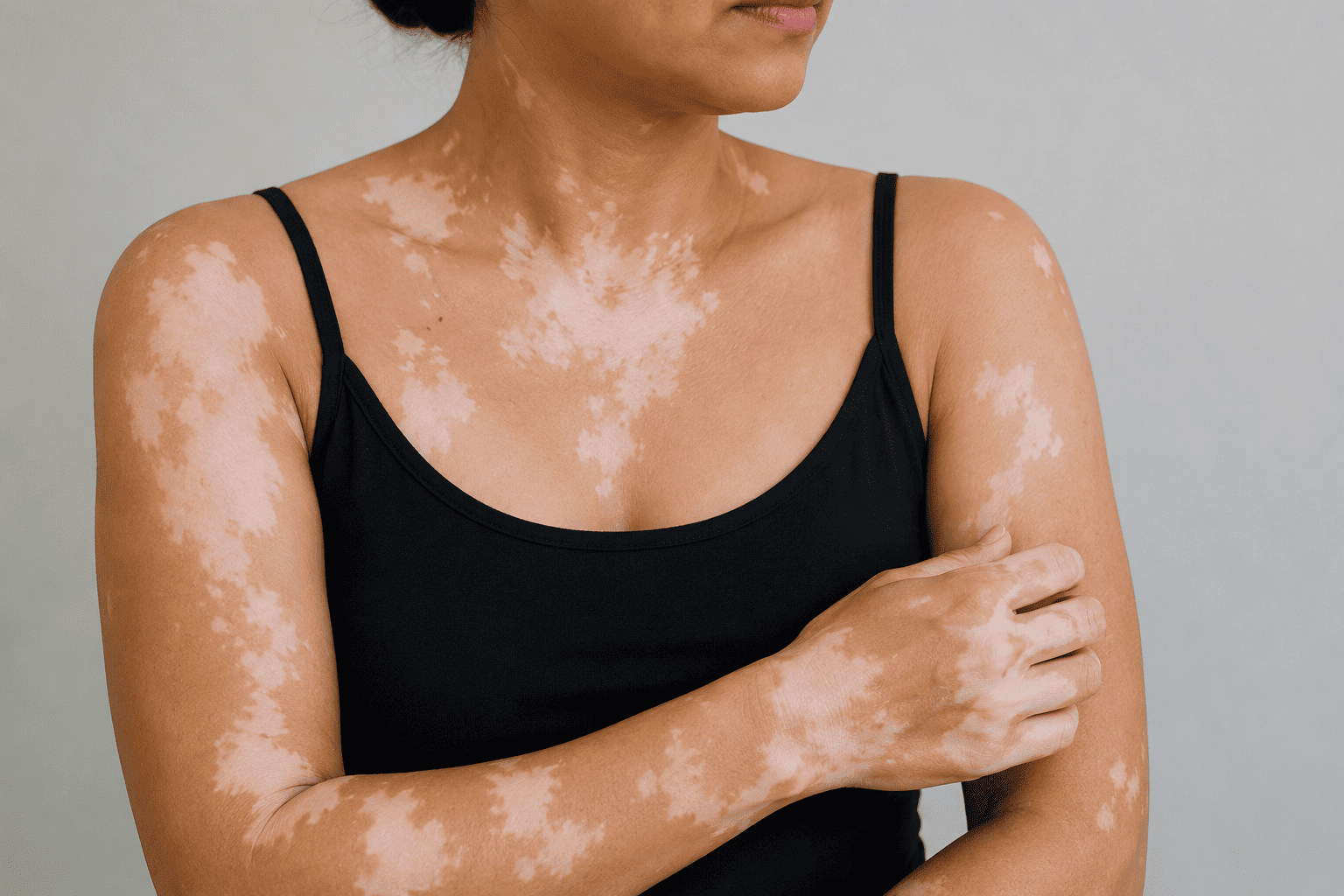
What is Vitiligo?
Vitiligo is an autoimmune skin condition where the body's immune system attacks melanocytes (melanin-producing cells) producing progressive loss of skin pigmentation in characteristic patterns ranging from small isolated patches to extensive depigmentation.
Definition and characteristics:
- Autoimmune destruction of melanocytes
- Progressive depigmentation with characteristic well-demarcated white patches
- Variable course with progression and stabilization phases
- Substantial psychosocial dimensions
- Association with other autoimmune conditions
- No gender disparity, peak onset 2nd-3rd decade
Pathophysiology:
- Autoimmune destruction of melanocytes
- T-cell mediated immune response targeting melanocytes
- Genetic predisposition (multiple gene associations including NLRP1, PTPN22, others)
- Environmental triggers (stress, skin trauma, severe sunburn, specific chemicals)
- Oxidative stress dimensions
- Neural factor involvement (particularly segmental vitiligo)
- Complex multifactorial pathology
Common symptoms and presentation:
- Well-demarcated white patches with sharp borders
- Typically symmetric distribution (non-segmental)
- Commonly affected areas: face, hands, wrists, elbows, knees, ankles, feet, genitalia
- Hair involvement (leukotrichia) within patches
- Mucosal involvement (some patients)
- Progressive course with periods of stabilization
- No physical discomfort typically (rare itching in active phases)
- Substantial psychological and social impact
Classification (non-segmental vitiligo subtypes):
- Generalized — Widespread symmetric (most common)
- Acrofacial — Hands, feet, face
- Universalis — >80% body surface
- Mucosal — Mucous membranes
- Focal — Limited patches
- Mixed
Segmental vitiligo:
- Unilateral dermatomal distribution
- Younger onset
- Often more responsive to surgical treatments
- Different progression pattern
Risk factors:
- Family history (substantial genetic component)
- Other autoimmune conditions
- Skin trauma (Koebner phenomenon)
- Severe sunburn
- Chronic stress (significant trigger)
- Specific chemicals exposure
- Hormonal triggers
- Specific medications (rarely)
Associated autoimmune conditions:
- Autoimmune thyroid disease (20-30%)
- Diabetes type 1 (increased risk)
- Alopecia areata
- Pernicious anemia
- Addison's disease
- Systemic lupus erythematosus
- Inflammatory bowel disease
- Rheumatoid arthritis
- Multiple others
Diagnosis:
- Clinical examination
- Wood's lamp examination (highlighting patches)
- Skin biopsy (rarely needed, distinctive features)
- Screening for associated autoimmune conditions (thyroid function, others as indicated)
- Family history assessment
Modern medical management:
- Topical: corticosteroids, calcineurin inhibitors (tacrolimus, pimecrolimus), JAK inhibitors (ruxolitinib cream)
- Phototherapy: NB-UVB (gold-standard), targeted phototherapy (excimer)
- Systemic: corticosteroids (mini-pulse), JAK inhibitors (emerging)
- Surgical: autologous melanocyte transplantation, suction blister grafting, mini-punch grafting
- Depigmentation for extensive disease (MBEH)
- Camouflage and cosmetic approaches
- Sun protection essential
- Psychological support essential
Understanding Shwitra: The Ayurvedic Root of Vitiligo
The Ayurvedic understanding of vitiligo sits within the framework of Shwitra — a specific condition within the broader Kushta (skin disease) framework with substantial classical literature in Charaka Samhita and Sushruta Samhita reflecting remarkably sophisticated clinical observation including distinct sub-types based on doshic predominance, clinical features, and prognostic considerations that anticipate modern understanding of vitiligo variation and outcomes.
Core concepts:
Shwitra as Distinct Kushta Sub-Type:
Classical texts describe Shwitra within the broader Kushta framework but as distinct entity with specific features:
- Skin discoloration (loss of normal complexion) as primary feature
- Absence of itching, discharge, or pain distinguishing from other Kushta types
- Specific therapeutic approach matched to sub-type
Three Sub-Types of Shwitra Based on Doshic Predominance:
Daruna Shwitra — Vata-predominant:
- Reddish-brown discoloration
- Dry rough patches
- Resistant to treatment (Krichchhasadhya — difficult to cure)
- Often corresponds to depigmentation with surrounding hyperpigmentation
- Resistant patterns
Charuna Shwitra — Pitta-predominant:
- Coppery or lotus-petal color
- Patches with reddish hue
- Burning sensation in some patients
- Moderate difficulty in treatment
- Often corresponds to actively progressing vitiligo
Kilasa Shwitra — Kapha-predominant:
- White color (most closely corresponding to typical vitiligo presentation)
- Thick patches
- More amenable to treatment (Sadhya — curable in some sub-types)
- Often corresponds to stable or longstanding patches
Prognostic Classical Considerations:
Classical texts identify factors affecting prognosis:
- Duration of disease (longer duration more difficult)
- Extent of involvement (more extensive more difficult)
- Family history (Sahaja — hereditary patterns more difficult)
- Location (certain locations including lips, palms, soles, genitalia more difficult)
- Hair involvement (leukotrichia — classical recognition of more difficult prognosis aligning with modern understanding)
- Constitutional factors
Pitta-Bhrajaka Vitiation as Central:
Bhrajaka Pitta is the specific sub-type of Pitta governing skin color, complexion, and absorption of substances applied to skin. Vitiation of Bhrajaka Pitta is central to Shwitra pathology — the loss of skin color directly reflects Bhrajaka Pitta dysfunction. Therapeutic approaches addressing Bhrajaka Pitta both internally and through topical applications are foundational.
Rakta-Mamsa Dushti:
Substantial involvement of Rakta Dhatu (blood) and Mamsa Dhatu (muscle tissue) with vitiation patterns producing the broader systemic dimensions of Shwitra:
- Rakta Vaha Srotas dysfunction affecting skin nourishment
- Mamsa Vaha Srotas dysfunction affecting tissue function
- Rakta-shodhaka (blood purification) approach foundational
Tridoshic Considerations with Sub-Type Predominance:
While doshic predominance varies by sub-type, chronic Shwitra typically involves all three doshas with specific sub-type predominance determining therapeutic emphasis:
- Vata — Dryness, irregular patterns, resistance to treatment
- Pitta — Inflammatory dimensions, color changes, burning
- Kapha — Chronicity, thick patches, fluid retention dimensions
Ojas Considerations:
Substantial Ojas Kshaya (vital essence depletion) in chronic Shwitra with broader immune dysfunction dimensions — anticipates modern understanding of autoimmune dimensions and broader systemic implications.
Manasika Bhava (Mental-Emotional) Dimensions:
Classical recognition of substantial mental-emotional dimensions of Shwitra including:
- Anxiety and depression common
- Social withdrawal
- Self-image disturbance
- Psychological stress as both cause and consequence
This classical recognition aligns with modern understanding of the profound psychological impact of vitiligo and the bidirectional relationship between stress and vitiligo activity.
Predisposing Nidana (Causes) Classical Ayurveda Identifies:
- Excessive consumption of dosha-aggravating foods
- Specific food combinations including incompatible foods (Viruddha Ahara) — particularly emphasized in classical texts including milk with fish (specific classical mention), sour fruits with milk, hot and cold combinations
- Suppression of natural urges (Vega Dharana)
- Excessive sour, salty, alkaline foods (Pitta-aggravating)
- Excessive heat exposure
- Chronic stress and emotional disturbance
- Excessive physical exertion
- Trauma to skin (Koebner phenomenon classically recognized)
- Pancha Karma when contraindicated
- Constitutional predisposition
- Beejadushti (genetic factors)
- Karmaja (karmic dimensions) — classical recognition of broader factors
Particular emphasis on Viruddha Ahara (Incompatible Foods):
Classical Ayurveda places substantial emphasis on incompatible food combinations as Shwitra cause, with specific combinations including milk with fish, milk with sour fruits, hot foods immediately after cold or vice versa, certain meat-milk combinations, and others. While not all classical food combination prohibitions align with modern nutritional science, the broader principle of avoiding chronic dietary patterns producing inflammatory or immune-disrupting effects has substantial alignment with modern understanding.
Honest Classical Framework:
Classical Ayurveda is remarkably honest about Shwitra prognosis — recognising that some sub-types are curable (Sadhya), some difficult (Krichchhasadhya), and some essentially incurable (Asadhya) based on specific clinical features. This nuanced prognostic framework distinguishing variable outcomes by sub-type aligns with modern understanding that vitiligo treatment outcomes vary substantially by location, duration, type, and other factors.
This comprehensive understanding shapes the Ayurvedic approach to vitiligo: identify the specific Shwitra sub-type through classical clinical assessment guiding therapeutic selection; address Bhrajaka Pitta vitiation through internal and topical therapies; comprehensive Rakta-shodhaka approach as foundational; Bakuchi (Psoralea corylifolia) as cornerstone repigmentation herb with substantial classical use and modern evidence; address chronic Tridoshic involvement based on sub-type predominance; comprehensive Kushta-management approach including dietary integration with attention to Viruddha Ahara avoidance; address Ojas Kshaya through Rasayana support; comprehensive Manasika Bhava integration addressing substantial psychological dimensions; honest prognostic framing matching classical sub-type assessment with realistic expectations; coordination with continued dermatology care.
The 3 Stages of Ayurvedic Treatment for Vitiligo
Ayurvedic care for Vitiligo follows a carefully sequenced three-stage approach adapted to the specific Shwitra sub-type, disease activity (progressing, stable, longstanding), extent of involvement, location considerations, age, presence of leukotrichia, associated conditions particularly other autoimmune disorders, psychological dimensions, prior treatments, and constitutional profile.
1. Preparation (Purva Karma) Comprehensive assessment including detailed Shwitra history (duration, progression pattern, prior treatments, response to previous therapies), specific Shwitra sub-type identification (Daruna, Charuna, Kilasa, or mixed), extent and distribution mapping, presence of leukotrichia and prognostic implications, screening for associated autoimmune conditions particularly thyroid disease, current dermatology management, psychological assessment given substantial dimensions, family history, dietary patterns with specific attention to Viruddha Ahara, lifestyle factors, stress patterns, and constitutional profile.
Dermatology coordination essential — sharing treatment approach, continued conventional treatment when appropriate, coordinating any phototherapy continuation, ensuring continued monitoring.
Critical recognition: Vitiligo response to treatment varies substantially — honest counseling about realistic expectations, recognition that some patients achieve substantial repigmentation while others experience stabilization without full repigmentation.
Deepana-Pachana addressing digestive dysfunction common in chronic skin disease.
Initial constitutional support with foundational Pitta-pacifying approach for most cases (with adjustments for Vata-predominant Daruna or Kapha-predominant Kilasa patterns).
Initial dietary modifications — Pitta-pacifying patterns, strict Viruddha Ahara (incompatible food combinations) avoidance essential given substantial classical emphasis, anti-inflammatory dietary patterns.
Foundational lifestyle measures — Stress management initiation given substantial dimensions, sun protection education (substantial importance), skin protection from trauma (Koebner phenomenon awareness), smoking cessation.
Comprehensive psychological assessment and support initiation — recognising the substantial mental-emotional dimensions central to vitiligo experience.
2. Core Treatment (Pradhana Karma) Primary therapies focus on five coordinated lines:
Comprehensive Pitta-Pacifying Constitutional Approach with Viruddha Ahara Awareness:
Dietary Pitta pacification:
- Cool to moderate temperature foods
- Reduced spicy, sour, salty foods
- Adequate cooling foods
- Specific Pitta-pacifying spices (fennel, coriander, cardamom, mint)
- Adequate ghee in moderation
- Strict Viruddha Ahara avoidance — specific classical food combinations particularly milk with fish, sour fruits with milk, certain other combinations
- Adequate protein for tissue rebuilding
- Anti-inflammatory dietary pattern
- Mediterranean-pattern integration with appropriate adaptations
Specific foods often beneficial:
- Bottle gourd (lauki)
- Bitter gourd in moderate amounts
- Leafy greens
- Coconut and coconut water
- Specific copper-rich foods (some emphasis in modern integrative approaches)
Foods to specifically avoid:
- Viruddha Ahara combinations as classically described
- Excessive spicy foods
- Excessive sour foods (curd particularly in evening, sour fruits)
- Excessive salty foods
- Excessive seafood in some patients
- Fermented foods in some patients
- Specific individual triggers
- Alcohol
- Excessive caffeine
Comprehensive Herbal Therapy with Bakuchi-Led Repigmentation Approach:
Foundational repigmentation herb:
Bakuchi (Psoralea corylifolia) — The cornerstone Ayurvedic herb for vitiligo with substantial classical use across centuries specifically for Shwitra and emerging modern clinical evidence. Contains psoralens which are photosensitizing compounds providing photoreactive effects when combined with controlled sun exposure or UV light — the same active compounds extracted for modern PUVA therapy reflecting Ayurveda's anticipation of modern photochemotherapy. Mechanisms include photosensitization effects supporting repigmentation, immunomodulatory effects relevant to autoimmune pathology, and broader skin-supportive properties. Used both internally and topically: Internal administration as Bakuchi Churna 1-3g daily (with careful monitoring), Bakuchi preparations including Bakuchyadi Vati; Topical applications as Bakuchi Taila, Bakuchi Lepa providing direct repigmentation support with controlled sun exposure protocol.
Critical safety considerations for Bakuchi: Photosensitization effects require careful sun exposure protocols (gradual, controlled, time-limited initial exposure); risk of phototoxic reactions with excessive sun exposure or sunburn; not appropriate during pregnancy; requires monitoring for hepatic effects with prolonged use; appropriate practitioner training essential. WellnessLoka centres provide expert Bakuchi protocols with appropriate safety monitoring.
Comprehensive Rakta-Shodhaka (Blood Purification) Approach:
- Manjishtha (Rubia cordifolia) — Foundational Rakta-shodhaka with substantial Kushta applications
- Khadira (Acacia catechu) — Classical Kushta-specific herb with substantial use for skin conditions; Khadirarishtam particularly valuable
- Sariva (Hemidesmus indicus) — Classical Rakta-shodhaka
- Guduchi (Tinospora cordifolia) — Immune modulation particularly valuable for autoimmune dimensions
- Neem (Azadirachta indica) — Comprehensive skin support with antimicrobial properties
- Aragwadha (Cassia fistula) — Classical Kushta support
Anti-inflammatory and Pitta-pacifying herbs:
- Turmeric (Haridra) — Comprehensive anti-inflammatory and skin-supportive
- Yashtimadhu (Glycyrrhiza glabra) — Anti-inflammatory and broader support
- Amalaki (Emblica officinalis) — Antioxidant and Pitta-pacifying
- Triphala — Foundational support
Classical formulations:
- Khadirarishtam — Foundational fermented preparation specifically for chronic skin conditions including Shwitra
- Mahamanjishthadi Kashayam — Comprehensive Rakta-shodhaka decoction
- Sarivadyasava — Specific applications
- Aragwadharishtam — Kushta-specific support
- Kaishore Guggulu — Comprehensive support for chronic inflammatory conditions
- Triphala Guggulu — Combined support
- Panchatikta Ghrita — Bitter ghee preparation specifically for skin conditions
- Mahatiktaka Ghrita — More potent bitter ghee preparation
- Avipattikara Churna — Digestive support
- Bakuchyadi Vati — Bakuchi-containing preparation
- Specific combinations matched to Shwitra sub-type and individual presentation
Comprehensive Topical Therapy and External Applications:
Bakuchi-based topical preparations:
- Bakuchi Taila — Bakuchi oil for direct application
- Bakuchi Lepa — Bakuchi paste applications
- Combined Bakuchi-Khadira preparations for synergistic effects
- Various classical topical preparations including specific oils and pastes
Sun exposure protocol with Bakuchi:
- Carefully controlled gradual sun exposure after topical Bakuchi application
- Initial brief exposure (5-10 minutes) gradually increasing
- Time-of-day considerations (morning or late afternoon avoiding peak UV)
- Monitoring for phototoxic reactions
- Patient education essential
- Modified protocols for facial application (more careful given sensitivity)
Other topical applications:
- Manjistha Lepa for Rakta-shodhaka local effect
- Specific medicated oils including Karanja Taila, Mahamarichyadi Taila
- Khadira preparations for direct application
- Specific medicated ghees for selected applications
- Avoidance of harsh topicals that may worsen Koebner phenomenon
Comprehensive Psychological Support and Manasika Bhava Integration:
The substantial psychological dimensions of vitiligo require comprehensive support — recognition that this is essential element of comprehensive care, not adjunctive:
Psychological support approach:
- Counseling and supportive therapy
- Specific Manasika Bhava herbs: Brahmi for cognitive-emotional support, Jatamansi for anxiety, Shankhpushpi for mental balance, Saraswatarishtam
- Meditation practices with documented benefits
- Yoga adapted to needs
- Pranayama including Anulom Vilom, Bhramari
- Stress management as central element
- Group support consideration where appropriate
- Family education and support
Specific psychological dimensions to address:
- Self-image and body image concerns
- Social anxiety and withdrawal
- Depression and anxiety
- Stress as trigger and consequence
- Cultural and family dimensions
- Career and relationship implications
Comprehensive Lifestyle Integration:
Sun protection:
- Daily broad-spectrum sunscreen (SPF 30-50+) on all affected and adjacent areas — essential to prevent sunburn that worsens vitiligo through Koebner phenomenon
- Sun-protective clothing for extended exposure
- Sun exposure timing considerations
- Exception for controlled Bakuchi-related sun exposure under specific protocols
Skin protection:
- Avoid skin trauma given Koebner phenomenon (tight clothing, friction, harsh chemicals, aggressive scrubbing)
- Gentle skincare without harsh products
- Avoidance of specific chemicals known to trigger vitiligo (phenolic compounds in some cleaning products, certain industrial chemicals)
Stress management — substantial impact on vitiligo activity through immune-stress axis.
Sleep optimization — quality sleep essential for immune regulation.
Smoking cessation — affects immune function and skin health.
Specific dietary integration as detailed in Pitta-pacifying approach.
Coordination with Continued Dermatology Care:
Critical recognition that integrative care complements rather than replaces conventional treatment for many patients:
- Continued topical treatments when prescribed (corticosteroids, tacrolimus, ruxolitinib) typically continue
- Continued phototherapy when indicated — integrative care can complement NB-UVB therapy
- Coordination for surgical treatments (autologous melanocyte transplantation) for stable disease
- Continued screening for associated autoimmune conditions
- Continued monitoring of progression and response
3. Rejuvenation (Paschat Karma) Sustained constitutional support, continued lifestyle modifications particularly Viruddha Ahara avoidance and stress management, continued repigmentation-supportive herbal therapy, continued sun protection and skin protection, periodic clinical follow-up, continued dermatology coordination, continued psychological support, and recognition that vitiligo management is long-term with sustained comprehensive approach providing best outcomes for both repigmentation and broader wellness.
The 5 Core Therapies for Vitiligo Explained
1. Bakuchi-Led Repigmentation Therapy with Sun Exposure Protocol Bakuchi (Psoralea corylifolia) represents the most clinically valuable and historically significant Ayurvedic intervention for vitiligo, with substantial classical use across centuries and remarkable anticipation of modern photochemotherapy approaches. The herb contains psoralens — the same compounds extracted for modern PUVA (psoralen + UVA) therapy — reflecting classical Ayurveda's sophisticated empirical observation that anticipated modern understanding of photochemotherapy by millennia. Mechanisms include: photosensitization effects supporting melanocyte stimulation and repigmentation when combined with controlled sun/UV exposure; immunomodulatory effects relevant to autoimmune pathology; broader skin-supportive properties. Internal administration: Bakuchi Churna 1-3g daily with careful monitoring; Bakuchyadi Vati classical formulation; combined with other supportive herbs. Topical applications: Bakuchi Taila (oil) and Bakuchi Lepa (paste) applied to vitiliginous patches; combined Bakuchi-Khadira preparations for synergistic effects. Sun exposure protocol: Carefully controlled gradual sun exposure typically 1-2 hours after topical Bakuchi application; initial brief exposure (5-10 minutes) gradually increasing as tolerated; morning or late afternoon timing avoiding peak UV; monitoring for phototoxic reactions including erythema, blistering; modified protocols for face given facial skin sensitivity. Critical safety considerations: Photosensitization requires careful supervised protocols; risk of phototoxic burns with excessive exposure; not appropriate during pregnancy given potential effects; requires monitoring for hepatic effects with prolonged internal use; appropriate practitioner training essential. Combined with comprehensive supportive herbs: Manjishtha, Khadira, Neem, Guduchi providing combined Rakta-shodhaka and immunomodulatory support. Sustained therapy over months with substantial classical experience supporting Bakuchi as cornerstone vitiligo intervention. WellnessLoka centres provide expert Bakuchi protocols with appropriate safety monitoring and patient education.
2. Comprehensive Manjishtha and Khadira-Led Rakta-Shodhaka Therapy Comprehensive Rakta-shodhaka (blood purification) therapy addresses the central Rakta-Mamsa Dushti dimensions of Shwitra pathology providing foundational systemic support that complements direct repigmentation interventions. Manjishtha (Rubia cordifolia) as foundational Rakta-shodhaka with substantial Kushta applications and classical use for chronic skin conditions including Shwitra — provides comprehensive blood-purifying effects, anti-inflammatory action, and broader supportive properties. Khadira (Acacia catechu) as classical Kushta-specific herb with substantial classical use specifically for chronic skin diseases — used as Khadirarishtam (fermented preparation) and various other forms providing comprehensive support. Combined Rakta-shodhaka approach: Sariva (Hemidesmus indicus) for classical Rakta-shodhaka support; Guduchi (Tinospora cordifolia) for immune modulation particularly valuable given autoimmune dimensions; Neem (Azadirachta indica) for comprehensive skin support with antimicrobial properties; Aragwadha (Cassia fistula) for classical Kushta support. Classical formulations: Khadirarishtam as foundational fermented preparation specifically for chronic skin conditions; Mahamanjishthadi Kashayam providing comprehensive Rakta-shodhaka; Sarivadyasava; Aragwadharishtam for Kushta-specific support; Panchatikta Ghrita and Mahatiktaka Ghrita providing bitter Pitta-pacifying ghee preparations specifically valuable for chronic skin conditions; Kaishore Guggulu for chronic inflammatory dimensions; Triphala Guggulu for comprehensive support. Sustained therapy over months providing comprehensive constitutional support alongside Bakuchi-based repigmentation interventions.
3. Comprehensive Pitta-Pacifying Constitutional Approach with Viruddha Ahara Integration Comprehensive Pitta-pacifying constitutional approach with substantial emphasis on Viruddha Ahara (incompatible food combinations) avoidance addresses the fundamental classical understanding of vitiligo causation through chronic dietary patterns. Dietary Pitta pacification: Cool to moderate temperature foods; reduced spicy, sour, salty foods aggravating Pitta-Bhrajaka; adequate cooling foods including coconut, cucumber, leafy greens, sweet ripe fruits; specific Pitta-pacifying spices (fennel, coriander, cardamom, mint, rose); adequate ghee in moderation; anti-inflammatory dietary pattern; adequate protein for tissue rebuilding. Critical Viruddha Ahara avoidance: Classical Ayurveda places substantial emphasis on specific incompatible food combinations as Shwitra cause: milk with fish (most emphasized combination — to be strictly avoided); milk with sour fruits (sour fruits with milk-based foods to avoid); hot foods immediately after cold or vice versa; certain meat-milk combinations; honey with hot foods or in equal quantities with ghee; various other specific combinations. While not all classical combinations align with modern nutritional science, comprehensive avoidance during vitiligo treatment reflects classical therapeutic principle and may have benefits beyond specific combination effects through promoting mindful eating and consistent dietary patterns. Foods often beneficial: bottle gourd (lauki), bitter gourd in moderate amounts, leafy greens (particular emphasis on bitter greens), coconut and coconut water, specific copper-rich foods (some emphasis in modern integrative approaches — sesame seeds, almonds, cocoa, certain seafoods if not otherwise contraindicated), turmeric integration, fig and pomegranate. Foods to specifically avoid beyond Viruddha Ahara: excessive spicy foods, excessive sour foods particularly curd in evening, excessive salty foods, fermented foods in some patients, individual triggers, alcohol substantially, excessive caffeine, processed foods. Lifestyle Pitta pacification: avoiding excessive heat exposure, cool environment, appropriate clothing, adequate hydration, stress management.
4. Comprehensive Psychological Support and Manasika Bhava Integration Comprehensive psychological support addresses the substantial mental-emotional dimensions central to vitiligo experience — not adjunctive consideration but essential element of comprehensive care given the profound psychological impact. Recognition of substantial psychological dimensions: depression and anxiety substantially elevated in vitiligo patients; social withdrawal and isolation common; self-image disturbance profound; cultural and family dimensions significant; bidirectional stress-vitiligo relationship through immune-stress axis. Comprehensive psychological support approach: Counseling and supportive therapy integrated throughout treatment; specific Manasika Bhava herbs: Brahmi (Bacopa monnieri) for cognitive-emotional support and adaptogenic effects; Jatamansi (Nardostachys jatamansi) for anxiety and emotional regulation; Shankhpushpi (Convolvulus pluricaulis) for mental balance; Ashwagandha for adaptogenic stress support; Saraswatarishtam for comprehensive nervous system support; Brahmi Ghrita for sustained cognitive-emotional support; Manasamitra Vatakam in selected cases. Meditation practices: substantial documented benefits for autoimmune conditions and psychological dimensions — mindfulness meditation, transcendental meditation, guided meditation. Yoga adapted to needs: gentle restorative practices; specific asanas supporting nervous system regulation; avoidance of poses producing skin friction or trauma. Pranayama: Anulom Vilom for autonomic balance; Bhramari for relaxation and nervous system regulation; Sheetali for cooling Pitta effects. Structured stress management including progressive muscle relaxation, biofeedback approaches, structured stress reduction. Specific psychological dimensions to address: self-image and body image concerns through structured therapeutic approach; social anxiety and withdrawal patterns; depression and anxiety with appropriate intervention; stress as trigger and consequence through comprehensive management; cultural and family dimensions through education and inclusion; career and relationship implications through supportive counseling. Family education and inclusion essential — vitiligo affects family dynamics, family members benefit from education about condition and supportive approaches. Group support consideration where culturally and individually appropriate. Coordination with mental health professionals when needed for significant depression, anxiety, or other concerns — integrative care complements rather than replaces psychiatric care for substantial mental health needs. WellnessLoka centres provide appropriate sensitive psychological support recognising central role in vitiligo care.
5. Comprehensive Lifestyle Integration with Sun Protection and Coordination with Continued Dermatology Care Comprehensive lifestyle integration with critical sun protection emphasis and coordination with continued dermatology care provides foundation for sustained vitiligo management. Sun protection essential: Daily broad-spectrum sunscreen (SPF 30-50+) on all affected and surrounding areas — essential to prevent sunburn that substantially worsens vitiligo through Koebner phenomenon; sun-protective clothing for extended exposure; sun exposure timing considerations avoiding peak UV; broad-spectrum hat and sunglasses for facial protection; awareness of reflected UV (water, snow, sand); higher SPF for face. Exception: Controlled Bakuchi-related sun exposure under specific protocols as part of treatment requires careful management distinguishing from general sun protection principle. Skin protection from trauma: Avoid skin trauma given Koebner phenomenon — tight clothing producing friction, aggressive scrubbing, harsh chemical products, hot water bathing, specific occupational skin trauma; gentle skincare without harsh ingredients (sulfates, harsh acids, abrasive scrubs); specific chemical avoidance — phenolic compounds in some cleaning products, certain industrial chemicals known to trigger vitiligo, specific cosmetic ingredients. Stress management as central element given substantial impact on vitiligo activity through immune-stress axis — comprehensive approach detailed in core therapy 4. Sleep optimization with adequate quality sleep essential for immune regulation. Smoking cessation absolutely essential — substantial impact on immune function, skin health, and oxidative stress. Comprehensive dietary integration as detailed in core therapy 3. Coordination with Continued Dermatology Care: Continued topical treatments when prescribed (corticosteroids, tacrolimus, pimecrolimus, ruxolitinib cream) typically continue throughout integrative care providing complementary effects; continued phototherapy when indicated — NB-UVB therapy substantially complements Bakuchi-based integrative care for many patients; coordination for surgical treatments for stable disease — autologous melanocyte transplantation, suction blister grafting, mini-punch grafting can be combined with integrative care; continued screening for associated autoimmune conditions particularly thyroid disease, diabetes, others; continued monitoring of progression and response; JAK inhibitor consideration for appropriate patients as emerging treatment option. Long-term framework: Recognition that vitiligo management is chronic with substantial individual variation in response — comprehensive integrative approach providing sustained value for both repigmentation support and broader wellness across years; periodic retreat visits providing ongoing support; integrative care complementing rather than replacing conventional treatment for many patients.
How Long Should an Ayurvedic Treatment Program for Vitiligo Last?
| Duration | Therapeutic Benefit |
| 7–14 days | Initial assessment, established protocols, initial Bakuchi therapy initiation, dietary integration |
| 14–21 days | Comprehensive constitutional support, established Bakuchi sun exposure protocols, herbal therapy stabilization |
| 21–28 days | Extended program for substantial constitutional rebuilding and comprehensive integration |
| 3–6 months home regimen | Sustained therapy essential for repigmentation outcomes |
The exact duration is decided after consultation with the Ayurvedic doctor in coordination with continued dermatology care, based on Shwitra sub-type, extent of involvement, presence of leukotrichia and other prognostic factors, disease activity, prior treatments, treatment goals, and individual factors. Initial intensive retreat 14-28 days establishing protocols including Bakuchi therapy, sun exposure protocols, dietary integration, comprehensive herbal therapy, and psychological support foundation. Continued home regimen essential for 3-6 months minimum providing sustained Bakuchi therapy, continued herbal support, ongoing dietary integration, sustained lifestyle modifications. Long-term comprehensive approach over 6-12+ months providing substantial repigmentation potential for many patients; honest framing about variable individual response. Periodic retreat visits annually or biannually for ongoing support, treatment adjustment, and continued comprehensive care. Recognition that vitiligo management is long-term with sustained comprehensive approach providing best outcomes — both for repigmentation goals and broader wellness throughout chronic management.
Book Consultation
Benefits of an Ayurvedic Treatment Retreat for Vitiligo
| Physical Benefits | Functional and Emotional Benefits | Long-Term Impact | |
| Repigmentation support in many patients | Improved self-image and confidence | Sustained disease stabilization | |
| Disease stabilization | Better emotional balance | Foundation for sustained autoimmune wellness | |
| Reduced inflammation and progression | Better social engagement |
|
|
| Better overall vitality | Better quality of life | Comprehensive integrative care framework |
Why Kerala is the Best Place for Vitiligo Treatment
An Ayurvedic Vitiligo treatment retreat in Kerala, India offers the most clinically authentic environment for comprehensive Shwitra care this complex condition fundamentally benefits from.
- Experienced physicians with specific expertise in Shwitra framework and the classical Kushta tradition with substantial focus on chronic skin conditions
- BAMS and MD Ayurveda-certified doctors with specialised training in vitiligo and autoimmune skin conditions
- Specialised practitioner training in Bakuchi therapy including proper preparation, internal and topical application protocols, sun exposure management, and safety monitoring — recognising Bakuchi as the cornerstone vitiligo intervention requiring specific expertise
- Authentic in-house Bakuchi preparation following classical methodology with appropriate quality control essential given specialty nature
- In-house preparation of classical Shwitra and Kushta-supportive formulations — Khadirarishtam, Mahamanjishthadi Kashayam, Sarivadyasava, Aragwadharishtam, Panchatikta Ghrita, Mahatiktaka Ghrita, Bakuchyadi Vati, Kaishore Guggulu, Triphala Guggulu, Manjishtha preparations, Khadira preparations, Sariva preparations, Guduchi preparations, Neem preparations — using authentic methods and fresh herbs
- Authentic in-house preparation of topical preparations including Bakuchi Taila, Bakuchi Lepa, combined Bakuchi-Khadira preparations, Manjistha Lepa, and other specialized topical applications
- Proper facilities for comprehensive vitiligo care including supervised sun exposure protocols with appropriate sun-exposure spaces, monitoring capability, and safety infrastructure
- Capacity for integrated care addressing the multidimensional needs of vitiligo patients including the substantial psychological dimensions
- Long-established Kerala tradition of comprehensive Kushta and skin condition Ayurveda
- Specialised psychological support capability essential given substantial psychosocial dimensions of vitiligo
- Coordination capability with continued dermatology care including phototherapy and conventional treatment management
- Capacity for sustained long-term care relationships through extended vitiligo management timeline
- Discretion and sensitivity essential for the substantial psychological and social dimensions of visible skin condition
- Capacity for family education and inclusion in treatment approach
- Integration of Mediterranean-pattern and Pitta-pacifying dietary protocols
- Capacity for comprehensive lifestyle integration including stress management, sun protection education, and skin protection guidance
Sri Lanka offers complementary tropical healing environment with Ayurvedic expertise in chronic skin conditions, while Bali provides wellness-oriented treatment retreats integrating Ayurvedic care with holistic wellness restructuring particularly valuable for early-stage vitiligo and broader constitutional approach phases. For specialised vitiligo Ayurveda with comprehensive Bakuchi expertise, authentic Shwitra and Kushta formulation preparation, and integrated psychological support, Kerala offers the deepest tradition.
Vitiligo Treatment Retreats by Location and Recommended Centres
Kerala, India — The most clinically authentic destination for classical vitiligo Ayurvedic care with established Shwitra tradition including specialised Bakuchi therapy capability, authentic preparation of Khadirarishtam, Mahamanjishthadi Kashayam, Panchatikta Ghrita, Bakuchyadi Vati, and classical Kushta formulations, comprehensive Rakta-shodhaka therapeutic capability, supervised sun exposure protocol infrastructure, integrated psychological support, and the deepest tradition of comprehensive chronic skin condition Ayurveda. Alleppey • Kovalam • Kumarakom • Wayanad • Palakkad
Sri Lanka — Coastal Ayurveda treatment retreats with comprehensive supportive care for chronic skin conditions in serene tropical environment suited to extended treatment programs. Wadduwa • Weligama • Sigiriya • Kosgoda • Bentota
Bali, Indonesia — Wellness treatment retreats integrating Ayurvedic care with holistic wellness restructuring, particularly valuable for early-stage vitiligo, constitutional rebuilding phases, and broader lifestyle integration. Ubud • Nusa Dua • Candidasa • Lovina
WellnessLoka connects you with verified centres across these destinations offering genuine Shwitra expertise, comprehensive Bakuchi therapy capability with appropriate safety protocols, authentic Khadirarishtam and classical Kushta formulation preparation, supervised sun exposure protocol infrastructure, integrated psychological support given substantial psychosocial dimensions, discretion and sensitivity throughout, willingness to coordinate with continued dermatology care including phototherapy and emerging treatments, and clear understanding of the integrative role alongside continued conventional management.
Who Should Consider an Ayurvedic Vitiligo Treatment Retreat
Patients seeking comprehensive natural approach — Those preferring integrative approaches as primary or complementary management for vitiligo.
Patients with limited response to conventional treatment — Comprehensive integrative approach for partial responders to topical corticosteroids, tacrolimus, or phototherapy.
Patients with concerns about long-term topical corticosteroid use — Effective alternatives for sustained management avoiding chronic corticosteroid side effects.
Patients with progressive disease seeking stabilization — Comprehensive approach addressing autoimmune dimensions to support disease stabilization.
Patients with stable disease seeking repigmentation — Comprehensive Bakuchi-based approach with substantial classical experience for repigmentation support.
Patients with associated autoimmune conditions — Combined approach addressing thyroid disease, diabetes type 1, alopecia areata, and other autoimmune dimensions.
Patients with substantial psychological dimensions — Comprehensive integrative care for the substantial psychosocial aspects of vitiligo that often substantially exceed apparent physical severity.
Patients with chronic stress and vitiligo — Comprehensive stress-management integration recognising substantial stress-vitiligo bidirectional relationship.
Patients with substantial dietary and lifestyle factor concerns — Comprehensive integrative lifestyle approach including critical Viruddha Ahara avoidance.
Patients seeking constitutional approach — Comprehensive Ayurvedic framework for skin health, autoimmune balance, and broader constitutional rebuilding.
Children with vitiligo (with appropriate adaptations) — Gentle integrative approaches alongside continued dermatology coordination and family involvement.
Patients in early disease seeking comprehensive approach — Recent-onset vitiligo with potentially better response to comprehensive integrative care.
Patients with focal or segmental vitiligo — Comprehensive approach alongside consideration of surgical interventions for appropriate cases.
Patients seeking integrative philosophy — Holistic approach to skin health, autoimmune balance, and broader wellness.
Patients with associated metabolic concerns — Combined approach for those with diabetes, thyroid issues, or other associated conditions.
Who Should Approach Treatment with Caution
Ayurvedic care for Vitiligo is genuinely valuable but appropriate medical evaluation and continued dermatology coordination are essential. A thorough consultation is essential, and Ayurvedic retreat-based care should be considered carefully in cases involving:
Patients with rapidly progressing vitiligo requiring urgent intervention — May benefit from initial systemic corticosteroid mini-pulse therapy alongside integrative care; should not delay urgent active disease management.
Patients with extensive vitiligo (>80% involvement) considering depigmentation therapy — Specific management decisions require dermatology evaluation; integrative care may complement decision-making but doesn't replace specialized treatment selection.
Patients with suspected vitiligo but unconfirmed diagnosis — Should have appropriate dermatology evaluation before extensive treatment given differential diagnoses including post-inflammatory hypopigmentation, tinea versicolor, pityriasis alba, idiopathic guttate hypomelanosis, and others.
Patients with associated active autoimmune disease requiring urgent management — Should address active disease (thyroid storm, severe diabetes, others) before extensive vitiligo-focused care.
Pregnant patients — Bakuchi is not appropriate during pregnancy given potential effects; specific therapeutic limitations during pregnancy require careful consideration; many topical and systemic treatments require pregnancy-specific consideration.
Patients with photosensitivity disorders or photosensitizing medications — Bakuchi photosensitization may compound risks; careful evaluation needed.
Patients with active malignancy — Photoreactive treatments require careful consideration in cancer history.
Patients with significant hepatic dysfunction — Bakuchi requires monitoring for hepatic effects; significant pre-existing hepatic dysfunction requires careful management.
Patients with severe psychiatric illness requiring active management — Should have appropriate mental health care; integrative care complements rather than replaces psychiatric treatment.
Patients with substantial unrealistic expectations — Honest counseling about realistic outcomes essential; vitiligo response varies substantially with no universal complete repigmentation expectation; counseling should address realistic expectations.
Patients unwilling to commit to sustained treatment — Vitiligo management is long-term; brief treatment approaches inadequate.
Patients unwilling to address contributing factors — Continued substantial stress, refusal to address dietary patterns particularly Viruddha Ahara, refusal to use sun protection substantially limits outcomes.
Patients with severe untreated comorbidities — Significant medical conditions require stabilisation before extensive integrative care.
Patients seeking promised guaranteed cures — Centres claiming guaranteed cures should be approached with extreme caution; honest framing essential.
Patients without continued dermatology care — Integrative care complements rather than replaces continued specialist monitoring.
Children requiring specialized pediatric dermatology care — Some children with extensive or progressive disease benefit from specialized pediatric dermatology management; integrative care can complement but not replace specialized care.
Choosing the Right Treatment Retreat for Vitiligo
Qualified physicians with Shwitra and Kushta Ayurveda expertise — BAMS or MD Ayurveda-credentialed doctors with specialised training in chronic skin conditions and specifically Bakuchi therapy protocols — not general Ayurvedic practitioners but those with documented vitiligo treatment experience.
Specialised practitioner training in Bakuchi therapy — Including proper preparation methodology, internal and topical administration protocols, sun exposure management with appropriate safety monitoring, recognition and management of phototoxic reactions, and patient education capability.
Authentic in-house Bakuchi preparation — Following classical methodology with appropriate quality control essential given specialty nature of this cornerstone vitiligo herb.
Authentic in-house herbal preparations — Including the comprehensive Shwitra and Kushta-supportive formulations particularly Khadirarishtam, Mahamanjishthadi Kashayam, Sarivadyasava, Aragwadharishtam, Panchatikta Ghrita, Mahatiktaka Ghrita, and broader Rakta-shodhaka formulations with quality assurance.
Proper infrastructure — Including appropriate facilities for supervised sun exposure protocols, monitoring capability, and safety infrastructure essential for Bakuchi-based therapy.
Capacity for comprehensive psychological support — Essential given substantial psychosocial dimensions; centres should have capability for integrated psychological care including counseling, group support consideration, and family inclusion.
Coordination capability with continued dermatology care — Essential for proper integration including continued topical treatments, phototherapy coordination, surgical treatment consideration, and screening for associated autoimmune conditions.
Capacity for sustained long-term care relationships — Recognising chronic nature of vitiligo and importance of sustained comprehensive approach.
Discretion and sensitivity — Essential given the substantial psychological and social dimensions of visible skin condition; appropriate privacy throughout treatment.
Family-friendly capability — For child patients and family inclusion in adult treatment.
Honest framing of integrative role and outcomes — Centres clearly understanding the supportive role of integrative care; avoid centres claiming guaranteed cures or universal repigmentation; appropriate honest counseling about realistic expectations based on Shwitra sub-type and prognostic factors.
Clear continuity-of-care planning — Detailed home regimens, follow-up timing, ongoing care guidance including continued Bakuchi protocols, lifestyle integration, and coordination with continued dermatology care.
How WellnessLoka Helps You Choose the Right Ayurveda Treatment Retreat for Vitiligo
Choosing the right treatment retreat for Vitiligo benefits enormously from genuine guidance. Vitiligo is a complex autoimmune skin condition with substantial individual variation in Shwitra sub-type, disease activity, extent of involvement, response to treatment, and psychosocial dimensions — and the right program depends on accurate identification of the specific Shwitra pattern and matching to centres with genuine vitiligo Ayurveda expertise particularly Bakuchi therapy capability. WellnessLoka exists to ensure that patients can make this decision with full information, genuine guidance, complete sensitivity to psychosocial dimensions, and absolute discretion.
Access to Verified Retreat Centres Every centre listed on WellnessLoka for Vitiligo treatment has been independently assessed for physician credentials, clinical experience with chronic skin conditions and Shwitra, depth of expertise in the full range of vitiligo-specific therapies including specialised Bakuchi therapy with appropriate safety protocols and sun exposure management, authentic Bakuchi preparation capability following classical methodology, authentic preparation of Khadirarishtam, Mahamanjishthadi Kashayam, Panchatikta Ghrita, and classical Kushta-supportive formulations, supervised sun exposure infrastructure essential for Bakuchi-based therapy, integrated psychological support capability essential given substantial psychosocial dimensions, discretion and sensitivity throughout, capacity for sustained long-term care relationships, willingness to coordinate with continued dermatology care including phototherapy and conventional treatment management, and clear understanding of the integrative role alongside continued conventional management. We list only centres where chronic skin condition protocols are genuinely practised with classical depth and where Bakuchi therapy meets specialised training and safety standards.
Free Pre-Retreat Consultation with Our Ayurvedic Doctor Before you choose a retreat, WellnessLoka offers a complimentary consultation with our in-house Ayurvedic consultant. This consultation reviews your specific vitiligo pattern (Shwitra sub-type identification with attention to Daruna, Charuna, or Kilasa predominance, classification as non-segmental or segmental, extent and distribution, presence of leukotrichia and prognostic implications, disease activity — progressing, stable, or longstanding), prior dermatology evaluation, current conventional treatment including topical and phototherapy use, associated autoimmune conditions screening particularly thyroid disease, family history, dietary patterns with attention to Viruddha Ahara, lifestyle factors particularly stress patterns, substantial attention to psychosocial dimensions including emotional impact and support needs, prior Ayurvedic treatment if any, and treatment goals with honest framing about realistic expectations. A critical part of this consultation is honest counseling about realistic expectations — recognising that vitiligo response varies substantially with some patients achieving substantial repigmentation while others experience stabilization without full repigmentation, with integrative care providing meaningful value across the spectrum. We screen for features warranting urgent dermatology evaluation, contraindications to specific therapies particularly Bakuchi (pregnancy, photosensitivity disorders, others), and ensure realistic understanding of treatment timeline and commitment required. Based on the assessment, we match you with the retreat centre and program duration best suited for your specific clinical context and individual situation. It is purely a guidance consultation to help you make an informed decision before you travel.
Transparent Centre Comparison WellnessLoka provides clear, honest information about each listed centre — physician qualifications, Bakuchi therapy capability and safety protocols, classical formulation preparation, psychological support integration, therapy protocols, program structure, monitoring capabilities, accommodation, and pricing — allowing you to compare options across Kerala, Sri Lanka, and Bali with full clarity and confidence.
Best Price Guarantee Through our strong, long-standing relationships with partner centres, you benefit from exclusive partner pricing that is always lower than booking directly. You receive the most authentic care for your Vitiligo treatment program without paying more for it.
Retreats for Every Budget From luxury wellness resorts to affordable, authentic healing centres, WellnessLoka helps you find a Vitiligo treatment retreat that aligns perfectly with your comfort level and budget — without ever compromising on the specialised Shwitra and Bakuchi therapy expertise this condition fundamentally benefits from.
Treatment is in Expert Hands Once you arrive at your chosen retreat, your Vitiligo treatment program is fully designed and managed by the qualified Ayurvedic physicians at that centre. From your first in-person consultation onwards, all clinical decisions, daily monitoring, therapeutic adaptation, sun exposure protocol management, and medical care are guided by experienced doctors on the ground — physicians with deep training in Shwitra management and direct, hands-on familiarity with the specialised Bakuchi therapy and broader classical Kushta therapies your program involves. Your treatment unfolds under continuous, qualified supervision with appropriate safety monitoring and sensitivity to psychological dimensions.
Local Support Team Our on-ground experts assist you at every step, from your first enquiry through to the completion of your retreat — resolving any issues that arise and ensuring your entire Vitiligo healing journey runs smoothly, safely, and with appropriate sensitivity to the psychosocial dimensions central to vitiligo experience.
End-to-End Booking Support From your first enquiry to confirmed booking, WellnessLoka provides full administrative and logistical support with discretion appropriate to the sensitive nature of vitiligo care — ensuring a smooth, stress-free process so that you can focus entirely on preparing for your healing program.
Why Travellers Trust WellnessLoka WellnessLoka is rated 4.9? on Google, with verified reviews from wellness travellers who have experienced authentic Ayurveda healing through us. We are trusted by hundreds of travellers from 28+ countries across Europe, the Americas, Asia, Australia, and Africa, backed by over a decade of expertise in curating authentic Ayurveda retreats across trusted centres. Our dedicated support team is available 24×7 to assist you before, during, and after your Vitiligo treatment retreat with appropriate sensitivity to the complex psychosocial dimensions and individual variability of this chronic condition.
Begin Your Healing Journey
Vitiligo represents one of the most clinically and psychosocially significant skin conditions affecting an estimated 65-95 million people worldwide with substantial impact extending far beyond the apparent physical changes through profound psychological, social, cultural, and emotional dimensions. Modern dermatological management has substantially advanced in recent years through topical calcineurin inhibitors, recent JAK inhibitor approvals (ruxolitinib cream representing major advance), narrowband UVB phototherapy as gold-standard intervention, surgical treatments for stable disease including autologous melanocyte transplantation, emerging systemic treatments, and comprehensive psychological support recognition. Yet substantial therapeutic gaps remain for patients seeking comprehensive natural approaches, those with limited response to conventional treatment, those with concerns about long-term corticosteroid use, those with substantial psychological dimensions requiring integrated care, and patients across the spectrum seeking holistic philosophy informing both repigmentation goals and broader wellness throughout chronic management.
Within this clinical context, classical Ayurvedic care offers genuinely meaningful contributions through the comprehensive Shwitra framework with substantial classical literature reflecting sophisticated clinical observation including distinct sub-types (Daruna, Charuna, Kilasa) and prognostic frameworks anticipating modern understanding. The therapeutic framework includes Bakuchi (Psoralea corylifolia) as cornerstone repigmentation therapy with substantial classical use across centuries and remarkable anticipation of modern photochemotherapy — the same psoralens extracted for PUVA therapy reflecting Ayurveda's empirical observation of photoactive plant compounds millennia before modern photomedicine; comprehensive Manjishtha and Khadira-led Rakta-shodhaka (blood purification) therapy providing foundational systemic support; comprehensive Pitta-pacifying constitutional approach with Viruddha Ahara integration addressing classical dietary causation framework with substantial emphasis on incompatible food combinations avoidance; comprehensive psychological support and Manasika Bhava integration essential given substantial psychosocial dimensions; comprehensive lifestyle integration with sun protection and coordination with continued dermatology care.
Whether you choose a treatment retreat in Kerala, Sri Lanka, or Bali — with Kerala offering particular depth in classical Shwitra Ayurveda and specialised Bakuchi expertise — Ayurvedic care for Vitiligo offers a thoughtful, deeply integrative path to repigmentation support, disease stabilization, comprehensive psychological care, and constitutional rebuilding. The integrative approach is undertaken alongside continued conventional dermatology care including topical treatments, phototherapy, surgical interventions for stable disease, screening for associated autoimmune conditions, and broader specialist care — recognising that comprehensive vitiligo management includes both classical Ayurvedic depth (particularly the distinctive Bakuchi contribution with remarkable anticipation of modern photochemotherapy) and modern medical expertise where each genuinely benefits the patient.
The journey with Vitiligo is profoundly varied across affected individuals with substantial implications extending throughout life, requiring comprehensive supportive frameworks addressing physical, psychological, social, and broader wellness dimensions. Classical Ayurvedic care provides one meaningful component of this comprehensive framework — offering skin condition expertise, the distinctive Bakuchi contribution with remarkable historical depth, integrated psychological support, and whole-person care alongside the continued conventional medical management essential for monitoring and specific interventions.
| Better long-term comprehensive outcomes |


