

When Veins Fail and Wounds Won't Heal: An Ayurvedic Path to Restored Tissue and Lasting Recovery
Varicose ulcers (also called venous leg ulcers or stasis ulcers) represent one of the most clinically challenging and quality-of-life-affecting chronic wound conditions, affecting an estimated 1-3% of the population particularly in elderly individuals (prevalence increasing dramatically with age), ranking among the most common chronic wound conditions globally, and with substantial impact through prolonged healing times often spanning months to years, recurrence rates of 50-70% within 5 years even after healing, substantial economic burden, and profound effects on mobility, employment, social participation, sleep, and broader wellbeing. The condition represents the most advanced manifestation of chronic venous insufficiency (CVI) — the progressive disease spectrum from varicose veins through skin changes to ulceration — making varicose ulcers fundamentally a complication of underlying venous disease that must be addressed for sustainable healing.
The clinical presentation involves characteristic features distinguishing varicose ulcers from other chronic wound types. Typical location: Lower leg, particularly the gaiter area (the region from ankle to mid-calf, especially the medial malleolus and surrounding area); occasionally lateral malleolus area; rarely above the knee. Wound characteristics: shallow with irregular margins; substantial exudate often substantial; granulation tissue typically present though may be unhealthy in chronic cases; surrounding skin changes characteristic of chronic venous insufficiency. Surrounding skin changes distinguishing CVI ulcers: hemosiderin deposition producing brownish discoloration; lipodermatosclerosis (chronic inflammatory fibrosis producing firm, woody, inverted-champagne-bottle appearance of lower leg); atrophie blanche (white scarring); eczema (varicose eczema with itching, scaling); edema typically chronic; prominent varicose veins often visible. Symptoms: variable pain (more often achy/heavy than severe sharp pain unless infected or with mixed arterial component); itching often prominent; substantial drainage requiring frequent dressing changes; odor in some cases particularly with infection; mobility limitations from pain and dressings.
Pathophysiology:
The condition fundamentally involves chronic venous hypertension — sustained elevated pressure in lower extremity veins from incompetent venous valves and/or venous outflow obstruction — producing progressive tissue changes:
- Venous valve incompetence in superficial veins (great or small saphenous), perforator veins, or deep veins
- Chronic venous hypertension in lower extremity venous system
- Capillary changes with leakage of fluid, proteins, and red blood cells
- Inflammatory cascade producing chronic inflammation
- Hemosiderin deposition from extravasated red blood cells
- Lipodermatosclerosis from chronic inflammation
- Tissue breakdown producing ulceration
- Impaired healing from chronic inflammation, edema, and tissue compromise
- Bacterial colonization of wound surface (typically not true infection but chronic colonization)
Classification and severity:
CEAP classification (Clinical-Etiologic-Anatomic-Pathophysiologic) — comprehensive venous disease classification:
- C0: No visible/palpable signs
- C1: Telangiectasias or reticular veins
- C2: Varicose veins
- C3: Edema
- C4: Skin changes from venous disease (C4a — eczema/pigmentation; C4b — lipodermatosclerosis)
- C5: Healed ulcer
- C6: Active ulcer
Risk factors:
- Chronic venous insufficiency (foundational cause)
- Previous varicose veins
- Previous deep vein thrombosis (DVT) producing post-thrombotic syndrome
- Family history
- Female sex (somewhat more affected)
- Age (substantial prevalence increase with age)
- Obesity
- Prolonged standing occupations
- Multiple pregnancies
- Previous lower extremity trauma
- Lipodermatosclerosis
- Limited ankle mobility (calf muscle pump dysfunction)
Complications:
- Wound infection (cellulitis, deeper infections)
- Contact dermatitis from dressings and topical products
- Squamous cell carcinoma in chronic non-healing ulcers (Marjolin's ulcer — rare but important)
- Substantial functional limitations
- Substantial psychological impact
- Chronic pain syndromes
Modern medical management has comprehensive evidence-based framework:
Compression therapy — Foundation of treatment:
- Multilayer compression bandaging (4-layer most common) — gold standard
- Compression stockings (15-40 mmHg depending on severity)
- Intermittent pneumatic compression for severe edema
- Substantial evidence base demonstrating compression as foundational to healing
Wound care:
- Wound assessment and ongoing monitoring
- Wound bed preparation (cleansing, debridement when needed)
- Appropriate dressings matched to wound characteristics (foam, alginate, hydrocolloid, antimicrobial, others)
- Infection management when present (topical or systemic antibiotics)
- Skin care for surrounding skin
Treatment of underlying venous disease:
- Endovenous ablation (laser, radiofrequency) for superficial venous incompetence
- Sclerotherapy for selected veins
- Surgical stripping (less common now)
- Subfascial endoscopic perforator surgery (SEPS) for perforator incompetence
- Substantial evidence that early venous intervention accelerates healing and reduces recurrence
Adjunctive therapies:
- Pentoxifylline with evidence for improved healing
- Aspirin with some evidence
- Topical and systemic antibiotics when infection present
- Growth factor preparations in selected cases
- Skin grafts for very large non-healing ulcers
- Negative pressure wound therapy in selected cases
Comprehensive supportive care:
- Pain management
- Edema management
- Mobility and exercise programs
- Nutrition optimization
- Comorbidity management particularly diabetes
- Psychological support
While conventional treatment provides effective approaches, substantial therapeutic gaps and complementary roles exist where Ayurveda offers genuine value:
Patients with non-healing varicose ulcers despite optimal conventional treatment — Comprehensive integrative approach for refractory cases.
Patients with recurrent ulcers — Comprehensive approach addressing underlying venous disease and constitutional dimensions.
Patients seeking comprehensive integrative approach — Combined conventional and Ayurvedic care for complex chronic wound management.
Patients with substantial pain dimensions — Comprehensive integrative pain support.
Patients with substantial itching and dermatitis dimensions — Comprehensive integrative skin support.
Patients with associated diabetes — Combined Madhumeha-aware approach with substantial impact on wound healing.
Patients with substantial Vata-Pitta predominance — Constitutional approach matched to individual patterns.
Patients post-venous intervention seeking healing support — Comprehensive recovery support after endovenous ablation, sclerotherapy, or surgical procedures.
Patients with substantial quality of life impact — Comprehensive integrative approach addressing physical, psychological, and broader dimensions.
Patients seeking constitutional approach — Comprehensive Ayurvedic framework for venous health and tissue recovery.
Patients with chronic stress contributing to wound healing — Comprehensive stress management integration.
Patients with multiple comorbidities affecting wound healing — Holistic integrative approach.
Classical Ayurveda addresses varicose ulcers within the comprehensive Dushta Vrana ("contaminated/non-healing wound") framework within broader Vrana (wound) framework with substantial classical literature particularly in Sushruta Samhita which provides the most detailed classical surgical and wound management framework in Ayurvedic medicine. The classical understanding involves substantial Vata-Pitta-Rakta vitiation with chronic venous and tissue dimensions, Dushta Vrana features (specific classical signs of non-healing wounds), Mamsa-Rakta-Meda Dushti (vitiation of muscle, blood, and fat tissues), and broader constitutional impact. The therapeutic approach includes comprehensive Vrana management following classical wound care principles; Jalaukavacharana (leech therapy) as one of the most distinctive Ayurvedic contributions specifically valuable for venous conditions with substantial classical use and emerging modern evidence; Jatyadi Taila as cornerstone classical wound-healing oil with substantial evidence for chronic wounds; comprehensive Triphala-based wound care; Rakta-shodhaka (blood purification) herbs including Manjishtha, Khadira, Sariva; internal herbal therapy addressing Vata-Pitta-Rakta dimensions; constitutional rebuilding addressing chronic disease impact; comprehensive lifestyle integration; coordination with continued vascular and wound care including compression therapy and venous interventions.
A Varicose Ulcers treatment retreat is best understood as comprehensive integrative care providing substantial wound healing support and venous insufficiency management — alongside continued conventional compression therapy, wound care, and venous interventions when appropriate.
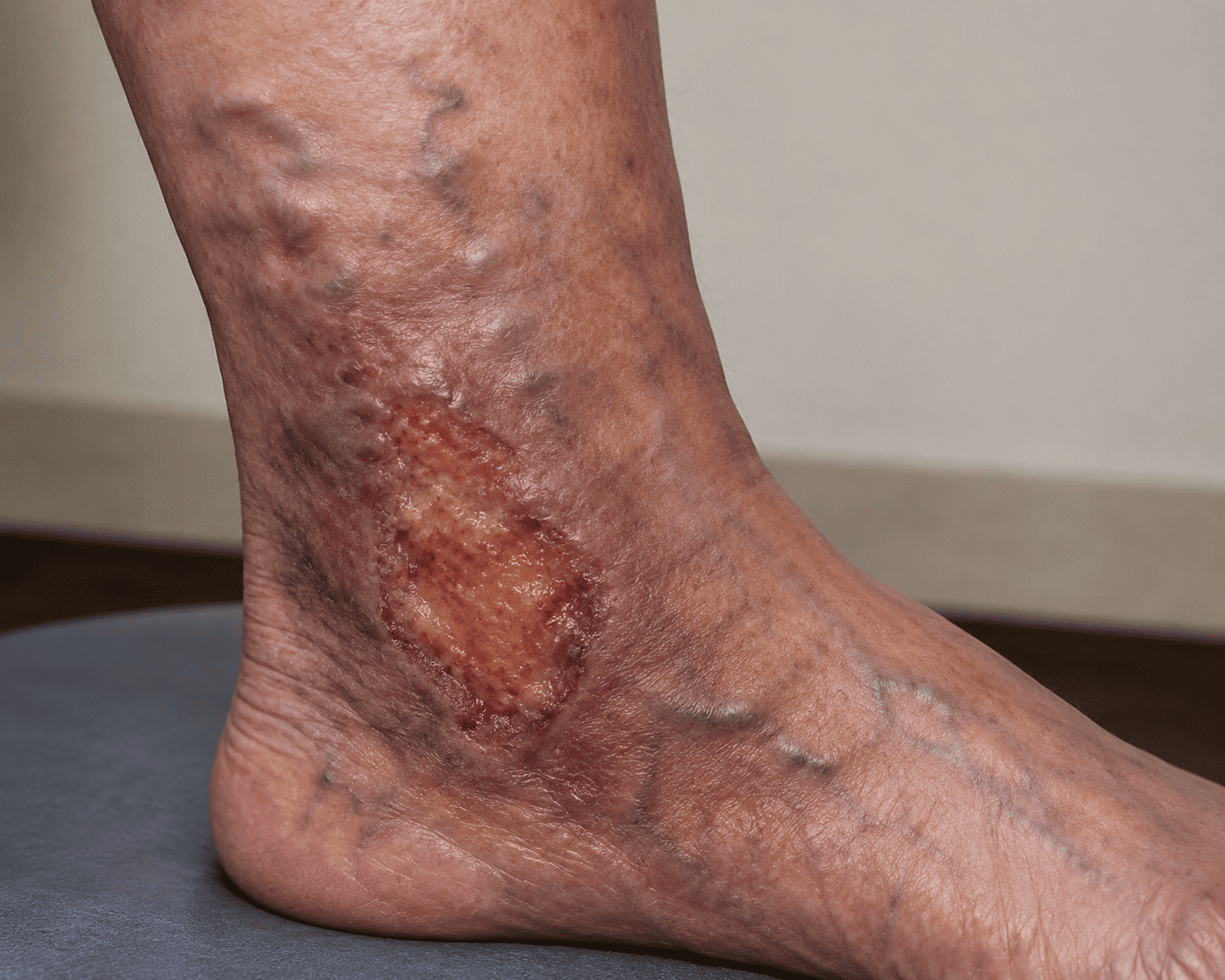
What are Varicose Ulcers?
Varicose ulcers (venous leg ulcers, stasis ulcers) are chronic non-healing wounds typically affecting lower legs resulting from chronic venous insufficiency producing tissue breakdown, persistent drainage, and substantial impact on quality of life.
Definition and characteristics:
- Chronic wounds from chronic venous insufficiency
- Most common chronic wound type globally
- Typically affect lower leg gaiter area
- Substantial recurrence rate (50-70% within 5 years)
- Substantial healing time (months to years)
- Most advanced manifestation of CVI spectrum
- Substantial quality of life impact
Typical location:
- Gaiter area (ankle to mid-calf, particularly medial malleolus)
- Occasionally lateral malleolus
- Rarely above knee
Wound characteristics:
- Shallow with irregular margins
- Substantial exudate
- Granulation tissue (may be unhealthy in chronic cases)
- Surrounding skin changes characteristic of CVI
Surrounding skin changes:
- Hemosiderin deposition (brownish discoloration)
- Lipodermatosclerosis (firm, woody, inverted-champagne-bottle appearance)
- Atrophie blanche (white scarring)
- Varicose eczema (itching, scaling)
- Chronic edema
- Prominent varicose veins
Symptoms:
- Variable pain (often achy/heavy rather than sharp severe)
- Itching often prominent
- Substantial drainage
- Odor in some cases
- Mobility limitations
Pathophysiology:
- Chronic venous insufficiency with valve incompetence
- Chronic venous hypertension
- Capillary changes with leakage
- Inflammatory cascade
- Hemosiderin deposition
- Lipodermatosclerosis
- Tissue breakdown producing ulceration
- Impaired healing from chronic inflammation
- Bacterial colonization
Classification — CEAP:
- C0-C2: Mild venous disease
- C3: Edema
- C4: Skin changes
- C5: Healed ulcer
- C6: Active ulcer
Risk factors:
- Chronic venous insufficiency (foundational)
- Previous varicose veins
- Previous DVT (post-thrombotic syndrome)
- Family history
- Female sex
- Age
- Obesity
- Prolonged standing occupations
- Multiple pregnancies
- Previous trauma
- Lipodermatosclerosis
- Limited ankle mobility
Complications:
- Wound infection (cellulitis)
- Contact dermatitis
- Squamous cell carcinoma in chronic ulcers (rare — Marjolin's ulcer)
- Substantial functional limitations
- Psychological impact
- Chronic pain syndromes
Modern medical management:
Compression therapy (Foundation):
- Multilayer compression bandaging (gold standard)
- Compression stockings
- Intermittent pneumatic compression
Wound care:
- Assessment and monitoring
- Wound bed preparation, debridement when needed
- Appropriate dressings
- Infection management
- Skin care
Treatment of underlying venous disease:
- Endovenous ablation (laser, radiofrequency)
- Sclerotherapy
- Subfascial endoscopic perforator surgery
Adjunctive therapies:
- Pentoxifylline
- Aspirin
- Antibiotics when infected
- Growth factor preparations
- Skin grafts for very large ulcers
- Negative pressure wound therapy
Comprehensive supportive care:
- Pain management
- Edema management
- Mobility programs
- Nutrition optimization
- Comorbidity management
- Psychological support
Understanding Dushta Vrana: The Ayurvedic Root of Varicose Ulcers
The Ayurvedic understanding of varicose ulcers sits within the comprehensive Dushta Vrana ("contaminated/non-healing wound") framework within broader Vrana (wound) framework with substantial classical literature particularly in Sushruta Samhita which provides the most detailed and sophisticated classical wound management framework in Ayurvedic medicine.
Core concepts:
Vrana Framework:
Classical Ayurveda extensively addresses wounds through Sushruta Samhita, providing remarkably detailed framework including wound types, healing stages, therapeutic principles, and specific interventions. The classical Vrana framework represents one of the most sophisticated traditional medical wound care systems globally with substantial relevance to chronic wound management.
Two Major Classical Categories:
- Shuddha Vrana — Clean wounds healing normally
- Dushta Vrana — Contaminated/non-healing wounds — varicose ulcers correspond to this category
Sapta Vidha Vrana Vastu — Seven Wound Examination Parameters:
Classical comprehensive wound assessment:
- Varna (color)
- Gandha (smell)
- Akriti (shape)
- Vedana (pain)
- Srava (discharge)
- Pratisarana (granulation)
- Vrana Marga (extent/depth)
This sophisticated classical assessment framework anticipates modern comprehensive wound assessment.
Vrana Lakshana — Healing Indicators:
Classical recognition of specific signs distinguishing healing wounds from non-healing patterns — anticipating modern wound healing assessment.
Dushta Vrana Lakshana — Non-Healing Wound Features:
Classical signs of chronic non-healing wounds:
- Severe pain
- Excessive discharge
- Foul smell
- Persistent inflammation
- Discolored surrounding tissue
- Various other features
These classical features remarkably correspond to modern chronic wound assessment criteria.
Vata-Pitta-Rakta Predominant Pathology:
Varicose ulcers involve substantial combined doshic vitiation:
- Vata contributes the pain dimensions, irregular healing patterns, chronic dysfunction
- Pitta contributes the inflammatory dimensions, burning, drainage characteristics
- Rakta (blood) is centrally involved given the fundamental venous and tissue-blood dimensions
Specific Recognition of Venous-Related Conditions:
While classical Ayurveda did not have detailed venous anatomy matching modern understanding, the recognition of conditions involving abnormal vessels, chronic lower extremity dysfunction, and chronic non-healing wounds in lower extremities provides framework relevant to modern varicose ulcer understanding. Classical descriptions of conditions with prominent vessels and chronic lower extremity dysfunction informs Ayurvedic approach to venous conditions.
Mamsa-Rakta-Meda Dushti:
Substantial vitiation of:
- Mamsa Dhatu (muscle tissue) — affecting tissue structure
- Rakta Dhatu (blood) — central to venous pathology
- Meda Dhatu (fat tissue) — relating to surrounding tissue changes
Rakta Vaha Srotas Dysfunction:
Classical recognition of "blood-carrying channels" — circulatory system — with dysfunction central to varicose ulcer pathology.
Krimi Considerations:
Classical recognition of microbial contributions to chronic wounds — anticipating modern understanding of bacterial colonization in chronic wounds.
Predisposing Nidana (Causes) Classical Ayurveda Identifies:
- Chronic Vata aggravating factors — prolonged standing, cold exposure, dry foods, irregular patterns
- Pitta aggravating factors — excessive heat, spicy foods, alcohol, inflammatory patterns
- Rakta vitiating factors — specific dietary patterns, lifestyle
- Constitutional predisposition (particularly Vata-Pitta or Vata-Pitta-Kapha vulnerability)
- Trauma to lower extremities
- Aging with progressive Vata aggravation
- Excessive standing or sitting
- Various dietary patterns
- Chronic stress
- Inadequate exercise
Ojas Considerations:
Substantial Ojas Kshaya (vital essence depletion) in chronic non-healing wounds with implications for immune function, tissue healing, and overall constitutional capacity — requiring Rasayana support for sustained healing.
Honest Classical Framework:
Classical Ayurveda recognized that Dushta Vrana requires comprehensive sustained therapeutic approach — not single interventions but systematic comprehensive care including local wound management, systemic constitutional approach, lifestyle integration, and sustained treatment over extended periods. Classical recognition that some chronic wounds require specialized interventions including surgical approaches anticipates modern recognition that severe varicose ulcers may require venous interventions for sustained healing.
This comprehensive understanding shapes the Ayurvedic approach to varicose ulcers: comprehensive Vrana management following classical principles; Vata-Pitta-Rakta combined pacification; Dushta Vrana-specific approach including comprehensive wound cleansing, appropriate medicated oil applications, and sustained internal therapy; Jalaukavacharana (leech therapy) as distinctive classical intervention specifically valuable for venous and chronic wound conditions; Jatyadi Taila as cornerstone wound-healing oil; comprehensive Rakta-shodhaka approach; internal herbal therapy addressing constitutional dimensions; Mamsa-Rakta-Meda Dhatu support; Ojas restoration through Rasayana; comprehensive lifestyle integration; coordination with continued vascular and wound care including essential compression therapy and venous interventions; recognition of chronic nature requiring sustained approach.
The 3 Stages of Ayurvedic Treatment for Varicose Ulcers
Ayurvedic care for Varicose Ulcers follows a carefully sequenced three-stage approach adapted to ulcer characteristics (size, depth, location, duration, infection status), underlying venous disease severity, comorbidities particularly diabetes, prior treatments and response, mobility status, age, and constitutional profile.
1. Preparation (Purva Karma) Comprehensive assessment including detailed ulcer history (duration, prior treatments, prior healing and recurrence patterns), thorough wound assessment using classical Sapta Vidha Vrana Vastu framework integrated with modern wound assessment, underlying venous disease assessment including vascular evaluation essential (Doppler studies for venous incompetence, arterial assessment for ABI to exclude significant arterial disease), prior venous interventions, current treatment including compression therapy, comorbidities particularly diabetes (substantial impact on healing), nutritional status, mobility assessment, current medications including any anticoagulants or antiplatelets, infection assessment, and constitutional profile.
Vascular surgeon/wound specialist coordination essential — sharing treatment approach, continued compression therapy when prescribed, coordination for any venous interventions, ensuring continued specialist monitoring.
Critical screening:
- Arterial assessment essential — ABI (ankle-brachial index) to exclude significant arterial disease that may contraindicate compression therapy and require different management
- Infection assessment — active cellulitis or deep infection requires antibiotic treatment before retreat-based intensive interventions
- Diabetes optimization — HbA1c assessment with optimization before extensive integrative care
- Nutritional status — adequate protein, micronutrients essential for healing
- Suspected malignancy — chronic non-healing wound with unusual features requires biopsy consideration (Marjolin's ulcer concern)
Deepana-Pachana addressing digestive function commonly affected in chronic disease.
Initial constitutional support with foundational Vata-Pitta pacifying approach.
Initial dietary modifications — Anti-inflammatory dietary patterns, adequate protein for tissue healing, adequate micronutrients (vitamin C, zinc, vitamin A for wound healing).
Foundational lifestyle measures — Mobility optimization within tolerance, elevation of affected leg when at rest, smoking cessation absolutely essential (substantial impact on wound healing), alcohol moderation.
Compression therapy continuation — essential foundation for varicose ulcer healing; integrative Ayurvedic care complements but does not replace compression.
2. Core Treatment (Pradhana Karma) Primary therapies focus on five coordinated lines:
Comprehensive Vrana Management with Classical Wound Care:
Classical wound cleansing protocols:
- Triphala Kashayam wash as foundational classical wound cleansing — providing antimicrobial, antioxidant, and tissue-supportive effects through Amalaki, Bibhitaki, Haritaki combination
- Panchavalkala Kashayam (decoction of five barks — Vata, Udumbara, Ashwattha, Parisha, Plaksha) with substantial classical wound-healing reputation
- Neem Kashayam for antimicrobial action
- Yashtimadhu Kashayam for soothing anti-inflammatory effect
- Manjishtha Kashayam for chronic inflammatory dimensions
Jatyadi Taila application — Foundational classical wound-healing oil with substantial classical use and emerging modern evidence specifically for chronic non-healing wounds including varicose ulcers. The formulation contains Jati (Jasminum officinale) as principal ingredient providing antimicrobial and wound-healing properties, combined with Triphala, Karaveera (Nerium indicum), Karanja (Pongamia pinnata), Yashtimadhu (Glycyrrhiza glabra), Haridra (Curcuma longa), Neem, and other specific wound-healing herbs in sesame oil base, providing combined antimicrobial, anti-inflammatory, granulation tissue-promoting, and tissue-supportive properties. Applied multiple times daily as direct wound application providing substantial healing support.
Other medicated oil applications:
- Madhuyashtyadi Taila for additional wound support
- Karanja Taila for antimicrobial effects
- Specific Vata-pacifying oils for surrounding skin
Specific local applications:
- Triphala paste for direct wound application
- Yashtimadhu paste for anti-inflammatory effects
- Madhu (honey) with substantial classical and modern wound healing evidence
- Ghee preparations for specific applications
- Lepa preparations for surrounding skin changes (Manjishtha for hemosiderin deposition, specific Pitta-pacifying preparations)
Wound dressing approach: Coordinated with conventional wound care, classical preparations integrated with modern dressing materials when appropriate.
Jalaukavacharana (Leech Therapy) — Distinctive Classical Intervention:
Jalaukavacharana represents one of the most distinctive and clinically valuable Ayurvedic contributions specifically for chronic venous conditions including varicose ulcers, with substantial classical use in Sushruta Samhita providing detailed protocols for leech selection, application, and management — anticipating modern medicinal leech therapy.
Indication for varicose ulcers:
- Chronic non-healing varicose ulcers with substantial venous component
- Surrounding tissue with chronic stasis dimensions
- Substantial inflammatory dimensions in tissue surrounding ulcer
- Hemosiderin deposition areas
- Lipodermatosclerosis areas in selected applications
Procedure:
- Medicinal leeches (Hirudo medicinalis or appropriate species) applied to selected areas in carefully sterile manner
- Typically 4-6 leeches per session matched to wound size and surrounding tissue area
- Duration approximately 30-60 minutes per session until leech naturally detaches
- Sessions weekly or every 10-14 days depending on response
Mechanism:
- Direct removal of stagnant blood from affected tissues providing immediate venous decompression effect
- Hirudin and other bioactive compounds in leech saliva providing anticoagulant, anti-inflammatory, vasodilatory, and antimicrobial effects
- Substantial modern evidence for medicinal leech therapy in venous conditions
Critical safety considerations:
- Bleeding disorders or anticoagulant therapy — relative or absolute contraindication depending on clinical context
- Severe immunocompromise — careful consideration
- Sterile technique essential
- Leech sourcing from medicinal leech farms with appropriate quality assurance
- Single-use only — never reused between patients
- Expert practitioner training essential
- Appropriate facility infrastructure for safe administration
Modern evidence: Substantial modern clinical evidence for medicinal leech therapy in chronic venous conditions including varicose ulcers, with international recognition including FDA clearance for medicinal leech therapy in specific indications.
Comprehensive Internal Herbal Therapy:
Foundational Rakta-shodhaka (blood-purifying) herbs:
- Manjishtha (Rubia cordifolia) — Foundational Rakta-shodhaka with substantial classical use for chronic skin and venous conditions
- Khadira (Acacia catechu) — Classical Rakta-shodhaka particularly valuable for chronic Rakta-Mamsa conditions
- Sariva (Hemidesmus indicus) — Classical blood purification
- Neem — Antimicrobial and Rakta-shodhaka
- Aragwadha (Cassia fistula) — Classical chronic disease support
Venous-supportive herbs:
- Triphala — Foundational antioxidant, antimicrobial, gentle action
- Guggulu preparations — Anti-inflammatory and tissue-supportive
- Punarnava (Boerhavia diffusa) — Anti-inflammatory and diuretic particularly valuable for edema dimensions
Tissue-supportive herbs:
- Ashwagandha — Constitutional support and tissue strengthening
- Bala (Sida cordifolia) — Classical tissue-strengthening
- Shatavari — Tissue-supportive
- Yashtimadhu — Comprehensive support
Anti-inflammatory herbs:
- Haridra (Turmeric) — Comprehensive anti-inflammatory
- Guduchi (Tinospora cordifolia) — Anti-inflammatory and immunomodulatory
- Shallaki (Boswellia serrata) — Anti-inflammatory
Classical formulations:
- Mahamanjishthadi Kashayam — Comprehensive Rakta-shodhaka decoction with substantial chronic wound applications
- Khadirarishtam — Foundational fermented preparation for chronic skin and tissue conditions
- Sarivadyasava — Specific blood purification
- Manjishthadi Kashayam — Comprehensive support
- Kaishore Guggulu — Comprehensive chronic inflammatory support
- Triphala Guggulu — Combined Triphala-Guggulu actions
- Punarnavadi Guggulu — For chronic edema and inflammatory dimensions
- Saptavinshati Guggulu — Specific chronic disease applications
- Mahatiktaka Ghrita — Bitter ghee preparation for inflammatory dimensions
- Specific combinations matched to Vata-Pitta-Rakta predominance
Comprehensive Constitutional Approach with Specific Wound-Healing Nutritional Support:
Anti-inflammatory dietary pattern with wound-healing emphasis:
- Adequate protein essential for tissue healing (1.0-1.5g/kg body weight)
- Adequate micronutrients essential for wound healing — vitamin C (citrus, amla, berries, leafy greens), zinc (pumpkin seeds, nuts, seeds, legumes), vitamin A (orange/yellow vegetables, leafy greens), B vitamins, copper, iron
- Anti-inflammatory foods — turmeric, ginger, leafy greens, fatty fish, olive oil
- Mediterranean-pattern integration with substantial evidence
- Adequate hydration essential
- Regular meal timing
Specific foods supporting wound healing:
- Amla (Indian gooseberry) with substantial vitamin C content and antioxidant properties
- Aloe vera with internal wound-healing effects
- Garlic for antimicrobial and circulation support
- Ginger for circulation and anti-inflammatory
- Turmeric comprehensive support
Foods to avoid:
- Excessive processed foods
- Excessive simple sugars (substantial impact on healing particularly in diabetics)
- Excessive saturated fats
- Excessive alcohol (substantial impact on healing)
- Specific individual triggers
- Inflammatory dietary patterns
Comprehensive Lifestyle Integration and Coordination with Continued Vascular Care:
Compression therapy continuation essential — foundational to varicose ulcer healing; Ayurvedic care strictly complements compression which must be continued as prescribed by vascular team.
Leg elevation — Substantial impact on venous return and edema; elevation above heart level for periods throughout day.
Mobility and exercise programs:
- Walking as foundational venous-supportive activity
- Calf muscle pump exercises — specific exercises activating calf muscles to support venous return
- Ankle mobility exercises — substantial impact on calf muscle pump function
- Avoiding prolonged standing or sitting with regular movement breaks
- Specific yoga adapted to needs
Specific yoga and pranayama:
- Viparita Karani (legs up the wall pose) for venous return support
- Pavanamuktasana
- Gentle ankle and calf exercises
- Pranayama for autonomic regulation
Smoking cessation absolutely essential — substantial impact on wound healing through multiple mechanisms.
Weight management — substantial impact on venous insufficiency and wound healing.
Stress management affecting wound healing through immune and inflammatory dimensions.
Sleep optimization — quality sleep essential for tissue healing.
Diabetes management if present — substantial impact on wound healing; HbA1c target <8% with comprehensive integrative diabetes care alongside continued endocrinology.
Coordination with Continued Vascular and Wound Care:
- Continued compression therapy as prescribed
- Continued wound assessment by wound care team
- Coordination for venous interventions when appropriate (endovenous ablation, sclerotherapy, surgical approaches)
- Continued monitoring for healing progression
- Antibiotic coordination when infection develops
- Specialized wound care coordination for complex cases
3. Rejuvenation (Paschat Karma) Sustained constitutional support, continued compression therapy essential for recurrence prevention (compression stockings typically lifelong for varicose ulcer history), continued lifestyle modifications particularly mobility and weight management, continued herbal therapy with maintenance Manjishtha-led preparations and constitutional support, substantial focus on recurrence prevention given 50-70% recurrence rate even after healing, continued vascular care coordination, periodic clinical follow-up, and recognition that varicose ulcer management is long-term given chronic underlying venous insufficiency requiring sustained comprehensive approach.
The 5 Core Therapies for Varicose Ulcers Explained
1. Comprehensive Vrana Management with Jatyadi Taila as Cornerstone Wound-Healing Therapy Comprehensive classical Vrana management with Jatyadi Taila as cornerstone wound-healing therapy represents the most clinically valuable Ayurvedic intervention for varicose ulcers with substantial classical use across centuries and emerging modern clinical evidence specifically for chronic non-healing wounds. Jatyadi Taila is the classical medicated oil with substantial reputation for chronic wound healing, containing Jati (Jasminum officinale) as principal ingredient providing antimicrobial and wound-healing properties, combined with Triphala (Amalaki, Bibhitaki, Haritaki), Karaveera (Nerium indicum), Karanja (Pongamia pinnata), Yashtimadhu (Glycyrrhiza glabra), Haridra (Curcuma longa), Neem, Madhuyashti, and other specific wound-healing herbs in sesame oil base prepared through classical methodology providing combined antimicrobial, anti-inflammatory, granulation tissue-promoting, and tissue-supportive properties. Application technique: Gentle application to ulcer area multiple times daily (typically 3-4 times) after wound cleansing; appropriate dressing coordination with conventional wound care. Comprehensive Vrana management following classical Sapta Vidha Vrana Vastu (seven wound examination parameters) framework — sophisticated assessment integrating with modern wound assessment. Classical wound cleansing protocols: Triphala Kashayam wash providing antimicrobial, antioxidant, and tissue-supportive effects; Panchavalkala Kashayam with substantial classical wound-healing reputation; Neem Kashayam for antimicrobial action; Yashtimadhu Kashayam for soothing anti-inflammatory effect. Other classical applications: Madhuyashtyadi Taila for additional support; Triphala paste, Yashtimadhu paste, Madhu (honey) with substantial classical and modern wound healing evidence; Manjishtha Lepa for surrounding hemosiderin areas. Combined with conventional compression therapy: Ayurvedic local wound therapy integrates with essential compression bandaging or compression stockings which remain foundation of varicose ulcer healing. Modern evidence: Multiple published clinical studies support Jatyadi Taila and classical wound care for chronic wounds with outcomes comparable to or sometimes better than conventional dressings, with substantial advantages including substantial classical safety record, accessibility, cost-effectiveness, and broader supportive effects. WellnessLoka centres provide authentic Jatyadi Taila and comprehensive classical wound management.
2. Jalaukavacharana (Leech Therapy) as Distinctive Classical Intervention Jalaukavacharana (medicinal leech therapy) represents one of the most distinctive and clinically valuable Ayurvedic contributions specifically for chronic venous conditions including varicose ulcers, with substantial classical use detailed in Sushruta Samhita and substantial modern clinical evidence supporting medicinal leech therapy in venous conditions including international recognition with FDA clearance for medicinal leech therapy in specific indications. Procedure: Medicinal leeches (Hirudo medicinalis or appropriate species) applied to selected areas in carefully sterile manner; typically 4-6 leeches per session matched to wound size and surrounding tissue area; duration approximately 30-60 minutes per session until leech naturally detaches; sessions weekly or every 10-14 days depending on response with treatment course typically 4-8 sessions over weeks to months. Mechanism: Direct removal of stagnant blood from affected tissues providing immediate venous decompression effect substantially valuable for chronic venous stasis; Hirudin (anticoagulant) and other bioactive compounds in leech saliva providing anticoagulant, anti-inflammatory, vasodilatory, antimicrobial, and analgesic effects with substantial modern characterization; substantial modern evidence for medicinal leech therapy in venous conditions, chronic wounds, and various indications. Specific applications for varicose ulcers: chronic non-healing varicose ulcers with substantial venous component; surrounding tissue with chronic stasis dimensions; substantial inflammatory dimensions in tissue surrounding ulcer; hemosiderin deposition areas; lipodermatosclerosis areas in selected applications; particularly valuable for refractory ulcers not responding to conventional treatment alone. Critical safety considerations: Bleeding disorders or anticoagulant therapy — relative or absolute contraindication depending on clinical context; severe immunocompromise — careful consideration; sterile technique essential; leech sourcing from medicinal leech farms with appropriate quality assurance and disease screening; single-use only — never reused between patients; expert practitioner training essential; appropriate facility infrastructure for safe administration; post-procedure care for bleeding management. Combined with comprehensive integrative approach: Jalaukavacharana provides intensive intervention complementing comprehensive local Vrana management, internal herbal therapy, compression therapy, and broader integrative care. WellnessLoka Kerala centres offering Jalaukavacharana provide expert practitioner training, sterile facility infrastructure, and medicinal leech sourcing meeting international quality standards.
3. Comprehensive Internal Herbal Therapy with Manjishtha-Led Rakta-Shodhaka Approach Comprehensive internal herbal therapy addressing the substantial Rakta Dushti (blood vitiation) and broader chronic dimensions of varicose ulcer pathology provides foundational systemic support that complements local wound interventions. Manjishtha (Rubia cordifolia) as foundational Rakta-shodhaka with substantial classical use for chronic skin and venous conditions and emerging modern interest — provides comprehensive blood-purifying effects, anti-inflammatory action, and broader supportive properties. Standard administration includes Manjishtha Churna 3-5g twice daily, Manjishthadi Kashayam, or in classical formulations. Combined Rakta-shodhaka approach: Khadira (Acacia catechu) as classical Rakta-shodhaka particularly valuable for chronic Rakta-Mamsa conditions; Sariva (Hemidesmus indicus) for classical blood purification; Neem (Azadirachta indica) for antimicrobial and Rakta-shodhaka effects; Aragwadha (Cassia fistula) for classical chronic disease support. Venous-supportive herbs: Triphala as foundational antioxidant and gentle action; Punarnava (Boerhavia diffusa) with anti-inflammatory and diuretic effects particularly valuable for chronic edema; Guggulu preparations for anti-inflammatory and tissue support. Tissue-supportive herbs: Ashwagandha for constitutional support and tissue strengthening; Bala (Sida cordifolia) for classical tissue-strengthening; Shatavari for tissue support; Yashtimadhu for comprehensive support. Anti-inflammatory herbs: Haridra (Turmeric) for comprehensive anti-inflammatory effects; Guduchi (Tinospora cordifolia) for anti-inflammatory and immunomodulatory effects; Shallaki (Boswellia serrata) for anti-inflammatory effects. Classical formulations: Mahamanjishthadi Kashayam as comprehensive Rakta-shodhaka decoction with substantial chronic wound applications; Khadirarishtam as foundational fermented preparation for chronic skin and tissue conditions; Sarivadyasava for specific blood purification; Kaishore Guggulu for comprehensive chronic inflammatory support; Triphala Guggulu for combined actions; Punarnavadi Guggulu for chronic edema and inflammatory dimensions; Saptavinshati Guggulu for specific chronic disease applications; Mahatiktaka Ghrita for inflammatory dimensions. Sustained therapy over months providing comprehensive constitutional support alongside local wound interventions and conventional vascular care.
4. Comprehensive Constitutional Approach with Wound-Healing Nutritional Support Comprehensive constitutional approach with specific wound-healing nutritional support addresses the fundamental tissue-healing requirements through Vata-Pitta pacification and specific nutritional optimization. Anti-inflammatory dietary pattern with wound-healing emphasis: Adequate protein essential for tissue healing (1.0-1.5g/kg body weight typically; higher for active wound healing) — appropriate lean meats if consumed, fish, eggs, legumes, dairy if tolerated, nuts and seeds; adequate micronutrients essential for wound healing — vitamin C (citrus fruits, amla which has highest vitamin C content classically, berries, leafy greens, kiwi, peppers); zinc (pumpkin seeds particularly valuable, nuts, seeds, legumes, whole grains); vitamin A (orange/yellow vegetables — carrots, sweet potato, pumpkin; leafy greens); B vitamins including B12, folate; copper, iron; anti-inflammatory foods — turmeric with substantial wound-healing evidence, ginger, garlic for antimicrobial and circulation, leafy greens, fatty fish for omega-3 fatty acids, olive oil; Mediterranean-pattern integration with substantial evidence for chronic disease and wound healing; adequate hydration essential (2-3 liters water daily). Specific Ayurvedic foods supporting wound healing: Amla (Indian gooseberry) with substantial vitamin C and Rasayana effects; aloe vera with internal wound-healing effects; garlic for antimicrobial and circulation; ghee in moderate quantities for tissue support; whole grains; adequate cooked vegetables; specific spices including turmeric, ginger, cumin, coriander. Constitutional adaptations based on individual Vata-Pitta-Rakta patterns. Foods to avoid: excessive processed foods with multiple negative impacts; excessive simple sugars with substantial impact on healing particularly in diabetics; excessive saturated fats; excessive alcohol with substantial impact on wound healing through multiple mechanisms; specific individual triggers; inflammatory dietary patterns. Comprehensive Vata-Pitta pacifying lifestyle integration: adequate rest balanced with appropriate mobility; warm comfortable environment; regular daily routine; adequate sleep; stress management; smoking cessation absolutely essential given substantial wound healing impact. WellnessLoka programs integrate comprehensive wound-healing nutritional support.
5. Comprehensive Lifestyle Integration with Mobility, Compression, and Coordination with Continued Vascular Care Comprehensive lifestyle integration with critical attention to continued compression therapy, mobility optimization, and coordination with continued vascular care provides foundation for both immediate wound healing and sustained recurrence prevention. Compression therapy continuation absolutely essential — foundation of varicose ulcer healing with substantial evidence; multilayer compression bandaging during active ulcer phase (4-layer compression most common); compression stockings (typically 30-40 mmHg for varicose ulcer history) continued long-term often lifelong for recurrence prevention; integrative Ayurvedic care strictly complements compression which must be continued as prescribed by vascular team. Leg elevation — substantial impact on venous return and edema; elevation above heart level for 15-30 minute periods 3-4 times daily; elevation during sleep when possible. Mobility and exercise programs: Walking as foundational venous-supportive activity — 30-45 minutes daily with substantial documented benefits for venous return through calf muscle pump activation; specific calf muscle pump exercises activating muscles that propel blood up through venous system; ankle mobility exercises substantial impact on calf muscle pump function; avoiding prolonged standing or sitting with regular movement breaks; specific yoga adapted to needs. Specific yoga and pranayama for varicose ulcers: Viparita Karani (legs up the wall pose) particularly valuable for venous return support; Pavanamuktasana; gentle ankle and calf exercises; specific seated and supine poses supporting venous return; avoiding poses that worsen venous return (prolonged standing poses during active disease); pranayama for autonomic regulation supporting circulation. Smoking cessation absolutely essential — substantial impact on wound healing through multiple mechanisms including reduced tissue oxygenation, impaired immune function, oxidative stress effects; comprehensive cessation support. Weight management — substantial impact on venous insufficiency and wound healing; gradual sustainable weight loss preferred. Stress management affecting wound healing through immune and inflammatory dimensions — comprehensive integrated approach. Sleep optimization essential for tissue healing; addressing pain or discomfort affecting sleep. Diabetes management if present — substantial impact on wound healing; HbA1c target <8% with comprehensive integrative diabetes care alongside continued endocrinology coordination. Coordination with Continued Vascular and Wound Care essential: Continued compression therapy as prescribed; continued wound assessment by wound care team; coordination for venous interventions when appropriate including endovenous ablation (laser, radiofrequency), sclerotherapy, surgical procedures — substantial evidence that early venous intervention accelerates healing and reduces recurrence; continued monitoring for healing progression; antibiotic coordination when infection develops; specialized wound care coordination for complex cases; continued primary care and comorbidity management essential. Long-term recurrence prevention framework: Given 50-70% recurrence rate even after healing, sustained comprehensive approach essential — continued compression typically lifelong for varicose ulcer history; continued mobility programs; continued weight management; continued integrative care with periodic retreat visits; continued vascular care follow-up. WellnessLoka programs emphasize comprehensive recurrence prevention.
How Long Should an Ayurvedic Treatment Program for Varicose Ulcers Last?
| Duration | Therapeutic Benefit |
| 7–14 days | Initial protocols, established Jatyadi Taila wound care, foundational interventions |
| 14–21 days | Comprehensive constitutional support, Jalaukavacharana sessions, extended therapy |
| 21–28 days | Extended program for substantial wound healing progress and constitutional rebuilding |
| 4–8 weeks | Complete intensive treatment with Jalaukavacharana sequence and sustained therapy |
The exact duration is decided after consultation with the Ayurvedic doctor in coordination with continued vascular and wound care, based on ulcer size and depth, duration of non-healing, underlying venous disease severity, comorbidities, response to interventions, and individual factors. Initial intensive retreat 14-28 days providing comprehensive foundation. Extended treatment 4-8 weeks for substantial wound healing in chronic cases. Continued home regimen essential with sustained compression therapy and lifestyle integration. Periodic retreat visits annually for recurrence prevention. Recognition that varicose ulcer management is long-term given chronic underlying venous insufficiency with substantial recurrence rate requiring sustained comprehensive approach alongside continued vascular care.
Book Consultation
Benefits of an Ayurvedic Treatment Retreat for Varicose Ulcers
| Physical Benefits | Functional Benefits | Long-Term Impact | ||
| Improved wound healing | Better mobility and daily function | Sustained healing maintenance | ||
| Reduced wound size and exudate | Reduced pain and discomfort | Reduced recurrence risk through integrated approach | ||
| Better surrounding skin condition |
|
Better long-term venous health framework | ||
| Better overall vitality |
|
Comprehensive integrative care framework |
Why Kerala is the Best Place for Varicose Ulcers Treatment
An Ayurvedic Varicose Ulcers treatment retreat in Kerala, India offers the most clinically authentic environment for comprehensive Dushta Vrana care this complex chronic wound condition fundamentally benefits from.
- Experienced physicians with specific expertise in Dushta Vrana framework and the classical wound management tradition particularly the comprehensive Sushruta Samhita wound care framework
- BAMS and MD Ayurveda-certified doctors with specialised training in chronic wound management and venous conditions
- Specialised practitioner training in Jalaukavacharana (leech therapy) — the distinctive Ayurvedic intervention specifically valuable for chronic venous conditions including varicose ulcers, requiring specific expertise and sterile facility infrastructure
- Medicinal leech sourcing from quality-assured medicinal leech farms meeting international standards essential for safe Jalaukavacharana
- Specialised expertise in classical Vrana management including Sapta Vidha Vrana Vastu (seven wound examination parameters) framework
- Authentic in-house preparation of classical wound-healing oils — Jatyadi Taila (the cornerstone wound-healing oil), Madhuyashtyadi Taila, Karanja Taila, specific Vata-pacifying oils — using authentic methods and fresh herbs
- Authentic in-house preparation of classical wound cleansing decoctions — Triphala Kashayam, Panchavalkala Kashayam, Neem Kashayam, Yashtimadhu Kashayam, Manjishtha Kashayam
- Authentic in-house preparation of classical chronic wound formulations — Mahamanjishthadi Kashayam, Khadirarishtam, Sarivadyasava, Manjishthadi Kashayam, Kaishore Guggulu, Triphala Guggulu, Punarnavadi Guggulu, Saptavinshati Guggulu, Mahatiktaka Ghrita — using authentic methods
- Proper facilities for comprehensive Vrana management including sterile wound care infrastructure, appropriate Jalaukavacharana facilities, and clinical monitoring capabilities
- Capacity for integrated care addressing the multidimensional needs of chronic wound management
- Long-established Kerala tradition of comprehensive Dushta Vrana and chronic wound Ayurveda
- Capacity for compression therapy coordination essential given foundational role of compression in varicose ulcer healing
- Coordination capability with continued vascular and wound care including venous intervention coordination
- Capacity for integrated comorbidity management particularly diabetes management given substantial impact on wound healing
- Senior-friendly accommodation for older varicose ulcer patients
- Easy mobility access for patients with mobility limitations from active ulcers
- Capacity for sustained long-term care relationships through chronic condition management with substantial recurrence rate
- Capacity for comprehensive lifestyle integration including mobility programs, weight management, and dietary protocols
- Discretion appropriate for chronic wound patients with substantial psychological dimensions
Sri Lanka offers complementary tropical healing environment with Ayurvedic expertise in chronic wound conditions, while Bali provides wellness-oriented treatment retreats integrating Ayurvedic care with holistic wellness particularly valuable for post-healing maintenance phases and broader lifestyle integration. For specialised Dushta Vrana Ayurveda with comprehensive Jalaukavacharana expertise, authentic Jatyadi Taila preparation, and integrated chronic wound management framework, Kerala offers the deepest tradition.
Varicose Ulcers Treatment Retreats by Location and Recommended Centres
Kerala, India — The most clinically authentic destination for classical chronic wound Ayurvedic care with established Dushta Vrana tradition including specialised Jalaukavacharana capability essential for varicose ulcers, authentic preparation of Jatyadi Taila and classical wound-healing oils, comprehensive Sushruta-based wound management framework, authentic Mahamanjishthadi Kashayam and chronic wound formulation preparation, compression therapy coordination capability, and the deepest tradition of comprehensive Vrana management. Alleppey • Kovalam • Kumarakom • Wayanad • Palakkad
Sri Lanka — Coastal Ayurveda treatment retreats with comprehensive supportive care for chronic wound conditions in serene tropical environment suited to extended treatment programs. Wadduwa • Weligama • Sigiriya • Kosgoda • Bentota
Bali, Indonesia — Wellness treatment retreats integrating Ayurvedic care with holistic wellness restructuring, particularly valuable for post-healing maintenance phases and broader lifestyle integration for recurrence prevention. Ubud • Nusa Dua • Candidasa • Lovina
WellnessLoka connects you with verified centres across these destinations offering genuine Dushta Vrana expertise, comprehensive Jalaukavacharana capability with appropriate safety protocols and medicinal leech sourcing, authentic Jatyadi Taila and classical wound-healing formulation preparation, integrated compression therapy coordination, integrated diabetes management capability, willingness to coordinate with continued vascular care including venous intervention coordination, and clear understanding of the integrative role alongside continued conventional management essential including compression therapy.
Who Should Consider an Ayurvedic Varicose Ulcers Treatment Retreat
Patients with non-healing varicose ulcers despite optimal conventional treatment — Those with chronic ulcers persisting >3-6 months despite appropriate compression therapy and wound care, seeking comprehensive integrative approach for refractory cases.
Patients with recurrent varicose ulcers — Those experiencing recurrence despite previous healing, seeking comprehensive approach addressing underlying venous disease and constitutional dimensions for sustainable healing.
Patients seeking comprehensive integrative approach — Combined conventional and Ayurvedic care for complex chronic wound management.
Patients with substantial pain dimensions — Comprehensive integrative pain support alongside continued pain management.
Patients with substantial itching and dermatitis dimensions — Comprehensive integrative skin support for varicose eczema and surrounding skin changes.
Patients with associated diabetes — Combined Madhumeha-aware approach with substantial impact on wound healing given diabetes-wound healing interactions.
Patients with substantial Vata-Pitta predominance — Constitutional approach matched to individual patterns.
Patients post-venous intervention seeking healing support — Comprehensive recovery support after endovenous ablation, sclerotherapy, or surgical procedures alongside continued vascular care.
Patients with substantial quality of life impact — Comprehensive integrative approach addressing physical, psychological, and broader dimensions.
Patients seeking constitutional approach — Comprehensive Ayurvedic framework for venous health and tissue recovery.
Patients with chronic stress contributing to wound healing — Comprehensive stress management integration.
Patients with multiple comorbidities affecting wound healing — Holistic integrative approach.
Patients with substantial recurrence prevention needs — Comprehensive integrative approach for sustained healing maintenance given 50-70% recurrence rate.
Patients with substantial elderly populations seeking integrative approach — Comprehensive care appropriate for older varicose ulcer patients.
Patients seeking long-term integrative philosophy — Holistic approach to chronic venous insufficiency management.
Who Should Approach Treatment with Caution
Ayurvedic care for Varicose Ulcers is genuinely valuable but appropriate medical evaluation and continued vascular/wound care coordination are essential. A thorough consultation is essential, and Ayurvedic retreat-based care should be deferred or replaced by urgent specialist care in cases involving:
Active severe wound infection (cellulitis, deep infection, sepsis) — Requires antibiotic treatment and possibly hospitalization before retreat-based intensive interventions.
Significant arterial disease — ABI <0.8 may contraindicate compression therapy and require different management; arterial evaluation essential before retreat-based care.
Suspected malignancy in chronic non-healing wound — Chronic non-healing wound with unusual features (irregular borders, rolled edges, raised areas, atypical appearance) requires biopsy consideration before extensive treatment (Marjolin's ulcer concern).
Mixed arterial-venous ulcers with significant arterial component — Require modified approach with reduced compression and specific considerations.
Suspected DVT — Acute DVT requires anticoagulation and urgent vascular evaluation; symptoms suggesting acute DVT (sudden swelling, severe pain, calf tenderness) require urgent care.
Pulmonary embolism risk or suspicion — Requires urgent medical care.
Severe diabetes with poor glycemic control — HbA1c >10% benefits substantially from diabetes optimization before extensive integrative care.
Patients with bleeding disorders or on substantial anticoagulation — Require careful coordination particularly for Jalaukavacharana (leech therapy) which may be contraindicated.
Patients on anticoagulants requiring Jalaukavacharana consideration — Specific careful coordination essential or alternative approaches.
Severe immunocompromise — Careful consideration for Jalaukavacharana and overall infection risk.
Severe untreated comorbidities — Significant cardiovascular disease, severe respiratory disease, or other significant medical conditions require stabilisation.
Active substance use affecting wound healing — Particularly alcohol with substantial impact on wound healing.
Patients unwilling to commit to compression therapy — Critical limitation — varicose ulcer healing fundamentally requires compression; patients unable to use compression have substantially limited outcomes regardless of additional interventions.
Patients unwilling to address contributing factors — Continued smoking, refusal to address obesity, refusal of mobility programs substantially limits outcomes.
Patients with unrealistic expectations — Honest counselling about realistic timeline (months for healing typically), recurrence risk despite optimal treatment, and importance of long-term comprehensive management.
Patients without vascular evaluation — Should have appropriate vascular evaluation including Doppler studies and ABI before retreat-based care.
Patients with severe untreated psychiatric conditions — May require mental health stabilization given substantial psychological dimensions of chronic wounds.
Choosing the Right Treatment Retreat for Varicose Ulcers
Qualified physicians with Dushta Vrana expertise — BAMS or MD Ayurveda-credentialed doctors with specialised training in chronic wound management and venous conditions — not general Ayurvedic practitioners but those with documented chronic wound treatment experience.
Specialised practitioner training in Jalaukavacharana (leech therapy) — For centres offering this distinctive therapy; including proper sterile technique, medicinal leech management, and post-procedure care expertise.
Medicinal leech sourcing from quality-assured farms — Essential for safe Jalaukavacharana; leeches from medicinal leech farms with appropriate disease screening, not collected from wild sources.
Authentic in-house Jatyadi Taila preparation — Following classical methodology with appropriate quality control essential given cornerstone role.
Authentic in-house herbal preparations — Including the comprehensive chronic wound formulations particularly Mahamanjishthadi Kashayam, Khadirarishtam, and broader Rakta-shodhaka formulations with quality assurance.
Proper infrastructure — Including appropriate sterile wound care facilities, Jalaukavacharana capability where offered, and clinical monitoring infrastructure.
Capacity for compression therapy coordination — Essential given foundational role of compression in varicose ulcer healing.
Coordination capability with continued vascular and wound care — Essential for proper integration including venous intervention coordination, antibiotic coordination when needed, and continued specialist monitoring.
Capacity for integrated comorbidity management — Particularly diabetes management given substantial impact on wound healing.
Senior-friendly accommodation — Essential for older varicose ulcer patients.
Easy mobility access — Essential for patients with mobility limitations from active ulcers.
Capacity for sustained long-term care relationships — Recognising chronic nature with substantial recurrence rate.
Discretion and sensitivity — Essential given personal nature of chronic wound conditions and substantial psychological dimensions.
Honest framing — Centres clearly understanding integrative role and recognizing essential continued conventional care including compression therapy.
Clear continuity-of-care planning — Detailed home regimens, continued compression coordination, ongoing care guidance for long-term management.
How WellnessLoka Helps You Choose the Right Ayurveda Treatment Retreat for Varicose Ulcers
Choosing the right treatment retreat for Varicose Ulcers benefits enormously from genuine guidance. Varicose ulcers represent complex chronic wound conditions with substantial individual variation in severity, duration, underlying venous disease, comorbidities, and response to treatment — and the right program depends on accurate identification of the specific Dushta Vrana pattern and matching to centres with genuine chronic wound and venous condition Ayurveda expertise particularly Jalaukavacharana capability where appropriate. WellnessLoka exists to ensure that patients can make this decision with full information, genuine guidance, complete sensitivity to chronic wound dimensions, and complete confidence.
Access to Verified Retreat Centres Every centre listed on WellnessLoka for Varicose Ulcers treatment has been independently assessed for physician credentials, clinical experience with chronic wounds and Dushta Vrana, depth of expertise in the full range of varicose ulcer-specific therapies including comprehensive Vrana management following classical Sushruta Samhita framework with Sapta Vidha Vrana Vastu assessment, specialised Jalaukavacharana (leech therapy) capability where offered with appropriate safety protocols, medicinal leech sourcing from quality-assured farms, and sterile facility infrastructure essential for this distinctive intervention, authentic Jatyadi Taila preparation following classical methodology essential given cornerstone role of this wound-healing oil, authentic preparation of Mahamanjishthadi Kashayam, Khadirarishtam, Sarivadyasava, Kaishore Guggulu, Punarnavadi Guggulu, and classical chronic wound formulations, capacity for compression therapy coordination essential given foundational role of compression in varicose ulcer healing, senior-friendly accommodation essential for older varicose ulcer patients, easy mobility access essential for patients with active ulcers, integrated diabetes management capability given substantial impact on wound healing, capacity for sustained long-term care relationships through chronic condition management with substantial recurrence rate, willingness to coordinate with continued vascular and wound care including venous intervention coordination, and clear understanding of the integrative role alongside continued conventional management including essential compression therapy. We list only centres where chronic wound and Dushta Vrana protocols are genuinely practised with classical depth and where Jalaukavacharana (where offered) meets specialised training and safety standards.
Free Pre-Retreat Consultation with Our Ayurvedic Doctor Before you choose a retreat, WellnessLoka offers a complimentary consultation with our in-house Ayurvedic consultant. This consultation reviews your specific varicose ulcer context (ulcer duration, size, location, depth, prior healing and recurrence patterns, prior treatments and response), prior vascular evaluation including Doppler studies and ABI essential before retreat-based care, underlying venous disease severity and any previous interventions (endovenous ablation, sclerotherapy, surgical procedures), current compression therapy use, comorbidities particularly diabetes (substantial impact on wound healing), nutritional status, mobility status, current medications including any anticoagulants or antiplatelets (important consideration for Jalaukavacharana candidacy), infection assessment, and constitutional profile. A critical part of this consultation is screening for any features warranting urgent specialist evaluation including active severe infection, significant arterial disease (ABI <0.8 may contraindicate compression), suspected malignancy in chronic non-healing wound, suspected DVT, or other concerning features that may make retreat-based care inappropriate currently. Also critical assessment of Jalaukavacharana candidacy — determining whether this distinctive therapy is appropriate for your specific clinical scenario or whether alternative approaches better suit your situation. Based on the assessment, we match you with the retreat centre and program duration best suited for your specific clinical context. It is purely a guidance consultation to help you make an informed decision before you travel.
Transparent Centre Comparison WellnessLoka provides clear, honest information about each listed centre — physician qualifications, Jalaukavacharana capability and safety protocols where offered, Jatyadi Taila and classical formulation preparation, compression therapy coordination capability, accommodation including senior-friendly features and mobility accessibility, therapy protocols, program structure, monitoring capabilities, and pricing — allowing you to compare options across Kerala, Sri Lanka, and Bali with full clarity and confidence.
Best Price Guarantee Through our strong, long-standing relationships with partner centres, you benefit from exclusive partner pricing that is always lower than booking directly. You receive the most authentic care for your Varicose Ulcers treatment program without paying more for it.
Retreats for Every Budget From luxury wellness resorts to affordable, authentic healing centres, WellnessLoka helps you find a Varicose Ulcers treatment retreat that aligns perfectly with your comfort level and budget — without ever compromising on the specialised Dushta Vrana and Jalaukavacharana expertise this condition fundamentally benefits from.
Treatment is in Expert Hands Once you arrive at your chosen retreat, your Varicose Ulcers treatment program is fully designed and managed by the qualified Ayurvedic physicians at that centre. From your first in-person consultation onwards, all clinical decisions, daily monitoring, therapeutic adaptation, and medical management are guided by experienced doctors on the ground — physicians with deep training in Dushta Vrana management and direct, hands-on familiarity with the specialised classical wound therapies your program involves including Jatyadi Taila application, Jalaukavacharana where indicated, and the broader comprehensive Vrana management framework. Your treatment unfolds under continuous, qualified supervision with appropriate sensitivity to the chronic wound dimensions and coordination with continued vascular care.
Local Support Team Our on-ground experts assist you at every step, from your first enquiry through to the completion of your retreat — resolving any issues that arise and ensuring your entire Varicose Ulcers healing journey runs smoothly and safely, with appropriate sensitivity to mobility considerations and chronic wound care needs.
End-to-End Booking Support From your first enquiry to confirmed booking, WellnessLoka provides full administrative and logistical support with appropriate sensitivity to chronic wound patient needs — ensuring a smooth, stress-free process so that you can focus entirely on preparing for your healing program.
Why Travellers Trust WellnessLoka WellnessLoka is rated 4.9? on Google, with verified reviews from wellness travellers who have experienced authentic Ayurveda healing through us. We are trusted by hundreds of travellers from 28+ countries across Europe, the Americas, Asia, Australia, and Africa, backed by over a decade of expertise in curating authentic Ayurveda retreats across trusted centres. Our dedicated support team is available 24×7 to assist you before, during, and after your Varicose Ulcers treatment retreat with appropriate sensitivity to chronic wound management complexity.
Begin Your Healing Journey
Varicose ulcers represent one of the most clinically challenging and quality-of-life-affecting chronic wound conditions globally, with substantial impact through prolonged healing times often spanning months to years, recurrence rates of 50-70% within 5 years, substantial economic burden, and profound effects on mobility, employment, social participation, sleep, and broader wellbeing. The condition is the most advanced manifestation of chronic venous insufficiency, making varicose ulcers fundamentally a complication of underlying venous disease that must be addressed for sustainable healing. Modern vascular medicine has substantially advanced with comprehensive evidence-based framework including compression therapy as foundation of treatment, comprehensive wound care, treatment of underlying venous disease through endovenous ablation and other interventions, and supportive measures producing substantial improvements in healing outcomes. Yet substantial therapeutic gaps remain for patients with non-healing ulcers despite optimal conventional treatment, those with recurrent disease, those seeking comprehensive integrative approach, those with substantial comorbidities, and patients across the spectrum seeking holistic philosophy addressing the broader constitutional and lifestyle dimensions of chronic venous insufficiency.
| Better sleep quality |


