

When New Life Grows Within: An Ayurvedic Path to Optimal Maternal Wellbeing and Healthy Fetal Development
Pregnancy Health Programme represents one of the most clinically sophisticated and culturally significant frameworks in classical Ayurvedic medicine — providing comprehensive month-by-month systematic care throughout the nine months of pregnancy with substantial relevance to contemporary maternal-fetal health that has gained increasing recognition as modern medicine acknowledges the substantial value of integrative pregnancy care beyond the basic prenatal check-ups of conventional practice. The pregnancy period, classically termed Garbhini Kala, is recognised in Ayurvedic medicine as a critical 270-day (nine-month) window of profound physiological transformation where the mother's body undergoes substantial adaptation to support developing life, where the fetus develops through specific monthly stages each with specific nutritional and supportive needs, and where comprehensive integrative care has substantial implications for both immediate pregnancy outcomes and long-term maternal-child health extending decades into the future. The classical recognition that pregnancy requires specific systematic month-by-month care, dedicated attention, structured nutrition, gentle therapeutic approaches, and constitutional support — rather than just the periodic clinical check-ups of much contemporary obstetric care — reflects sophisticated understanding of maternal-fetal physiology that modern research is increasingly validating.
For most contemporary pregnant women, the pregnancy experience involves significant unmet needs that conventional obstetric care, while excellent for medical monitoring and emergency management, often inadequately addresses for comprehensive wellbeing: morning sickness and hyperemesis gravidarum affecting 70-80% of pregnant women with varying severity; back pain and musculoskeletal discomfort affecting 50-70% as pregnancy progresses; fatigue profoundly affecting daily functioning particularly in first and third trimesters; constipation and digestive issues affecting 25-40% of pregnancies; edema and fluid retention common in third trimester; gestational hypertension and pre-eclampsia affecting 5-8% with substantial maternal-fetal risk; gestational diabetes affecting 3-10% depending on population and screening criteria; sleep disturbances in over 75% of third-trimester pregnancies; anxiety and mood vulnerability affecting an estimated 10-25% of pregnant women; stretch marks and skin changes affecting most pregnancies; leg cramps and restless legs affecting 30-50%; heartburn and reflux affecting 50-80% particularly late pregnancy; headaches affecting 30-40% pregnant women; dental health concerns with pregnancy-specific considerations; anemia affecting an estimated 20-40% of pregnancies depending on population; vitamin and mineral deficiencies common despite prenatal supplementation; immune function changes affecting overall wellbeing; delivery preparation including physical, emotional, and practical readiness; bonding and emotional preparation for motherhood; partner relationship adaptation during pregnancy; practical life adjustments for new family member arrival. Modern research increasingly recognises the substantial implications of comprehensive integrative pregnancy care — including improved birth outcomes, reduced common pregnancy complications, better delivery experiences, faster postpartum recovery, improved infant outcomes, enhanced maternal mental health, and the broader long-term implications for maternal-child health relationships.
The pathophysiology of pregnancy involves multiple interconnected dimensions of profound physiological transformation that classical Ayurveda comprehensively addresses through the Garbhini Paricharya framework. Cardiovascular adaptation — Substantial pregnancy-related cardiovascular changes including 40-50% increase in blood volume by mid-pregnancy, increased cardiac output, hemodynamic changes, fluid distribution, and broader cardiovascular reorganization supporting fetal needs while maintaining maternal function. Hormonal transformations — Massive hormonal changes including dramatic rises in estrogen, progesterone, human chorionic gonadotropin (HCG), human placental lactogen, prolactin, oxytocin during labor, and other pregnancy-specific hormones producing wide-ranging effects on every body system. Metabolic adaptations — Substantial metabolic changes including 15-20% increased metabolic rate, altered glucose metabolism, lipid changes, protein metabolism modifications, and nutritional requirement increases. Musculoskeletal changes — Progressive postural changes, ligament laxity from relaxin hormone, weight redistribution, abdominal stretching, pelvic adjustments, and broader musculoskeletal accommodation to growing pregnancy. Respiratory changes — Increased respiratory rate and tidal volume, diaphragm displacement by growing uterus, shortness of breath particularly late pregnancy. Renal changes — Increased glomerular filtration, frequency of urination, urinary tract considerations. Gastrointestinal changes — Slowed motility producing constipation, smooth muscle relaxation contributing to reflux and heartburn, altered nutrient absorption requirements. Immune adaptation — Specific pregnancy-related immune changes balancing maternal protection with fetal acceptance. Mental-emotional adaptation — Substantial brain-hormonal changes producing mood vulnerability, anxiety potentials, and the broader psychological preparation for motherhood. Skin and hair changes — Pigmentation changes, stretch marks, hair changes, and various pregnancy-related skin manifestations. Nutritional demands — Substantially elevated requirements for protein, iron, calcium, folate, omega-3 fatty acids, vitamin D, B vitamins, and many other nutrients often inadequately met by typical modern diets even with prenatal supplementation. Sleep changes — Progressive sleep alterations particularly third trimester. Fetal development — The 270-day journey from single cell to full-term infant involving precise embryological and fetal development requiring specific nutritional, hormonal, and environmental support.
The contemporary medical landscape addresses some of these dimensions through modern obstetric prenatal care which provides essential medical monitoring including periodic clinical assessments, blood tests, ultrasound monitoring of fetal development, screening for gestational complications (gestational diabetes, pre-eclampsia, infections), genetic screening where indicated, and intervention for any identified problems. This medical monitoring framework is essential and irreplaceable — providing crucial safety net for both maternal and fetal wellbeing throughout pregnancy. However, substantial gaps exist in conventional prenatal care including limited comprehensive lifestyle guidance, minimal structured nutritional support beyond basic recommendations and prenatal vitamins, inadequate musculoskeletal support for pregnancy-related discomfort, limited mental health attention beyond brief screening, minimal constitutional rebuilding approach, limited preparation for delivery beyond medical aspects, and the broader recognition that the comprehensive non-medical aspects of pregnancy wellness receive inadequate attention within busy contemporary obstetric practice.
This is the clinical landscape where classical Ayurvedic Garbhini Paricharya offers genuinely valuable contributions to contemporary maternal-fetal health — providing comprehensive integrated framework for pregnancy care that complements modern obstetric medical monitoring with sophisticated understanding of pregnancy physiology, structured month-by-month practices addressing all dimensions, gentle therapeutic approaches safe for pregnancy, herbal formulations specifically developed for pregnancy needs (with careful safety considerations), and the broader constitutional support that addresses both immediate pregnancy wellbeing and long-term maternal-child health. The classical recognition that pregnancy care requires dedicated comprehensive month-by-month approach — rather than just clinical monitoring visits — addresses the fundamental gap in comprehensive lifestyle and constitutional support of much contemporary prenatal care and provides framework relevant to expectant mothers across all cultural backgrounds.
Within this framework, who benefits from Pregnancy Health Programme retreat? The applications span the spectrum of pregnant women across all trimesters with appropriate timing considerations:
Pregnant women across all trimesters seeking comprehensive integrative support — Those wanting comprehensive systematic care complementing continued obstetric monitoring, with appropriate adaptations for trimester-specific needs and safety considerations.
First trimester (after first trimester safety considerations including stabilization of any nausea/vomiting and confirmation of healthy early pregnancy) — Gentle supportive care for early pregnancy adjustment, morning sickness management, fatigue support, emotional adjustment, foundational dietary and lifestyle establishment.
Second trimester — Often considered the most comfortable retreat timing, with stable pregnancy, generally good energy, ability to engage with comprehensive care, preparation for third trimester demands, and broad therapeutic options.
Third trimester (with appropriate safety considerations and modifications) — Delivery preparation, late pregnancy comfort, edema management, sleep support, emotional preparation for delivery, gentle therapies adapted to advanced pregnancy.
Women with high-risk pregnancies in coordination with obstetric care — Including those with gestational hypertension, gestational diabetes, advanced maternal age, multiple pregnancy, previous pregnancy complications, or other risk factors benefiting from comprehensive supportive care alongside intensified medical monitoring.
First-time mothers — Particularly benefiting from comprehensive preparation for pregnancy, delivery, and motherhood transition.
Multiparous mothers — Benefiting from comprehensive support across subsequent pregnancies recognizing the demands of pregnancy combined with caring for other children.
Women with significant pregnancy discomforts — Severe morning sickness, persistent back pain, severe fatigue, sleep disturbances, anxiety, and various pregnancy-related symptoms inadequately managed by conventional approaches.
Women with constitutional vulnerabilities — Various constitutional patterns affecting pregnancy experience benefiting from individualized constitutional support.
Women preparing for natural birth — Those planning natural childbirth experiences seeking comprehensive preparation including physical, emotional, and educational components.
Women preparing for cesarean delivery — Those facing scheduled cesarean delivery seeking comprehensive pre-surgical preparation and post-surgical recovery planning.
Women with previous pregnancy difficulties — Previous miscarriages, difficult deliveries, severe postpartum challenges seeking comprehensive integrative support for current pregnancy.
Women with chronic illness affecting pregnancy — Diabetes, thyroid disorders, autoimmune conditions, or other chronic conditions benefiting from integrated pregnancy support alongside continued medical management.
Women seeking integrative philosophy for pregnancy — Those wanting classical Ayurvedic depth informing their pregnancy experience and broader family health philosophy.
Women from cultures with pregnancy traditions — Those whose cultural backgrounds value structured pregnancy care seeking authentic classical Ayurvedic framework.
Women seeking complete maternal care continuum — Those wanting integrative care from pregnancy through delivery and postpartum, with continuity of care providers and approaches.
This is where classical Ayurvedic care offers what may be one of its most clinically valuable and culturally significant contributions to maternal-fetal health. Classical Ayurveda addresses pregnancy care through the comprehensive Garbhini Paricharya framework with substantial literature in Charaka Samhita (particularly Sharira Sthana with detailed pregnancy content), Sushruta Samhita, Ashtanga Hridaya, Ashtanga Sangraha, and especially Kashyapa Samhita (which provides remarkably detailed pediatric and obstetric content reflecting Kashyapa's specific focus on these areas including month-by-month Garbhini Paricharya). The classical recognition of pregnancy as critical 270-day window requiring specific systematic month-by-month care, with detailed protocols for nutrition, daily routine, herbal therapy, physical activity, mental-emotional support, and constitutional rebuilding, represents one of the most clinically sophisticated pregnancy care frameworks in any traditional medical system. Modern recognition of pregnancy care needs has produced increasing interest in traditional pregnancy care frameworks, with Ayurvedic Garbhini Paricharya gaining attention in integrative women's health, prenatal doula training, and contemporary maternal wellness movements globally. The framework provides comprehensive integrated approach including month-by-month specific care protocols with detailed recommendations for each lunar month of pregnancy; structured daily routines appropriate to each trimester; specific dietary protocols with detailed food recommendations supporting healthy pregnancy, fetal development, and maternal wellbeing; gentle therapeutic approaches including modified Abhyanga safe for pregnancy; carefully selected herbal formulations safe and beneficial for pregnancy including Phala Ghrita, Brahmi Ghrita, Kalyanaka Ghrita, and various other preparations; specific support for common pregnancy issues through dietary, herbal, and lifestyle approaches; delivery preparation including physical, emotional, and educational components; mental-emotional support addressing pregnancy emotional dimensions; constitutional rebuilding through Rasayana — providing remarkably comprehensive pregnancy care alongside continued obstetric monitoring.
A Pregnancy Health Programme retreat is best understood as comprehensive integrative maternal-fetal care undertaken for pregnant women across all trimesters with appropriate timing and safety considerations, providing systematic support complementing continued obstetric medical care.
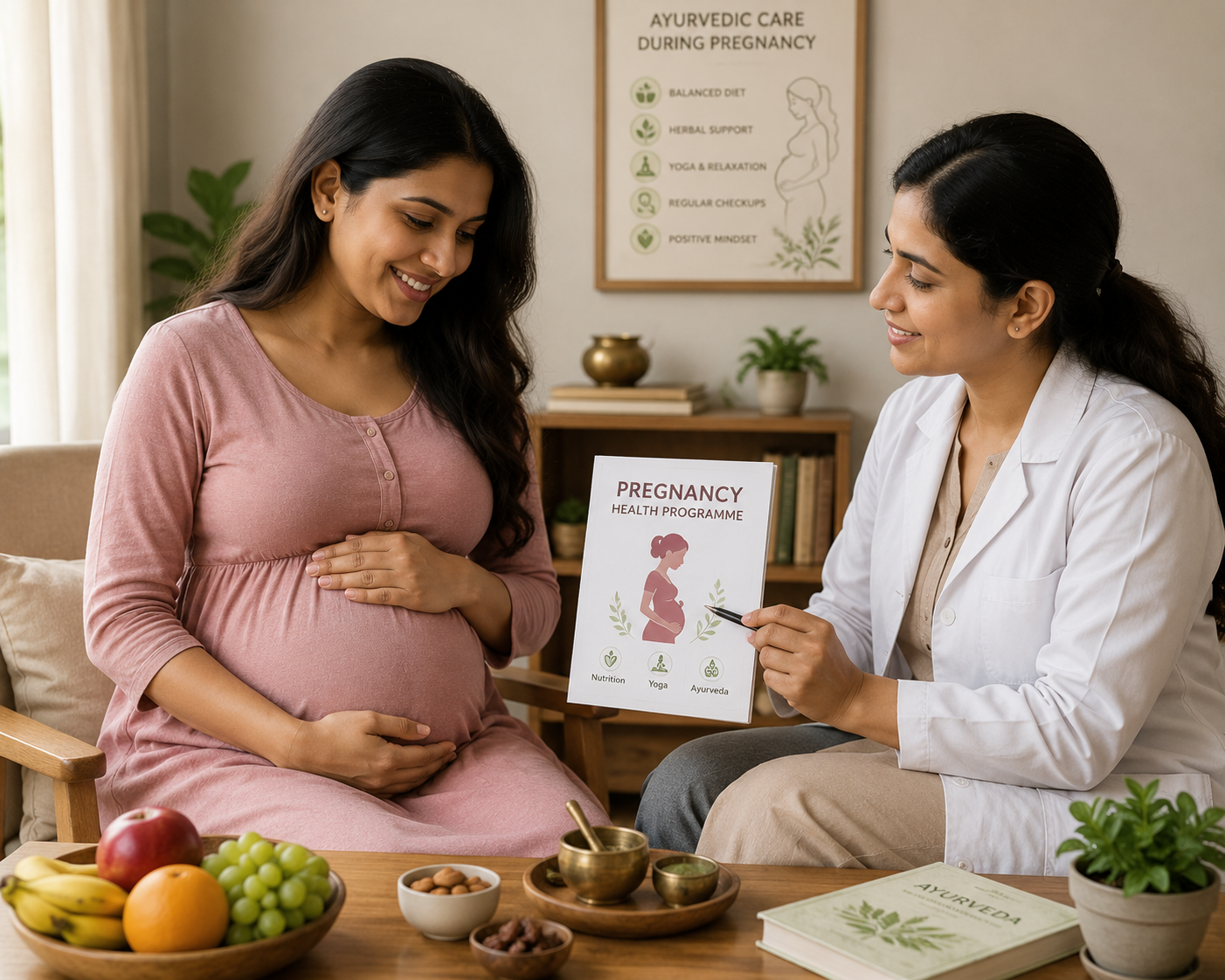
What is Pregnancy Health Programme (Garbhini Paricharya)?
Pregnancy Health Programme (Garbhini Paricharya) is the classical Ayurvedic systematic framework for comprehensive pregnancy care throughout the nine months (270 days) of gestation. The framework provides month-by-month detailed protocols addressing maternal wellbeing, fetal development support, management of common pregnancy discomforts, prevention of pregnancy complications, and preparation for healthy delivery and postpartum recovery through structured daily routines, dietary protocols, gentle therapeutic approaches, safe herbal support, and lifestyle integration.
The Garbhini Paricharya Framework:
Definition: Garbhini is the pregnant woman; Paricharya is the systematic care framework — Garbhini Paricharya is therefore the comprehensive care system for pregnancy, with classical texts providing detailed month-by-month protocols.
Duration: The framework covers the entire 270 days (nine lunar months) of pregnancy with specific protocols for each month, recognising the changing maternal-fetal needs throughout pregnancy progression.
Physiological significance: Classical recognition that pregnancy involves profound physiological transformation requiring specific care that supports both maternal wellbeing and optimal fetal development, with the quality of pregnancy care substantially affecting both immediate outcomes and long-term maternal-child health.
The Comprehensive Framework Includes:
Month-by-Month Specific Care (Masanumasika Garbhini Paricharya):
First Month: Foundational care during early pregnancy with gentle approaches, attention to early symptoms, foundational dietary support, emotional adjustment
Second Month: Continued gentle care, morning sickness management, fatigue support, foundational herbal therapy with safe preparations
Third Month: Active embryological development support, structured dietary intensification, continued herbal support
Fourth Month: Fetal organ development support, increased nutritional demands, expanded therapeutic interventions
Fifth Month: Active fetal development with specific support, structured Abhyanga initiation in many traditions, increased exercise tolerance
Sixth Month: Continued comprehensive care, preparation for late pregnancy demands, specific musculoskeletal support beginning
Seventh Month: Increased therapeutic focus, edema prevention, delivery preparation initiation, specific dietary modifications
Eighth Month: Critical late pregnancy support, edema management, sleep support, increased emotional preparation
Ninth Month: Final preparation for delivery, specific delivery-supporting practices, comprehensive readiness for labor and postpartum
Structured Daily Routines (Garbhini Dinacharya):
- Appropriate sleep patterns supporting pregnancy
- Gentle exercise programs adapted to trimester
- Hygiene protocols appropriate to pregnancy
- Mental-emotional practices supporting wellbeing
- Structured meal patterns
- Appropriate work-rest balance
Dietary Protocols (Garbhini Ahara):
- Trimester-specific dietary recommendations
- Specific foods supporting maternal-fetal health
- Adequate protein, iron, calcium, folate, and other essential nutrients
- Pitta-pacifying patterns particularly in later pregnancy
- Vata-pacifying patterns supporting digestion
- Avoidance of contraindicated foods
- Hydration with appropriate fluids
- Specific traditional preparations supporting pregnancy
Gentle Therapeutic Approaches (Garbhini Chikitsa):
- Modified Abhyanga safe for pregnancy
- Specific oils carefully selected
- Trimester-appropriate techniques
- Avoidance of contraindicated practices
- Supportive practices including foot massage, head massage
- Pregnancy-safe Pranayama and meditation
Carefully Selected Herbal Therapy:
- Phala Ghrita — Classical pregnancy tonic
- Brahmi Ghrita — Mental-emotional support
- Kalyanaka Ghrita — Comprehensive support
- Shatavari preparations — Maternal-fetal nourishment
- Various other safe preparations carefully selected for pregnancy
Specific Support for Common Issues:
- Morning sickness management
- Constipation support
- Back pain and musculoskeletal support
- Sleep support
- Edema management
- Heartburn management
- Anxiety and mood support
- Skin care during pregnancy
Delivery Preparation:
- Physical preparation including specific exercises
- Emotional preparation for labor and birth
- Educational preparation
- Birth planning support
- Postpartum care preparation
Mental-Emotional Support:
- Recognition of pregnancy emotional dimensions
- Specific practices supporting emotional wellbeing
- Stress management during pregnancy
- Bonding preparation
- Family adjustment support
Constitutional Rebuilding:
- Sustained Rasayana approach appropriate to pregnancy
- Long-term maternal health support
- Foundation for postpartum recovery
Modern Recognition and Relevance:
The increasing modern recognition of substantial gaps in conventional prenatal care has produced growing interest in traditional pregnancy care frameworks including Garbhini Paricharya.
Prenatal Doula Training programs increasingly incorporate Ayurvedic Garbhini Paricharya principles.
Integrative Women's Health practitioners increasingly recommend traditional pregnancy care frameworks.
Contemporary Prenatal Programs in various cultural contexts increasingly draw from Ayurvedic principles for systematic pregnancy care.
The framework is genuinely valuable across cultural contexts — providing structured comprehensive approach to pregnancy care that addresses universal physiological needs while accommodating individual and cultural variations.
Understanding Garbhini Avastha: The Ayurvedic Framework for Pregnancy
The Ayurvedic understanding of pregnancy sits within the comprehensive Garbhini Avastha (pregnant state) framework with substantial classical literature particularly in Charaka Samhita Sharira Sthana, Sushruta Samhita, Ashtanga Hridaya, Ashtanga Sangraha, and especially Kashyapa Samhita which provides remarkably detailed obstetric and pediatric content. The classical recognition of pregnancy as distinct physiological state requiring specific systematic month-by-month care represents one of the most clinically sophisticated pregnancy care frameworks in any traditional medical system.
The core concepts include:
Garbhini Avastha as Distinct Physiological State:
Classical Ayurveda recognises pregnancy as fundamentally different physiological state from non-pregnant condition — with specific patterns of doshic balance, dhatu (tissue) status, ojas (vital essence) status, dual circulation supporting both mother and fetus, and broader constitutional features requiring specific recognition and care. The classical understanding that pregnant body is "supporting two lives" with corresponding needs anticipates modern understanding of substantial pregnancy physiological transformation.
The Concept of Dauhrida (Pregnancy Cravings) and Its Significance:
Classical recognition that pregnant women experience specific cravings (Dauhrida) reflecting both fetal needs and maternal physiology requires careful attention — appropriate satisfaction of safe cravings supports both maternal wellbeing and fetal development, while unsatisfied healthy cravings may negatively affect both. This sophisticated classical understanding of the relationship between maternal cravings and fetal development represents remarkable clinical insight.
Vata-Pitta-Kapha Considerations in Pregnancy:
Vata predominance with specific considerations — Pregnancy involves significant Vata changes including the substantial physical changes, hormonal shifts, and broader transformation requiring Vata-pacification approaches. Apana Vayu (the Vata sub-type governing downward movement and elimination) is centrally involved in pregnancy and delivery requiring specific attention.
Pitta considerations — Pregnancy involves increased metabolic activity (Pitta function), and some pregnancies have stronger Pitta involvement requiring specific approaches including cooling dietary patterns and Pitta-pacifying lifestyle practices, particularly relevant for gestational hypertension and pre-eclampsia.
Kapha considerations — Tissue building (Kapha function) is central to pregnancy with substantial Kapha-related processes including fetal growth, breast development, and broader anabolic processes requiring appropriate support.
Garbha and Fetal Development:
Classical Ayurveda provides detailed descriptions of fetal development month-by-month including specific stages of organ formation, development of subtle and gross body elements, and the timing of various developmental milestones — anticipating much of modern embryological understanding through clinical observation. The classical framework includes Pancha Mahabhuta (five elements) involvement in fetal development with specific implications for maternal support.
Sapta Dhatu Considerations in Pregnancy:
Substantial tissue requirements during pregnancy — including increased Rasa Dhatu (lymph/plasma) for circulation and fluid needs; Rakta Dhatu (blood) for substantial blood volume increases; Mamsa Dhatu (muscle) for uterine growth and maternal-fetal needs; Meda Dhatu (fat) for energy reserves and structural support; Asthi Dhatu (bone) for fetal skeletal development and maternal needs; Majja Dhatu (marrow/nervous tissue) for fetal neurological development; Shukra Dhatu (reproductive essence) — these all require active support through nutrition and constitutional approach.
Ojas Considerations:
Ojas role in pregnancy is central — pregnancy involves substantial Ojas expenditure for fetal development, with maternal Ojas reserves needing both protection and replenishment throughout pregnancy and into postpartum. The classical recognition that adequate Ojas support during pregnancy determines both pregnancy outcomes and long-term maternal-child health represents sophisticated understanding.
Manovaha Srotas and Manasika Bhava in Pregnancy:
Classical recognition of substantial mental-emotional dimensions of pregnancy — including the well-recognised emotional vulnerability, mood fluctuations, anxiety potentials, attachment formation, and the broader psychological preparation for motherhood. The classical attention to Manovaha Srotas function and Manasika Bhava provides framework for comprehensive mental-emotional support during pregnancy.
Stanya (Breast Milk) Preparation:
Classical understanding that breast milk formation begins during pregnancy, with appropriate maternal care during pregnancy directly affecting lactation capacity postpartum. This integrated view of pregnancy-postpartum continuum guides comprehensive maternal care preparation for both phases.
Garbha Sambhava and Conception Concepts:
Classical framework includes detailed concepts of conception (Garbha Sambhava) involving union of Shukra (sperm/male contribution) and Artava (ovum/female contribution) in healthy Ashaya (uterus) with appropriate Atma (soul/consciousness) — these concepts provide framework for understanding pregnancy in classical context while accommodating modern reproductive medicine understanding.
Predisposing Factors for Pregnancy Complications:
Classical texts identify factors potentially affecting pregnancy:
- Inadequate Garbhini Paricharya (pregnancy care)
- Excessive Vata-aggravating factors
- Inadequate Pitta-pacification when needed
- Suppression of natural urges
- Excessive physical activity or exertion
- Inadequate sleep
- Chronic stress and Manasika Bhava disturbance
- Inadequate nutritional support
- Constitutional vulnerabilities not adequately addressed
- Various external factors affecting pregnancy
Specific Pregnancy-Related Conditions Classical Ayurveda Identifies:
- Garbhopadrava — Various pregnancy complications requiring specific management
- Garbhasrava — Threatened miscarriage requiring specific supportive care (with appropriate modern obstetric coordination)
- Garbhini Vyadhi — Various pregnancy-related disorders including common discomforts and complications
This comprehensive understanding shapes the Ayurvedic approach to pregnancy: provide systematic month-by-month support through detailed Garbhini Paricharya framework; address tridoshic considerations based on individual constitutional patterns and trimester needs; support tissue building through adequate nutrition and Rasayana addressing the substantial Dhatu requirements; protect and replenish Ojas as central therapeutic objective throughout pregnancy; manage Apana Vayu function supporting healthy pregnancy and preparing for delivery; support stanya preparation through appropriate pregnancy care affecting postpartum lactation; address Manovaha Srotas and Manasika Bhava through comprehensive mental-emotional support; respect Dauhrida with appropriate attention to pregnancy cravings; prevent Garbhini Vyadhi through complete adequate preventive care; respect individual and cultural variations while maintaining classical framework integrity; coordinate closely with modern obstetric care recognising the irreplaceable value of medical monitoring throughout pregnancy.
The 3 Stages of Ayurvedic Treatment for Pregnancy Health Programme
Ayurvedic care for Pregnancy Health Programme follows a carefully sequenced three-stage approach adapted to the specific trimester (first, second, or third), individual constitutional patterns, presence of any pregnancy complications, previous pregnancy history, current symptoms, and individual needs. The retreat can be initiated at various stages of pregnancy with appropriate trimester-specific protocols and safety considerations, though second trimester is often considered optimal timing for comprehensive engagement with full therapeutic range.
1. Preparation (Purva Karma) The preparatory stage begins with comprehensive assessment integrating obstetric history (current pregnancy progression, any complications, previous pregnancies, current obstetric care), current pregnancy status (specific gestational week, any concerns), individual constitutional profile, family history relevant to pregnancy, current symptoms and discomforts, and treatment goals. Coordination with obstetric provider is essential — confirming pregnancy status, any specific clinical considerations, current medications, monitoring requirements, and ensuring continuity of care throughout retreat period.
Initial gentle constitutional support with appropriate pregnancy-safe herbal preparations addressing immediate needs:
For first trimester (after first trimester safety considerations including stable pregnancy confirmation):
- Gentle nausea support with ginger preparations, cumin-fennel-coriander herbal teas, dry ginger and lemon
- Foundational dietary modifications
- Gentle constitutional support
- Avoidance of stronger preparations during organogenesis period
For second trimester:
- Expanded therapeutic range with Phala Ghrita as foundational classical pregnancy tonic
- Broader dietary intensification supporting fetal development
- Gentle Abhyanga initiation
- Comprehensive constitutional support
For third trimester:
- Continued constitutional support with attention to late-pregnancy comfort
- Specific delivery preparation
- Edema management
- Sleep support
- Modified Abhyanga adapted to advanced pregnancy
Initial dietary modifications appropriate to trimester:
First trimester emphasis:
- Easily digestible foods addressing nausea
- Small frequent meals
- Bland nutritious foods initially with gradual expansion
- Avoidance of strong smells and tastes triggering nausea
- Adequate hydration with appropriate fluids
Second trimester emphasis:
- Comprehensive nutritious diet
- Adequate protein, iron, calcium, folate
- Variety of vegetables, fruits, grains, legumes
- Appropriate ghee and oils
- Specific foods supporting fetal development
Third trimester emphasis:
- Continued comprehensive nutrition with attention to portion sizes
- Specific foods supporting delivery preparation
- Hydration management for edema
- Easily digestible patterns for late pregnancy digestion
- Specific preparation foods
Foundational lifestyle measures — Adequate sleep with appropriate positioning, gentle exercise appropriate to trimester (walking, prenatal yoga, swimming where appropriate), stress management initiation, partner education for supportive role.
Foundational Abhyanga initiation (with appropriate trimester modifications and pregnancy-safe oils).
2. Core Treatment (Pradhana Karma) Primary therapies focus on four coordinated lines: comprehensive Abhyanga and gentle external therapy adapted to pregnancy, structured trimester-specific dietary protocols, carefully selected herbal therapy, and lifestyle integration with constitutional support.
Comprehensive Pregnancy-Safe Abhyanga:
Daily systematic Abhyanga carefully adapted to pregnancy provides supportive therapy throughout pregnancy — supporting circulation, comfort, stress reduction, sleep quality, musculoskeletal wellbeing, skin health, and broader constitutional support. Performed daily for 30-60 minutes with appropriate techniques and oils selected for pregnancy safety.
Pregnancy-safe oil selection:
For most pregnancies:
- Ksheerabala Taila — Particularly valuable for pregnancy with gentle Vata-Pitta balancing
- Dhanwantharam Taila — Classical Vata-pacifying oil safe for pregnancy
- Bala Taila — Gentle strength-building oil
- Coconut oil — Particularly valuable in warm climates and for Pitta-predominant women
- Sesame oil — In appropriate constitutional patterns
Pregnancy-specific Abhyanga modifications:
General principles:
- Gentle technique throughout — never vigorous massage
- Avoid abdomen pressure
- Avoid specific marma points that should not be stimulated during pregnancy
- Avoid deep pressure on specific points
- Modified positioning appropriate to trimester
Trimester-specific adaptations:
First trimester — Very gentle approach, avoidance of abdomen, focus on extremities and back, attention to areas of nausea relief
Second trimester — Expanded application range with continued gentle technique, attention to areas of growing discomfort
Third trimester — Modified positioning (side-lying often necessary), specific attention to back pain areas, foot massage for edema, gentle approach throughout
Specific Abhyanga techniques for pregnancy:
Foot massage (Padabhyanga) — Particularly valuable throughout pregnancy for circulation, relaxation, sleep support, edema management. Some specific marma points avoided during pregnancy (particularly during early and late pregnancy when considering potential effects on labor).
Head and face massage (Shiroabhyanga and Mukhabhyanga) — Stress reduction, sleep support, headache relief.
Back massage — Particularly valuable for the substantial back pain affecting many pregnancies, with appropriate positioning (typically side-lying for advanced pregnancy).
Avoiding contraindicated practices:
- Deep abdominal massage
- Specific marma points considered contraindicated during pregnancy
- Vigorous massage of any kind
- Heat-based therapies that could affect pregnancy
- Specific oils with potential pregnancy contraindications
Pregnancy-safe Steam Therapy and Heat Applications in selected cases with careful temperature control and appropriate modifications.
Structured Trimester-Specific Dietary Protocols:
First Trimester Dietary Emphasis (when retreat occurs in stable first trimester after safety considerations):
- Easily digestible bland foods addressing morning sickness
- Small frequent meals (5-6 small meals rather than 3 large)
- Adequate hydration with appropriate fluids (warm water, ginger tea, cumin-fennel tea, fresh fruit juices)
- Specific anti-nausea foods (ginger preparations, lemon, mint, small portions of crackers, dry foods that can be tolerated)
- Adequate folate-rich foods (leafy greens, lentils, beans, citrus)
- Avoidance of strong-smelling foods triggering nausea
- Specific traditional preparations including dry ginger in cumin-fennel water for nausea
- Gradual expansion as nausea improves
Second Trimester Dietary Emphasis (the comprehensive nutrition phase):
- Comprehensive nutritious diet with full range of food groups
- Adequate protein through dal preparations, milk products, eggs where consumed, and other appropriate sources
- Iron-rich foods including jaggery, dates, raisins, green leafy vegetables, sesame seeds, methi (fenugreek), pomegranate
- Calcium-rich foods including milk products, sesame seeds, leafy greens, almonds
- Folate-rich foods continued
- Vitamin D considerations through appropriate exposure and dietary sources
- Omega-3 fatty acids through walnuts, flaxseeds (in moderation), and where consumed appropriate fish (with appropriate safety considerations regarding mercury)
- Adequate ghee (1-2 teaspoons daily) providing tissue-supportive effects and Vata pacification
- Variety of vegetables with appropriate cooking
- Variety of fruits with appropriate selection (avoiding very heating fruits in some constitutional patterns)
- Whole grains with appropriate preparation
- Specific traditional pregnancy foods including milk preparations with appropriate spices, ghee preparations, specific Rasayana foods
- Hydration with warm water, herbal teas, and appropriate fluids
Third Trimester Dietary Emphasis (preparation and comfort phase):
- Continued comprehensive nutrition with attention to comfort
- Smaller more frequent meals as space becomes limited
- Easily digestible patterns to address pregnancy digestion changes
- Specific foods supporting delivery preparation
- Tila taila (sesame oil) considerations as classical recommendation in late pregnancy (with appropriate dose and individual assessment)
- Specific preparation foods including milk-ghee combinations
- Hydration management with attention to edema (adequate but not excessive)
- Heartburn management through smaller meals, appropriate food selection, avoidance of triggers
- Constipation management through adequate fiber, appropriate fluids, specific gentle approaches
- Light easily digestible dinner improving sleep quality
Specific Foods Beneficial Throughout Pregnancy:
- Milk preparations with appropriate spices (turmeric milk, almond-saffron milk, ghee-milk preparations)
- Date preparations for iron, energy, and specific pregnancy benefits
- Coconut water for hydration and electrolytes
- Ghee in appropriate amounts daily
- Whole grains prepared appropriately
- Variety of seasonal vegetables and fruits
- Adequate water with attention to quality
Foods to Approach with Caution During Pregnancy:
- Raw or undercooked foods with food safety concerns
- Excessive spicy foods particularly third trimester
- Excessive sour foods with Pitta considerations
- Highly processed foods with limited nutritional value
- Excessive caffeine
- Alcohol (absolute avoidance)
- Specific herbs with pregnancy contraindications (would be specifically identified by Ayurvedic physician)
- Certain specific fish with mercury concerns
- Unpasteurized dairy with infection risks
- Specific traditional foods with cultural cautions during pregnancy
Carefully Selected Herbal Therapy for Pregnancy:
Pregnancy-safe foundational formulations:
Phala Ghrita — The classical foundational pregnancy tonic prepared with specific herbs in ghee base providing comprehensive pregnancy support. Particularly valuable from second trimester onwards.
Kalyanaka Ghrita — Comprehensive support formulation with broad pregnancy applications.
Brahmi Ghrita — Mental-emotional support during pregnancy.
Saraswatarishtam (with appropriate consideration) — Specific situations requiring nervous system support.
Shatavari preparations — Shatavari Ghrita, Shatavari Kalpa — providing maternal-fetal nourishment, lactation preparation, and broader women's health support throughout pregnancy.
Sukumara Ghrita — Comprehensive support particularly valuable for women's health.
Chyawanprash — Rasayana support with appropriate dose during pregnancy (typically 1 teaspoon daily, with attention to individual considerations).
Specific situational formulations (used carefully with appropriate Ayurvedic physician guidance):
For morning sickness:
- Ginger preparations in appropriate doses
- Cumin-coriander-fennel preparations
- Specific traditional anti-nausea formulations
For constipation:
- Triphala in carefully selected dose
- Castor oil (in very specific situations with careful consideration — generally avoided during pregnancy due to potential effects on labor)
- Dietary fiber emphasis
- Specific gentle approaches
For musculoskeletal discomfort:
- Topical Mahanarayana Taila and similar oils
- Specific herbal applications
- Avoidance of internal strong Vata-pacifying herbs that could be contraindicated
For sleep issues:
- Brahmi preparations
- Foot massage with appropriate oils
- Specific dietary support
For edema (late pregnancy):
- Punarnava preparations (in carefully selected formulations and doses appropriate for pregnancy)
- Hydration management
- Foot elevation
- Specific dietary approaches
Important Safety Considerations for Pregnancy Herbal Therapy:
Many herbs commonly used in general Ayurvedic practice are contraindicated or require caution during pregnancy — emphasizing the absolute necessity of expert Ayurvedic physician consultation for pregnancy-specific herbal recommendations rather than self-prescription. WellnessLoka centres employ physicians with specific training in pregnancy-safe Ayurvedic practice.
Lifestyle Integration:
Sleep optimization throughout pregnancy with appropriate positioning (left lateral position recommended late pregnancy), supportive environment, adequate duration, daytime rest as needed.
Gentle exercise programs appropriate to trimester:
- First trimester: Continued usual activity with attention to fatigue; gentle walking; prenatal yoga with appropriate instructor; swimming
- Second trimester: Often increased energy supporting fuller exercise programs; structured prenatal yoga; swimming; walking; pelvic floor exercises; appropriate strength training
- Third trimester: Modified continuation; gentle walking; modified prenatal yoga; swimming particularly valuable; specific birth-preparation exercises
Mental-emotional support:
- Recognition of pregnancy emotional vulnerability
- Specific practices supporting wellbeing including meditation, gentle pranayama (Bhramari particularly valuable, Anulom Vilom)
- Bonding preparation activities
- Partner integration in care
- Birth preparation education
- Support for any anxiety or mood concerns with appropriate escalation if needed
Hygiene practices appropriate to pregnancy including skin care for stretch marks (with appropriate oils — coconut, sesame, almond oils commonly used), breast care preparation, dental health attention.
Avoidance practices during pregnancy:
- Smoking (absolute avoidance)
- Alcohol (absolute avoidance)
- Specific contraindicated herbs and substances
- Excessive heat exposure (saunas, very hot baths)
- Excessive physical exertion
- Specific yoga poses
- Travel limitations as advised by obstetrician
- Sexual activity limitations as advised based on individual factors
3. Rejuvenation (Paschat Karma) The final stage focuses on continued pregnancy support, delivery preparation, and bridge to postpartum:
Continued constitutional support with appropriate formulations continued throughout remaining pregnancy.
Delivery preparation intensified in third trimester:
- Specific birth-preparation exercises
- Pelvic floor preparation
- Emotional preparation
- Birth plan development
- Postpartum care planning
Continued obstetric care with appropriate follow-up.
Family preparation for delivery and postpartum.
Postpartum care planning — Coordinating with potential follow-up Prasava Raksha postpartum care retreat or home-based postpartum care.
Educational completion for delivery and early postpartum.
Continued lifestyle modifications through remaining pregnancy.
Home maintenance regimen with prescribed herbal medicines and lifestyle practices continued through pregnancy, delivery, and into postpartum.
Bridge to postpartum care — Seamless transition planning from pregnancy support into postpartum Sutika Kala care.
The 5 Core Therapies for Pregnancy Health Programme Explained
1. Daily Pregnancy-Safe Comprehensive Abhyanga Daily pregnancy-safe Abhyanga is the cornerstone external therapeutic practice of Garbhini Paricharya, providing comprehensive benefits across multiple dimensions of pregnancy wellbeing when performed with appropriate technique and pregnancy-specific modifications. The therapy involves daily warm oil massage performed for 30-60 minutes with carefully selected pregnancy-safe oils and trimester-appropriate techniques. Therapeutic effects include comprehensive circulation support beneficial for both maternal wellbeing and fetal development; musculoskeletal support addressing the substantial pregnancy-related back pain, pelvic discomfort, and broader musculoskeletal changes; stress reduction and nervous system regulation addressing the substantial mental-emotional dimensions of pregnancy; sleep support through nervous system regulation; skin health with attention to stretch marks and pregnancy skin changes; edema support particularly important late pregnancy; bonding preparation when partner-administered providing relationship support; broader constitutional support providing foundation for healthy pregnancy and postpartum recovery. Pregnancy-safe oil selection: Ksheerabala Taila (particularly valuable with gentle Vata-Pitta balancing); Dhanwantharam Taila (classical Vata-pacifying oil safe for pregnancy); Bala Taila (gentle strength-building oil); Coconut oil (particularly valuable in warm climates and Pitta-predominant women); Sesame oil (in appropriate constitutional patterns). Pregnancy-specific modifications essential for safety: gentle technique throughout — never vigorous massage that could potentially affect pregnancy; avoid direct abdomen pressure; avoid specific marma points considered contraindicated during pregnancy; modified positioning appropriate to trimester (side-lying often necessary in advanced pregnancy); avoidance of deep pressure on specific points. Trimester-specific adaptations: First trimester — Very gentle approach, focus on extremities and back, attention to nausea relief; Second trimester — Expanded application with continued gentle technique; Third trimester — Modified positioning (side-lying often necessary), specific attention to back pain, foot massage for edema. Specific techniques including comprehensive body Abhyanga adapted for pregnancy, foot massage (Padabhyanga) particularly valuable for circulation and edema, head and face massage (Shiroabhyanga and Mukhabhyanga) for stress and sleep support, gentle back massage for the substantial back discomfort of pregnancy. Bath after Abhyanga with warm water (not hot — heat avoidance during pregnancy). The remarkable comprehensive value of properly performed pregnancy-safe Abhyanga explains its central role in Garbhini Paricharya care.
2. Phala Ghrita and Foundational Pregnancy Herbal Therapy Phala Ghrita is the most clinically important single Ayurvedic preparation specifically for pregnancy, providing comprehensive constitutional support that addresses multiple dimensions of healthy pregnancy in single integrated formulation with substantial classical use and recognition specifically for pregnancy applications. The classical preparation contains specific herbs prepared in ghee base providing comprehensive pregnancy support including fetal development support, maternal nourishment, hormonal balance, and broader constitutional benefits. Therapeutic effects include comprehensive maternal-fetal nourishment through the ghee base and selected herbs; support for healthy fetal development through the classical pregnancy-specific formulation; hormonal balance support during the substantial pregnancy hormonal transitions; broader constitutional support addressing the substantial constitutional demands of pregnancy; preparation for healthy delivery and postpartum recovery through accumulated supportive effects; maintenance of Ojas during the substantial demands of pregnancy. Standard administration: Typically 1-2 teaspoons daily with warm milk, prescribed individually by Ayurvedic physician based on trimester, individual constitution, and specific clinical considerations. Best initiated in second trimester after first trimester safety considerations, continued through pregnancy. Kalyanaka Ghrita — Comprehensive support formulation with broad pregnancy applications, particularly valuable for women with complex needs or those requiring broader constitutional support. Brahmi Ghrita — Mental-emotional support during pregnancy addressing the substantial emotional dimensions and supporting maternal mental health. Shatavari preparations — Shatavari Ghrita, Shatavari Kalpa, Shatavari Churna — provide maternal-fetal nourishment, lactation preparation beginning during pregnancy, reproductive system support, and broader women's health throughout pregnancy. Shatavari is particularly valuable as it supports both pregnancy needs and prepares for postpartum lactation. Sukumara Ghrita — Comprehensive support particularly valuable for women's health applications. Chyawanprash — Rasayana support typically 1 teaspoon daily during pregnancy with attention to individual considerations including blood sugar management for diabetic mothers. Critical safety consideration: Many Ayurvedic herbs commonly used in general practice are contraindicated or require careful consideration during pregnancy — emphasizing the absolute necessity of expert Ayurvedic physician consultation for pregnancy-specific herbal recommendations rather than self-prescription. WellnessLoka centres employ physicians with specific training in pregnancy-safe Ayurvedic practice and detailed knowledge of which herbs are safe versus contraindicated during pregnancy.
3. Structured Trimester-Specific Comprehensive Dietary Protocols The structured dietary protocols of Garbhini Paricharya represent one of the most sophisticated traditional pregnancy dietary frameworks, providing systematic trimester-specific guidance for the comprehensive nutritional support essential to healthy pregnancy and optimal fetal development. The fundamental principles include adequate nutrition supporting both mother and fetus, easy digestibility as digestive function changes during pregnancy, appropriate trimester-specific modifications, specific foods supporting fetal development, avoidance of contraindicated foods, and constitutional adaptation to individual needs. First Trimester Emphasis addresses the common challenges of early pregnancy: easily digestible bland foods addressing morning sickness; small frequent meals (5-6 small meals rather than 3 large) better tolerated; adequate hydration with warm water, ginger tea, cumin-fennel tea, fresh fruit juices; specific anti-nausea foods including ginger preparations, lemon, mint, small portions of dry foods or crackers tolerated; adequate folate-rich foods supporting early embryonic development including leafy greens, lentils, beans, citrus; avoidance of strong-smelling foods triggering nausea; specific traditional preparations including dry ginger in cumin-fennel water for nausea management. Second Trimester Emphasis represents the comprehensive nutrition phase with stable pregnancy and good appetite: comprehensive nutritious diet with full range of food groups; adequate protein through dal preparations, milk products, eggs where consumed, paneer and cheese, and other appropriate sources; iron-rich foods including jaggery, dates, raisins, green leafy vegetables (palak, methi), sesame seeds, methi seeds, pomegranate — essential given pregnancy-related iron demands; calcium-rich foods including milk products, sesame seeds, leafy greens, almonds — essential for fetal skeletal development; folate-rich foods continued throughout; vitamin D considerations through appropriate sunlight exposure and dietary sources; omega-3 fatty acids through walnuts, flaxseeds in moderation, and where consumed appropriate fish (with mercury safety considerations); adequate ghee (1-2 teaspoons daily) providing tissue-supportive effects, Vata pacification, and traditional pregnancy nourishment; variety of vegetables appropriately cooked; variety of fruits with appropriate selection; whole grains appropriately prepared; specific traditional pregnancy foods including turmeric milk, almond-saffron milk, ghee preparations, milk-ghee combinations supporting Rasayana effect; hydration with warm water, herbal teas, fresh juices, coconut water. Third Trimester Emphasis focuses on comfort and preparation: continued comprehensive nutrition with attention to comfort given space limitations from growing baby; smaller more frequent meals as space becomes limited; easily digestible patterns addressing pregnancy digestion changes; specific foods supporting delivery preparation; classical recommendation of tila taila (sesame oil) in appropriate doses during late pregnancy supporting flexibility (with individual assessment); specific preparation foods including milk-ghee combinations classical to pregnancy; hydration management with attention to edema (adequate but not excessive in late pregnancy); heartburn management through smaller meals, appropriate food selection, avoidance of triggers, sitting up after meals; constipation management through adequate fiber, appropriate fluids, specific gentle approaches; light easily digestible dinner improving late pregnancy sleep quality. Foods to approach with caution during pregnancy: raw or undercooked foods with food safety concerns; excessive spicy foods particularly third trimester; excessive sour foods with Pitta considerations particularly relevant for some constitutional patterns; highly processed foods with limited nutritional value; excessive caffeine; absolute avoidance of alcohol; specific herbs with pregnancy contraindications; certain fish with mercury concerns; unpasteurized dairy with infection risks; and specific traditional foods with cultural cautions during pregnancy. WellnessLoka programs include integrated meal preparation following these structured protocols.
4. Comprehensive Lifestyle Integration and Delivery Preparation The comprehensive lifestyle integration dimensions of Garbhini Paricharya address the practical comprehensive support that pregnancy wellness requires beyond direct therapeutic interventions — recognising that healthy pregnancy requires structured supportive environment, lifestyle modifications, and integrated approach to all dimensions of expectant motherhood. Sleep optimization throughout pregnancy with appropriate trimester-specific approaches: First trimester typical fatigue requiring adequate sleep accommodation, often 9-10 hours nightly with daytime rest as needed; Second trimester generally improved sleep with attention to sleep hygiene; Third trimester sleep challenges from physical discomfort, frequent urination, anxiety requiring active management including appropriate positioning (left lateral position recommended), supportive pillows, sleep environment optimization, daytime rest as needed. Gentle exercise programs appropriate to trimester: First trimester — Continued usual activity with attention to fatigue; gentle walking; prenatal yoga with appropriate instructor familiar with first trimester safety; swimming when accessible; avoidance of new strenuous activities; Second trimester — Often increased energy supporting fuller exercise programs; structured prenatal yoga with attention to second trimester poses; swimming particularly valuable; walking 30+ minutes daily; pelvic floor exercises (Kegel exercises) regular practice; appropriate strength training with prenatal modifications; specific birth-preparation exercises beginning; Third trimester — Modified continuation of previous routines; gentle walking continued; modified prenatal yoga with third trimester safety considerations; swimming particularly valuable for relief from physical demands; specific birth-preparation exercises intensified including squatting practice, pelvic floor work, breathing techniques, position practice for labor. Mental-emotional support integration: Recognition of pregnancy emotional dimensions as normal feature requiring acknowledgment and support; specific practices supporting wellbeing including pregnancy-adapted meditation; gentle pranayama appropriate for pregnancy (Bhramari particularly valuable for both relaxation and labor preparation, Anulom Vilom for balance, Ujjayi in modified form, avoidance of intense pranayama practices); bonding preparation activities including singing to baby, gentle touch communication, visualization; partner integration in care including partner education for supportive role, prenatal classes participation, birth preparation discussions; addressing any anxiety or mood concerns with appropriate care and escalation if symptoms suggest pregnancy depression or anxiety requiring specific intervention. Birth preparation as central focus particularly in third trimester: Physical preparation through specific exercises, flexibility work, strength building for delivery; emotional preparation through education, visualization, fear processing, breathing practice for labor; educational preparation through prenatal classes, reading, birth philosophy clarification; birth planning support helping develop birth plan with realistic flexibility; postpartum care preparation including practical arrangements, support system organization, planning for Sutika Kala care; partner preparation for supportive role during labor and early parenting. Hygiene practices appropriate to pregnancy: Skin care for stretch marks with appropriate oils (coconut, sesame, almond oils commonly used) beginning prophylactically in second trimester; breast care preparation for breastfeeding; dental health attention with pregnancy-specific considerations; appropriate clothing adaptations. Avoidance practices throughout pregnancy: Absolute avoidance of smoking, alcohol; specific contraindicated herbs and substances; excessive heat exposure (saunas, very hot baths, hot tubs); excessive physical exertion; specific yoga poses contraindicated for pregnancy; travel limitations as advised by obstetrician particularly third trimester; specific medications avoided unless absolutely necessary with obstetric guidance.
5. Constitutional Support, Coordination with Modern Obstetric Care, and Bridge to Postpartum The fifth therapeutic dimension provides sustained constitutional support, careful coordination with modern obstetric care, and seamless transition into postpartum care — recognising pregnancy as continuum extending into Sutika Kala (postpartum) period and beyond. Sustained Rasayana therapy with Phala Ghrita, Kalyanaka Ghrita, Shatavari preparations, Chyawanprash continued throughout pregnancy providing constitutional support addressing the substantial Dhatu requirements and Ojas demands of healthy pregnancy. Continued constitutional adaptation as pregnancy progresses with adjustments based on trimester, individual needs, and emerging considerations. Pregnancy is fundamentally a medical experience requiring continued obstetric care throughout — Ayurvedic Garbhini Paricharya complements but never substitutes for appropriate modern obstetric monitoring including periodic clinical visits, blood tests, ultrasound monitoring, screening for pregnancy complications (gestational diabetes, pre-eclampsia, infections, fetal positioning), and intervention for any identified problems. WellnessLoka programs explicitly coordinate with continued obstetric care including communication with obstetric provider before, during, and after retreat regarding the integrative care, accommodation of any specific obstetric recommendations, and clear protocols for any concerning symptoms requiring obstetric attention. Recognition that pregnancy may have complications requiring conventional medical management — gestational hypertension, pre-eclampsia, gestational diabetes, fetal growth concerns, fetal positioning issues, preterm labor, and other conditions require obstetric expertise. Integrative care provides valuable supportive role alongside necessary medical management. Birth experience planning considering individual preferences (vaginal versus cesarean if elective, hospital versus birthing center versus home with appropriate safety considerations and obstetric coordination, pain management preferences, support persons, immediate postpartum preferences) while maintaining flexibility for medical needs. Bridge to postpartum care — Continuous care extending into Sutika Kala (postpartum) period: continuation of comprehensive constitutional support transitioning to postpartum protocols; preparation for postpartum care including potential Prasava Raksha retreat or structured home-based postpartum care; family preparation for postpartum support; practical arrangements for postpartum care needs; partner education for postpartum supportive role; lactation preparation continuing from pregnancy into postpartum; emotional preparation for motherhood transition; recognition that quality of pregnancy care substantially affects postpartum recovery quality. Family education about ongoing maternal-fetal care needs throughout remaining pregnancy and into postpartum. Subsequent pregnancy planning considerations if relevant, with classical Ayurvedic emphasis on adequate recovery between pregnancies (typically minimum 2 years recommended) and comprehensive Garbhini Paricharya for subsequent pregnancies. Periodic integrative care visits for ongoing constitutional support, addressing any persistent or emerging issues, and supporting healthy pregnancy progression. The integration of comprehensive Ayurvedic Garbhini Paricharya with modern obstetric care provides genuinely complete maternal-fetal support that distinguishes comprehensive integrative pregnancy care from fragmented contemporary approaches.
How Long Should an Ayurvedic Treatment Program for Pregnancy Health Programme Last?
|
Therapeutic Benefit | |
| 7–14 days | Initial assessment, established Abhyanga and dietary protocols, foundational pregnancy support | |
| 14–21 days | Moderate constitutional support, comprehensive trimester-specific care, established lifestyle integration | |
| 21–28 days | Extended comprehensive pregnancy care — recommended for mothers seeking substantial integrative support | |
| Extended programs |
|
The exact duration of your Pregnancy Health Programme is decided after consultation with the Ayurvedic doctor in close coordination with continued obstetric provider, based on the specific trimester, individual pregnancy progression, any complications or risk factors, individual constitutional needs, family situation, and treatment goals. The optimal approach for many pregnant women involves multiple shorter retreats throughout pregnancy — typically 7-14 days in second trimester (often considered optimal timing), additional shorter visits in first trimester (with safety considerations) and third trimester (birth preparation focus), and potentially seamless transition to postpartum Prasava Raksha retreat. Single longer retreat of 14-28 days during second trimester provides comprehensive foundation with continued home regimen for remaining pregnancy. Birth preparation intensive of 7-14 days late second trimester or early third trimester provides focused preparation for labor and postpartum. The home regimen of continued Abhyanga practice (taught during retreat for self or partner administration), continued dietary patterns, continued herbal therapy with prescribed safe formulations, continued lifestyle integration, and ongoing constitutional support is what genuinely supports healthy pregnancy throughout the remaining months. Periodic check-in visits support continued pregnancy care across multiple trimesters with continuity of integrative care providers.
Benefits of an Ayurvedic Treatment Retreat for Pregnancy Health Programme
| Physical Benefits | Pregnancy and Fetal Benefits | Long-Term Impact | ||||
| Reduced common pregnancy discomforts (back pain, edema, sleep issues) | Optimal support for healthy fetal development | Foundation for successful delivery and postpartum recovery | ||||
| Better management of morning sickness and digestive issues | Better maternal nourishment supporting fetus | Foundation for sustained postpartum maternal health | ||||
| Improved sleep quality and energy throughout pregnancy | Reduced risk of common pregnancy complications |
|
||||
| Improved skin health and stretch mark prevention | Enhanced maternal-fetal bonding through comprehensive care | Foundation for healthy mother-child relationship |
Why Kerala is the Best Place for Pregnancy Health Programme Treatment
An Ayurvedic Pregnancy Health Programme retreat in Kerala, India offers the most clinically authentic environment for comprehensive classical Garbhini Paricharya care this critical maternal-fetal period benefits from.
- Experienced physicians with specific expertise in classical Garbhini Paricharya framework and women's health Ayurveda, with depth in pregnancy care across all trimesters and various clinical scenarios
- BAMS and MD Ayurveda-certified doctors trained in classical Stree Roga (women's health) including comprehensive Garbhini Paricharya with specific knowledge of pregnancy-safe herbs and contraindications
- Specialised practitioner training in pregnancy-safe Abhyanga and the specific techniques appropriate for each trimester
- In-house preparation of classical pregnancy-safe formulations — Phala Ghrita, Kalyanaka Ghrita, Brahmi Ghrita, Shatavari Ghrita, Shatavari Kalpa, Sukumara Ghrita, Chyawanprash, and various other formulations specifically valuable for pregnancy care — using authentic methods and fresh herbs
- Authentic in-house preparation of pregnancy-safe oils — Ksheerabala Taila, Dhanwantharam Taila, Bala Taila, and others appropriate for pregnancy use
- Proper facilities for comprehensive pregnancy care with appropriate environment for expectant mothers, supportive accommodation, integrated meal preparation following Garbhini Paricharya dietary protocols, trained therapists, and clinical monitoring
- Capacity for integrated care recognising the inseparable nature of maternal-fetal wellbeing
- Long-established Kerala tradition of comprehensive women's health Ayurveda including deep classical Garbhini Paricharya expertise
- Strong cultural tradition of structured pregnancy care in Kerala providing cultural reinforcement of classical Ayurvedic framework
- Capacity for various trimester-specific adaptations
- Coordination capability with continued obstetric care
- Capacity for sustained long-term care relationships extending throughout pregnancy and into postpartum
- Continuity-of-care capability spanning pregnancy through postpartum with seamless transition to Prasava Raksha (postpartum) care
- Family-friendly environment supporting partner involvement and family integration in pregnancy care
Sri Lanka offers complementary tropical healing environment with growing Ayurvedic pregnancy expertise, while Bali provides wellness-oriented treatment retreats integrating Ayurvedic pregnancy care with holistic maternal wellness particularly valuable for second trimester care. For specialised pregnancy care with full classical framework and pregnancy-safe expertise, Kerala offers the deepest tradition with established programs specifically focused on traditional maternal-fetal care.
Pregnancy Health Programme Treatment Retreats by Location and Recommended Centres
Kerala, India — The most clinically authentic destination for classical Garbhini Paricharya care with the deepest tradition of comprehensive women's health Ayurveda including specialized pregnancy programs, experienced physicians, and established infrastructure for maternal-fetal residential care throughout pregnancy. Alleppey • Kovalam • Kumarakom • Wayanad • Palakkad
Sri Lanka — Coastal Ayurveda treatment retreats offering comprehensive pregnancy supportive care in serene environment suited to maternal recovery and constitutional support, valuable particularly for second trimester comprehensive care and third trimester preparation. Wadduwa • Weligama • Sigiriya • Kosgoda • Bentota
Bali, Indonesia — Wellness treatment retreats integrating Ayurvedic pregnancy care with holistic maternal wellness and lifestyle restructuring particularly valuable for second trimester comprehensive care and integration with broader maternal wellness goals. Ubud • Nusa Dua • Candidasa • Lovina
WellnessLoka connects you with verified centres across these destinations — with particular care to match mothers with centres that have genuine Garbhini Paricharya expertise including comprehensive trimester-specific protocols, pregnancy-safe herbal knowledge, appropriate infrastructure for expectant mother care, willingness to coordinate with continued obstetric care, and clear understanding of the integrative role alongside continued conventional medical care.
Who Should Consider an Ayurvedic Pregnancy Health Programme Treatment Retreat
Pregnant women across all trimesters with appropriate timing considerations seeking comprehensive integrative support — Those wanting systematic care complementing continued obstetric monitoring with appropriate adaptations for trimester-specific needs.
Pregnant women in stable first trimester (after safety considerations) — Gentle supportive care for early pregnancy adjustment, morning sickness management, fatigue support, emotional adjustment, and foundational dietary and lifestyle establishment.
Pregnant women in second trimester — Often considered the optimal retreat timing with stable pregnancy, generally good energy, ability to engage with comprehensive care, preparation for third trimester demands, and broad therapeutic options.
Pregnant women in third trimester (with appropriate safety considerations and modifications) — Delivery preparation, late pregnancy comfort, edema management, sleep support, emotional preparation for delivery, gentle therapies adapted to advanced pregnancy.
First-time mothers — Particularly benefiting from comprehensive preparation for pregnancy, delivery, and motherhood transition.
Multiparous mothers — Benefiting from comprehensive support across subsequent pregnancies recognizing demands of pregnancy combined with caring for other children.
Women with significant pregnancy discomforts — Severe morning sickness (after appropriate medical evaluation), persistent back pain, severe fatigue, sleep disturbances, anxiety, and various pregnancy-related symptoms inadequately managed by conventional approaches.
Women with constitutional vulnerabilities — Various constitutional patterns affecting pregnancy experience benefiting from individualized constitutional support.
Women preparing for natural birth — Those planning natural childbirth experiences seeking comprehensive preparation including physical, emotional, and educational components.
Women preparing for cesarean delivery — Those facing scheduled cesarean delivery seeking comprehensive pre-surgical preparation and post-surgical recovery planning.
Women with previous pregnancy difficulties — Previous miscarriages, difficult deliveries, severe postpartum challenges seeking comprehensive integrative support for current pregnancy in coordination with continued obstetric care.
Women with chronic illness affecting pregnancy — Diabetes, thyroid disorders, autoimmune conditions, or other chronic conditions benefiting from integrated pregnancy support alongside continued medical management.
Women seeking integrative philosophy for pregnancy — Those wanting classical Ayurvedic depth informing their pregnancy experience and broader family health philosophy.
Women from cultures with pregnancy traditions — Those whose cultural backgrounds value structured pregnancy care seeking authentic classical Ayurvedic framework.
Women seeking complete maternal care continuum — Those wanting integrative care from pregnancy through delivery and postpartum with continuity of care.
Women with high-risk pregnancies in close coordination with obstetric care — Including those with gestational hypertension, gestational diabetes, advanced maternal age, multiple pregnancy, previous pregnancy complications, benefiting from comprehensive supportive care alongside intensified medical monitoring.
Women planning multiple pregnancies — Those wanting comprehensive integrative care framework for current and subsequent pregnancies.
Who Should Approach Treatment with Caution
Ayurvedic care for Pregnancy Health Programme is genuinely valuable for most pregnant women but appropriate medical evaluation and continued obstetric care coordination are absolutely essential. A thorough consultation is essential, and certain considerations require careful attention or referral to obstetric care:
Active acute pregnancy complications — Suspected ectopic pregnancy, threatened miscarriage with active bleeding, severe pre-eclampsia or eclampsia signs, severe hyperemesis gravidarum requiring hospitalization, active labor or preterm labor, fetal distress, severe abdominal pain, or other severe symptoms require immediate obstetric attention — not retreat-based care.
First trimester before safety considerations — Very early pregnancy with concerns about viability or stability require obstetric evaluation and stabilization before retreat-based care; many centres prefer retreat care after stable first trimester (typically after week 8-10) with confirmed healthy progression.
High-risk pregnancies requiring intensive medical monitoring — Some high-risk pregnancies require frequent obstetric monitoring incompatible with extended retreat travel; appropriate consultation determines whether retreat is feasible.
Previous pregnancy losses or complications — Women with history of pregnancy loss require careful evaluation and may benefit from delaying retreat-based care until pregnancy stability confirmed.
Active pregnancy infections requiring specific treatment — UTI, GBS infection, sexually transmitted infections, or other infections require appropriate medical treatment.
Gestational complications requiring intensified medical management — Severe gestational diabetes requiring insulin, severe gestational hypertension, or other complications requiring careful medical management.
Twin or multiple pregnancies — Have substantially elevated complication risks and intensified monitoring requirements that may affect retreat appropriateness depending on individual situation.
Late third trimester travel limitations — Most airlines and obstetric guidance recommend against travel after 36 weeks; retreat timing in third trimester requires careful coordination.
Women with specific medical conditions requiring continuous specialist care — Including those requiring frequent specialist consultations not feasible with retreat travel.
Women on specific medications with pregnancy considerations — Require careful coordination with prescribing physicians regarding any herbal interactions during retreat.
Women without adequate obstetric follow-up — Should have established obstetric care before retreat-based care.
Women considering specific Ayurvedic herbs without expert consultation — Many Ayurvedic herbs are contraindicated during pregnancy; self-prescription is dangerous. WellnessLoka centres employ physicians with specific pregnancy-safe Ayurvedic training distinguishing safe from contraindicated approaches.
Women with unrealistic expectations — Honest counselling about pregnancy timeline, normal variations, and the supportive nature of integrative care (complementing not replacing medical care).
Specific cultural or religious considerations — Women from various backgrounds may have specific considerations affecting pregnancy practices; integrative care should respect and integrate these.
Specific dietary requirements — Vegetarian, vegan, religious, or medical dietary restrictions require careful coordination to maintain therapeutic dietary framework within individual constraints.
Women with severe pregnancy mood disorders — Severe depression, severe anxiety, or other mental health conditions during pregnancy require mental health care alongside integrative support.
Choosing the Right Treatment Retreat for Pregnancy Health Programme
Qualified physicians with Stree Roga (women's health) and Garbhini Paricharya expertise — BAMS or MD Ayurveda-credentialed doctors with specific specialised training in pregnancy-safe Ayurvedic practice including detailed knowledge of pregnancy-contraindicated herbs and modifications.
Specialised practitioners trained in pregnancy-safe Abhyanga — Including therapists with specific training in trimester-appropriate techniques and contraindications.
Proper infrastructure for expectant mother residential care — Including appropriate accommodation, environment suitable for pregnancy comfort, integrated meal preparation following Garbhini Paricharya dietary protocols, support services.
Authentic in-house herbal preparations safe for pregnancy — Including specific pregnancy-safe formulations particularly Phala Ghrita, Kalyanaka Ghrita, Brahmi Ghrita, Shatavari preparations with authentic preparation methodology.
Authentic pregnancy-safe oil preparations — Including Ksheerabala Taila, Dhanwantharam Taila, Bala Taila prepared on-site following classical methodology.
Capacity for trimester-specific adaptations — Including specific protocols for each trimester with appropriate modifications.
Willingness to coordinate with continued obstetric care — Essential for ongoing medical management; should include communication with obstetric provider regarding integrative care.
Capacity for integrated mental-emotional support — Including screening for pregnancy mood disorders and appropriate referral for those needing mental health care beyond integrative support.
Family-friendly environment — Including capacity for partner integration in care, family education about supportive role.
Capacity for sustained long-term care relationships — Recognising pregnancy as continuum extending through delivery and postpartum requiring continued engagement; capability for seamless transition to postpartum Prasava Raksha care.
Clear continuity-of-care planning — Centres providing detailed written guidance on continued home Abhyanga, continued dietary patterns, continued herbal therapy, lifestyle modifications, follow-up timing, and bridge to postpartum care.
How WellnessLoka Helps You Choose the Right Ayurveda Treatment Retreat for Pregnancy Health Programme
Choosing the right treatment retreat for Pregnancy Health Programme benefits from specialised guidance given the distinctive nature of pregnancy care and the importance of matching specific pregnancy needs with appropriate centre capabilities. WellnessLoka exists to ensure that expectant mothers can make this decision with full information, genuine guidance, and complete confidence during this profound life journey.
Access to Verified Retreat Centres Every centre listed on WellnessLoka for Pregnancy Health Programme has been independently assessed for physician credentials, specialised Garbhini Paricharya expertise, pregnancy-safe Ayurvedic practice knowledge, appropriate infrastructure for expectant mother residential care, capacity for trimester-specific adaptations, willingness to coordinate with continued obstetric care, integration of mental-emotional support, family-friendly environment, and clear understanding of the integrative role alongside continued conventional care. We list only centres where Garbhini Paricharya protocols are genuinely practised with classical depth and appropriate safety standards for this sensitive period.
Free Pre-Retreat Consultation with Our Ayurvedic Doctor Before you choose a retreat, WellnessLoka offers a complimentary consultation with our in-house Ayurvedic consultant. This consultation reviews your specific pregnancy context (current trimester, any complications or risk factors, previous pregnancy history, current symptoms and concerns), constitutional profile, individual needs, family situation including partner involvement, and treatment goals. The consultation provides personalized guidance about appropriate retreat timing (first trimester after safety considerations, second trimester comprehensive care, third trimester preparation), duration recommendations based on individual needs, and matching to centre that best fits your specific situation. A particularly important aspect is assessment of any features requiring medical evaluation rather than retreat-based care, ensuring safe recommendations. Based on the assessment, we match you with the retreat centre and program duration best suited for your specific pregnancy needs. It is purely a guidance consultation to help you make an informed decision during this special period.
Transparent Centre Comparison WellnessLoka provides clear, honest information about each listed centre — physician qualifications, Garbhini Paricharya expertise, pregnancy-safe practice knowledge, therapy protocols, program structure, monitoring capabilities, accommodation including expectant mother arrangements, meal preparation, family integration, and pricing — allowing you to compare options across Kerala, Sri Lanka, and Bali with full clarity and confidence.
Best Price Guarantee Through our strong, long-standing relationships with partner centres, you benefit from exclusive partner pricing that is always lower than booking directly. You receive the most authentic care for your Pregnancy Health Programme without paying more for it.
Retreats for Every Budget From luxury wellness resorts with comprehensive expectant mother amenities to affordable, authentic healing centres with focused traditional pregnancy care, WellnessLoka helps you find a Pregnancy Health Programme retreat that aligns perfectly with your comfort level and budget — without ever compromising on the specialised Garbhini Paricharya expertise this critical period benefits from.
Treatment is in Expert Hands Once you arrive at your chosen retreat, your Pregnancy Health Programme is fully designed and managed by the qualified Ayurvedic physicians at that centre. From your first in-person consultation onwards, all clinical decisions, daily monitoring, therapeutic adaptation, and medical management are guided by experienced doctors on the ground — physicians with deep training in Garbhini Paricharya and direct familiarity with the classical pregnancy care approaches your program involves. Your pregnancy support unfolds under continuous, qualified supervision in family-friendly environment.
Local Support Team Our on-ground experts assist you at every step, from your first enquiry through to the completion of your retreat — resolving any issues that arise and ensuring your entire pregnancy care journey runs smoothly and safely. This includes practical support for travel considerations during pregnancy, comfort accommodations, and any other concerns specific to expectant mothers.
End-to-End Booking Support From your first enquiry to confirmed booking, WellnessLoka provides full administrative and logistical support — ensuring a smooth, stress-free process so that you can focus entirely on preparing for your pregnancy care program during this special time.
Continuity of Care Through Pregnancy and Postpartum WellnessLoka facilitates seamless continuity of care from pregnancy through postpartum — coordinating Pregnancy Health Programme during pregnancy with subsequent Prasava Raksha (postpartum care) retreat, often at the same centre with same care team providing continuity through this important transition.
Why Travellers Trust WellnessLoka WellnessLoka is rated 4.9? on Google, with verified reviews from wellness travellers including many expectant mothers who have experienced authentic Ayurveda pregnancy care through us. We are trusted by hundreds of travellers from 28+ countries across Europe, the Americas, Asia, Australia, and Africa, backed by over a decade of expertise in curating authentic Ayurveda retreats across trusted centres. Our dedicated support team is available 24×7 to assist you before, during, and after your Pregnancy Health Programme retreat.
Begin Your Healing Journey
Pregnancy Health Programme represents one of the most distinctive and clinically valuable contributions of classical Ayurveda to contemporary maternal-fetal health — providing comprehensive integrated framework for pregnancy care that complements modern obstetric medical monitoring with sophisticated understanding of pregnancy physiology, structured month-by-month practices addressing all dimensions of expectant motherhood, gentle therapeutic approaches safe for pregnancy, and the broader constitutional support that addresses both immediate pregnancy wellbeing and long-term maternal-child health. The classical recognition that pregnancy requires dedicated comprehensive month-by-month approach during the critical 270-day Garbhini Kala window — with specific attention to maternal physical comfort, optimal fetal development, hormonal balance, mental-emotional wellbeing, sleep, nutrition, musculoskeletal support, delivery preparation, and broader constitutional rebuilding — addresses the substantial gap in comprehensive lifestyle and constitutional support of much contemporary prenatal care and provides framework with substantial implications for both pregnancy outcomes and long-term maternal-child health.
The growing modern recognition of substantial pregnancy wellness needs beyond medical monitoring, the increasing interest in traditional pregnancy care frameworks, the integration of Ayurvedic Garbhini Paricharya principles into prenatal doula training programs and integrative women's health practices globally, reflect the genuine value this classical framework offers contemporary expectant mothers. The comprehensive integrated approach including trimester-specific systematic care with detailed protocols for each phase of pregnancy; daily pregnancy-safe Abhyanga with carefully selected oils providing comprehensive supportive practice; structured trimester-specific dietary protocols with detailed nutritional guidance supporting healthy pregnancy and optimal fetal development; carefully selected herbal therapy with pregnancy-safe formulations including Phala Ghrita, Kalyanaka Ghrita, Brahmi Ghrita, Shatavari preparations, and other classical formulations specifically developed for pregnancy care; comprehensive lifestyle integration addressing sleep, exercise, mental-emotional wellbeing, hygiene, and broader practical aspects of pregnancy; specific management of common pregnancy issues including morning sickness, back pain, sleep disturbances, edema, heartburn, anxiety; delivery preparation integrated throughout late pregnancy; constitutional rebuilding through sustained Rasayana appropriate to pregnancy; seamless bridge to postpartum care recognising pregnancy-postpartum continuum; and close coordination with continued obstetric medical care ensuring comprehensive integrated maternal-fetal support — provides the kind of comprehensive systematic pregnancy care that contemporary expectant mothers genuinely need but rarely receive within conventional medical frameworks.
Whether you choose a treatment retreat in Kerala, Sri Lanka, or Bali — with Kerala offering particular depth in classical Garbhini Paricharya tradition and authentic preparation of pregnancy-safe specialized oils and formulations — Ayurvedic Pregnancy Health Programme care offers a thoughtful, deeply integrative path to comprehensive maternal-fetal wellness during this profound life journey. The approach is undertaken alongside continued obstetric medical care recognising that comprehensive maternal-fetal care includes both classical Ayurvedic depth (particularly the rigorous comprehensive pregnancy framework) and modern medical expertise where each genuinely benefits mother and baby. Investment in comprehensive Garbhini Paricharya care represents investment in long-term maternal-child health — recognising that the foundation laid during pregnancy substantially affects outcomes extending through delivery, postpartum, breastfeeding, and into the broader years of motherhood and child development, and that contemporary expectant mothers deserve access to the comprehensive systematic care that traditional medicine has provided across cultures for millennia.
The journey of motherhood begins not with the birth of a child but with the journey of pregnancy itself — and how that journey is supported fundamentally shapes the experience of motherhood, the foundation laid for child development, and the long-term health of both mother and child. Garbhini Paricharya provides the comprehensive framework for ensuring this critical journey receives the attention, care, and integrated support that expectant mothers genuinely need and that classical Ayurveda has refined over millennia of clinical experience with maternal-fetal health.
| Multiple retreat visits throughout pregnancy — first trimester (after safety considerations), second trimester (often optimal timing), third trimester (birth preparation focus) |


