
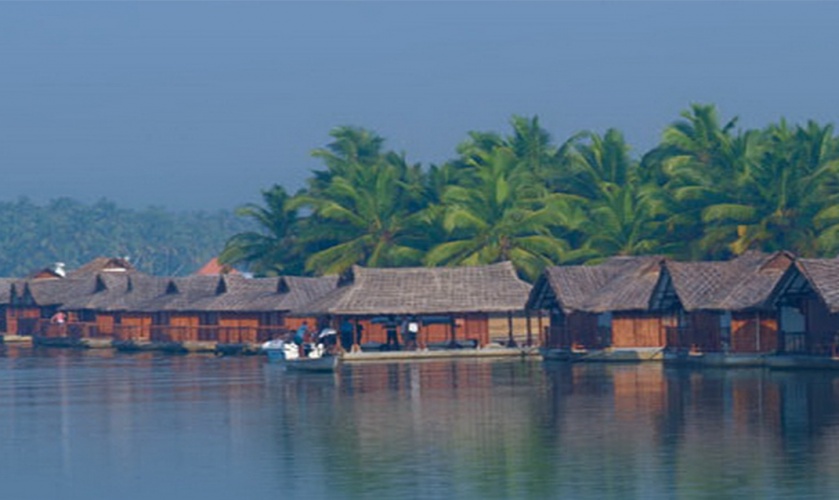
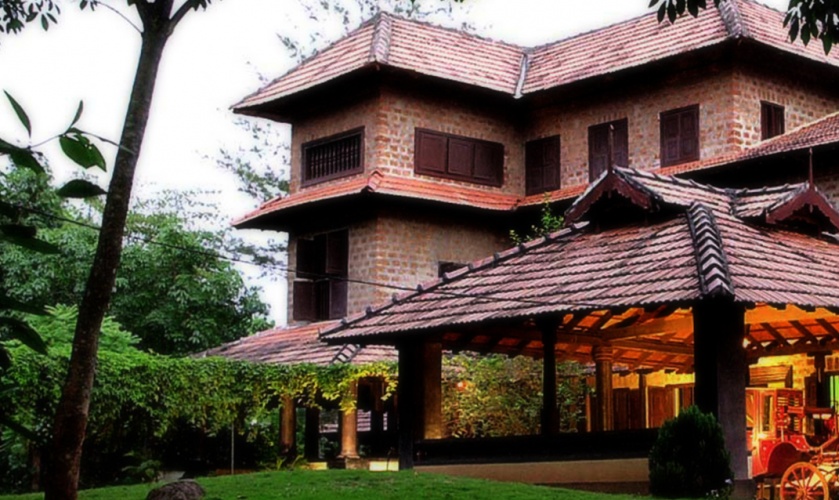
Rajah Healthy Acres
India/Kerala/Palakkad
Starting Rate Per Night: ₹ 6,710
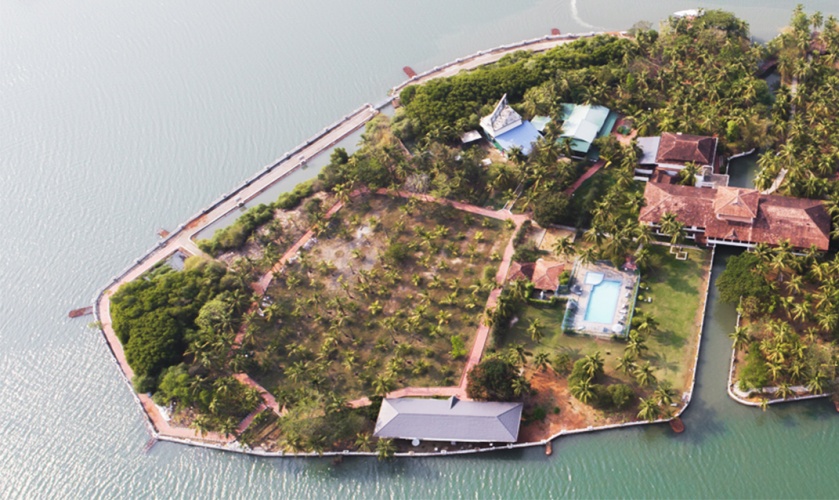
Rajah Healthy Acres is an Ayurvedic hospital and residential treatment centre at Perumanoor, Chalissery, Koottanad, Palakkad, Kerala, established in 1996 as the first treatment centre of Rajah Ayurveda. The centre is situated...
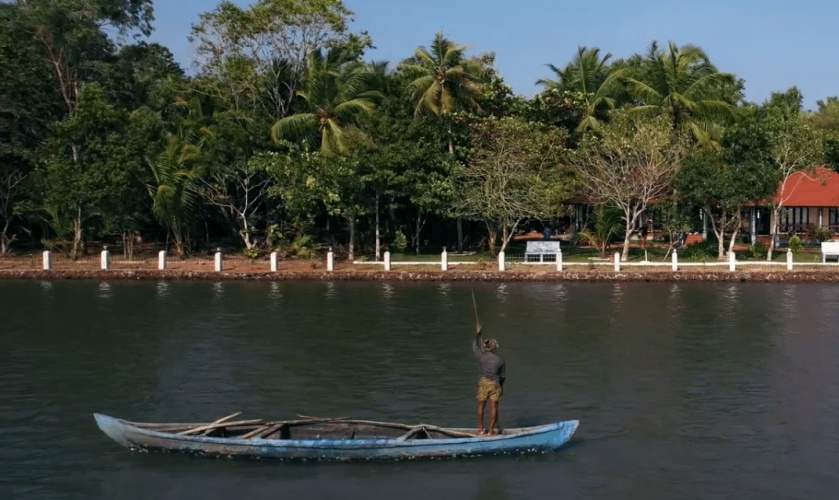
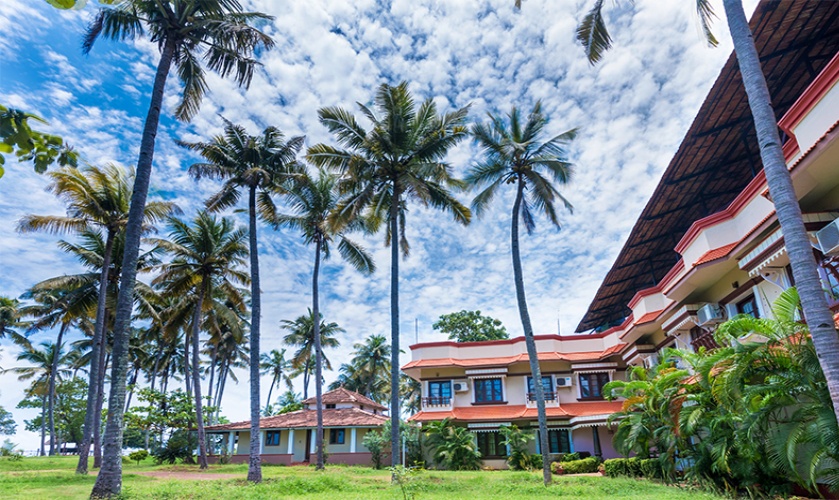
Malika Ayurveda Beach Retreat
India/Kerala/Varkala
Starting Rate Per Night: ₹ 15,422
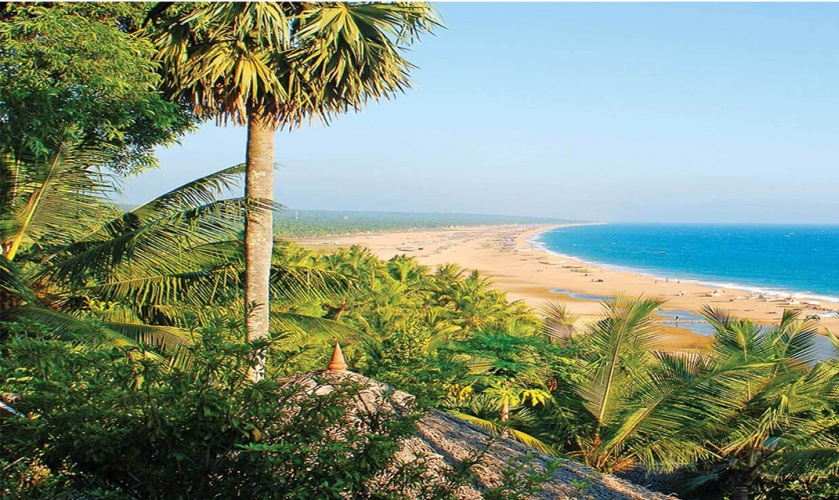
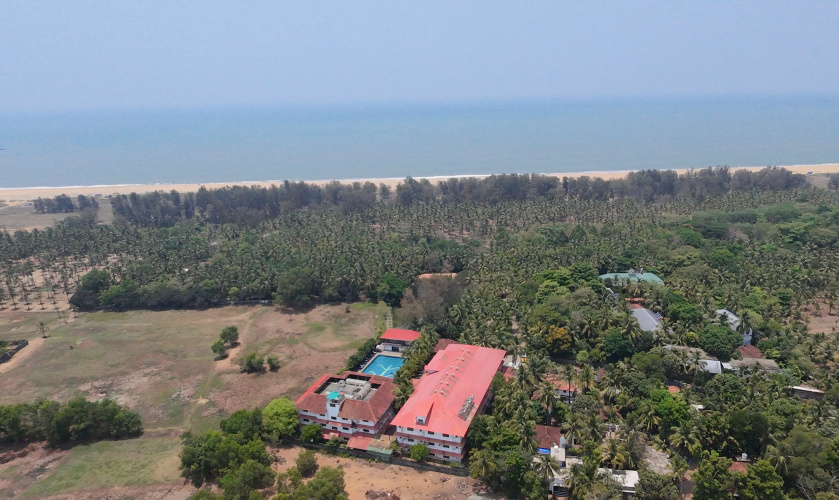
Malika Ayurveda Beach Retreat is a traditional Ayurveda healing centre set atop the dramatic cliffs of Varkala in Kerala, overlooking a 150-foot drop to the Arabian Sea with nearly 200 feet of direct beach frontage and...

When the Skin Inflames: An Ayurvedic Path to Calming Chronic Dermatitis
The skin is the body's largest organ and one of its most communicative. When it inflames — when redness spreads, when itching becomes relentless, when dryness cracks the surface or weeping disrupts the day — something has gone wrong in the dynamic conversation between the skin barrier, the immune system, and the internal environment that supplies them both. Dermatitis is the broad clinical name for that conversation gone awry. It is not a single disease but a family of conditions sharing a common feature: visible, often intensely uncomfortable inflammation of the skin, ranging from a single localised patch to widespread, lifelong patterns affecting daily life in profound ways.
For atopic dermatitis (eczema), the pattern often begins in childhood — the dry, itching, flexural patches that flare and remit through the school years, sometimes persisting into adulthood, sometimes resolving and returning decades later. For contact dermatitis, the trigger may be a single identifiable irritant or allergen — nickel jewellery, fragrance, a workplace chemical, a new cosmetic — producing localised reactions that resolve when the trigger is removed. For seborrhoeic dermatitis, the pattern affects the scalp, face, and chest with greasy yellowish scales linked to Malassezia yeast. For nummular dermatitis, coin-shaped patches appear in random locations on the limbs and trunk. For stasis dermatitis, the lower legs develop chronic changes from venous insufficiency. Across all of these, the visible inflammation is the surface expression of a deeper, often complex interplay of barrier dysfunction, immune dysregulation, microbial influence, and individual susceptibility.
Modern medicine offers a substantial and evolving treatment toolkit. Topical corticosteroids of varying potencies remain first-line for active flares. Topical calcineurin inhibitors (tacrolimus, pimecrolimus) offer steroid-sparing alternatives. PDE4 inhibitors (crisaborole) and JAK inhibitors provide newer options. Antihistamines manage itching. Emollients form the backbone of long-term barrier care. For moderate-to-severe atopic dermatitis, biologic therapies including dupilumab and tralokinumab, along with oral JAK inhibitors, have transformed outcomes in the past decade. For seborrhoeic dermatitis, antifungal preparations are central. For severe cases, phototherapy or systemic immunosuppression may be needed. These approaches are genuinely effective and remain absolutely essential treatment for many patients.
Yet for a substantial portion of chronic dermatitis patients, the treatment plateau is real. The topical steroid that works while applied loses effect when stopped, or thins the skin over years of use. The flares keep returning despite consistent emollient care. The biologic provides genuine relief but raises concerns about long-term immunosuppression. The seasonal pattern, the stress-triggered flare, the food-triggered exacerbation, the broader question — why is my skin chronically doing this, and how do I make it stop — often remains unanswered by surface treatment alone.
This is where Ayurveda offers a thoughtful, clinically grounded contribution. By understanding chronic dermatitis as a manifestation of Kushta and Vicharchika — conditions of Pitta-Kapha-Vata imbalance expressing through Rakta (blood) vitiation, with Ama (metabolic toxins) compounding the inflammatory burden — Ayurvedic care works at depths conventional topical treatment cannot reach. It cools and clears the internal heat driving chronic inflammation, purifies the Rakta carrying the immune signals to the skin, restores Agni (digestive fire) to address the gut-skin axis that modern research increasingly recognises, calms the Vata sensitivity that amplifies reactions, and rebuilds the skin barrier through sustained nourishment, Snehana, and Rasayana — supporting the body to return to a state where the inflammation no longer chronically arises.
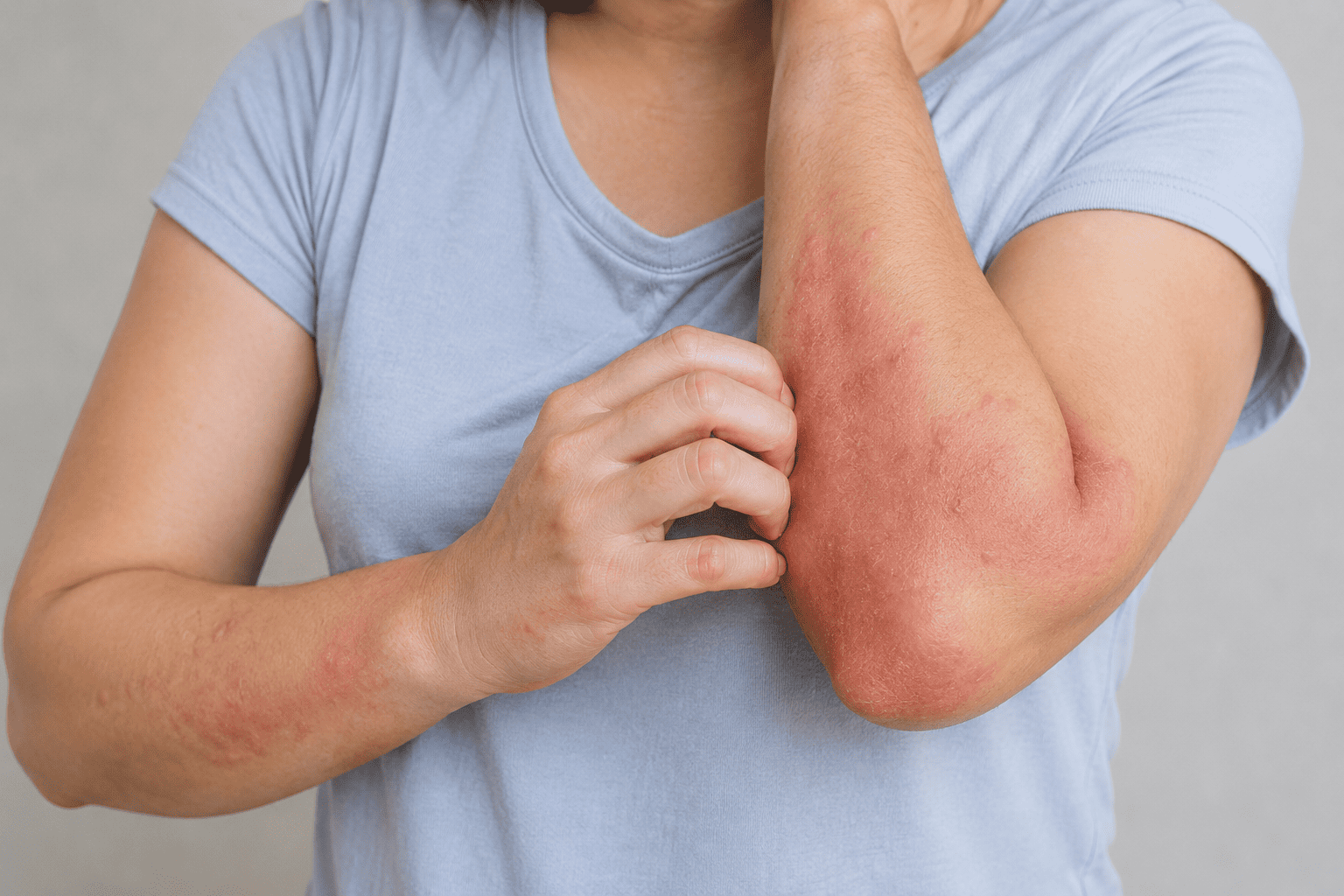
A Dermatitis treatment retreat is best understood as a comprehensive program of medically supervised Ayurvedic care, designed to soothe acute symptoms alongside any conventional treatment, address the deeper Pitta-Rakta-Ama background that drives chronic dermatitis, and meaningfully reduce the recurrence pattern that makes this family of conditions so persistent for those who live with it.
What is Dermatitis?
Dermatitis is an umbrella term for a group of inflammatory skin conditions characterised by visible inflammation — redness, itching, dryness, scaling, oozing, crusting, swelling, or thickening — affecting the skin in varying patterns, distributions, and severities. While the surface expressions vary, the underlying pathophysiology consistently involves some combination of skin barrier dysfunction, immune dysregulation, microbial influence, and individual genetic susceptibility.
The main forms include:
Atopic Dermatitis (Eczema) — The most common chronic inflammatory skin condition, affecting roughly 10 to 20 percent of children and 2 to 10 percent of adults globally. Characterised by intensely itchy, dry, red patches affecting flexural areas (elbow creases, behind the knees, neck), face, and hands. Strongly genetic, often associated with the "atopic march" of asthma, allergic rhinitis, and food allergies. Driven by filaggrin gene mutations causing barrier dysfunction, type 2 immune dysregulation, and microbiome alteration including Staphylococcus aureus colonisation.
Contact Dermatitis — Localised inflammation from direct skin contact with an irritant (irritant contact dermatitis) or allergen (allergic contact dermatitis). Common triggers include nickel, fragrances, preservatives, rubber, certain plants, soaps, detergents, and occupational chemicals. Resolves when the trigger is removed; may require patch testing to identify.
Seborrhoeic Dermatitis — Affects sebum-rich areas (scalp, face — eyebrows, nasolabial folds — chest), linked to Malassezia yeast proliferation, producing yellowish greasy scales with underlying redness.
Nummular (Discoid) Dermatitis — Coin-shaped patches of intensely itchy, often weeping inflammation, typically on limbs and trunk. Often associated with dry skin and may flare in winter.
Stasis Dermatitis — Develops on the lower legs of patients with chronic venous insufficiency. Skin becomes discoloured, thickened, and prone to ulceration.
Dyshidrotic Dermatitis (Pompholyx) — Itchy blisters on the palms, soles, and fingers, often flaring with stress, heat, and sweating.
Other Forms — Including hand dermatitis (common in healthcare workers, hairdressers, and others with frequent water exposure), neurodermatitis (lichen simplex chronicus, from chronic scratching), and asteatotic dermatitis (severe winter dryness).
Common symptoms across forms include itching (often the most distressing symptom, leading to scratching that worsens inflammation), redness or erythema, scaling and dryness, in acute presentations weeping and crusting, in chronic presentations skin thickening (lichenification), and pigmentation changes that may persist after the active inflammation resolves. Risk factors include genetic predisposition, atopic background, environmental allergens and irritants, dry climate, stress, infections (Staphylococcus, herpes, Malassezia), microbiome disruption, and dietary factors. Diagnosis is largely clinical; investigations include patch testing for contact allergens, IgE testing for atopic background, and biopsy for atypical or refractory cases.
Understanding Kushta and Vicharchika: The Ayurvedic Root of Dermatitis
In Ayurveda, the broad family of chronic inflammatory skin conditions modern medicine groups under "dermatitis" falls within the classical category of Kushta — a comprehensive term for skin disorders described in extraordinary detail in Charaka Samhita, Sushruta Samhita, Ashtanga Hridaya, and Madhava Nidana. The classical taxonomy describes 18 sub-types of Kushta (7 Mahakushta and 11 Kshudrakushta), each with distinct clinical features. The presentation most clinically aligned with atopic dermatitis and the broader dermatitis spectrum is Vicharchika — described as a Kshudrakushta with cardinal features of Kandu (intense itching), Pidaka (small papules), Shyava Varna (dark or dusky discoloration), and Bahu Srava (significant oozing or discharge) — a remarkably accurate description of weeping, itching dermatitis. Seborrhoeic dermatitis aligns with Sidhma Kushta. Different presentations within the spectrum align with different Kushta sub-types based on doshic predominance.
The doshic understanding shapes the pathology:
Tridoshic Vitiation with Pitta and Rakta Predominance — Classical Ayurveda recognised that chronic skin conditions involve all three doshas in varying combinations, with Pitta and Rakta vitiation typically central. Pitta drives the heat, redness, burning, and inflammatory character. Kapha contributes the oozing, swelling, and waxy thickening. Vata produces the dryness, scaling, itching, and migratory patterns.
Rakta Dushti (Blood Vitiation) — The central pathology of chronic dermatitis is the vitiation of Rakta Dhatu (blood tissue). Toxin-laden, Pitta-aggravated blood carries inflammatory signals to the skin, driving the visible eruption. This corresponds remarkably to modern understanding of immune-mediated cutaneous inflammation, with circulating immune cells and inflammatory mediators reaching the skin via the dermal microcirculation.
Twak (Skin) and Mamsa (Underlying Tissue) Dushti — In chronic dermatitis, both the surface Twak and the deeper Mamsa Dhatu become vitiated. This explains the chronic thickening and lichenification seen in long-standing eczematous skin — surface inflammation extending into deeper tissue change.
Ama and Mandagni (The Gut-Skin Axis in Classical Form) — Ayurveda has long recognised the connection between digestive function and skin health. Weak digestive fire generates Ama (undigested, metabolically toxic material) that enters circulation, contributes to immune dysregulation, and triggers the inflammatory reactivity expressed at the skin. This corresponds with extraordinary precision to modern research on the gut-skin axis, intestinal permeability, microbiome alterations, and food sensitivities in chronic dermatitis — particularly atopic dermatitis where the connection is well-established.
Viruddha Ahara (Incompatible Food Combinations) — Ayurveda specifically identifies food combinations that disturb digestion and generate Ama: combining milk with fish or sour fruits, hot and cold foods together, fermented foods with raw, certain meat combinations. These dietary patterns are clinically observed to worsen chronic dermatitis in many patients — a classical observation modern research is increasingly validating.
Asatmya (Individual Incompatibility — the Ayurvedic Concept of Allergy) — Ayurveda's concept of Asatmya describes the body's incompatibility with specific substances, foods, or environmental factors — corresponding closely to the modern concept of allergy and hypersensitivity. The framework provides clear guidance for identifying and avoiding individual triggers in chronic dermatitis.
Ojas Kshaya and Immune Dysregulation in Chronic Cases — Years of chronic skin inflammation, repeated infections, broken sleep from itching, and the systemic burden of chronic disease deplete Ojas (vital essence and immune reserve), creating the dysregulated immune state in which chronic dermatitis perpetuates.
Stress and Manasika Bhava (Mental-Emotional Drivers) — Classical Ayurveda specifically identifies emotional disturbance, suppressed feelings, and chronic stress as drivers of Kushta — corresponding to the well-documented role of stress, anxiety, and the brain-skin axis in chronic dermatitis flares.
This understanding shapes a comprehensive Ayurvedic approach: clear aggravated Pitta, purify the vitiated Rakta, address Kapha-Vata involvement based on individual presentation, kindle Agni and clear Ama through internal therapy, identify and modify specific dietary and lifestyle Nidana (triggers), address the stress-skin dimension, restore the skin barrier through Snehana and medicated external therapies, and rebuild Ojas and immune balance through sustained Rasayana — working alongside topical and where needed systemic conventional therapy, and offering the deeper recurrence-prevention reach that surface treatment alone cannot.
The 3 Stages of Ayurvedic Treatment for Dermatitis
Ayurvedic care for Dermatitis follows a carefully sequenced three-stage approach, adapted at every step to the specific type of dermatitis (atopic, contact, seborrhoeic, nummular, stasis, dyshidrotic), severity, acuity vs chronicity, doshic predominance, identified triggers, and overall constitution.
1. Preparation (Purva Karma) The preparatory stage begins with Deepana-Pachana (kindling the digestive fire and digesting Ama) — particularly important in chronic dermatitis where gut-mediated immune dysfunction underlies persistent presentation. Internal Snehana (oleation) with cooling, Rakta-purifying medicated ghees such as Mahatiktaka Ghrita, Tiktaka Ghrita, and Patolakaturohinyadi Ghrita prepares the body for clearing therapies while providing systemic anti-inflammatory and immune-modulating action. Gentle external Abhyanga with cooling medicated oils, and mild Swedana where Vata predominates, support broader doshic balance. The emphasis is on creating the internal conditions favourable to skin recovery before localised and clearing therapies intensify.
2. Core Treatment (Pradhana Karma) Primary therapies focus on clearing Pitta-Rakta vitiation and providing direct skin support. Virechana (therapeutic purgation) is the central therapy for dermatitis and one of the most established Ayurvedic interventions for Pitta-Kapha-dominant skin conditions. Performed with appropriate herbal purgatives such as Avipattikar Churna, Trivrit Lehyam, or Triphaladi formulations, Virechana clears aggravated Pitta from the gut, liver, and circulation, reduces inflammatory mediator burden, and produces meaningful improvement in chronic dermatitis patients. In cases of severe Rakta vitiation, intense localised inflammation, and chronic refractory presentations, Raktamokshana (controlled bloodletting) — performed traditionally via Jalauka Avacharana (medicinal leech therapy) or carefully controlled venesection — may be considered for its powerful local and systemic effect. External therapies include medicated oil applications (Abhyanga with appropriate Pitta-pacifying oils such as Eladi Taila, Karanja Taila, and Nalpamaradi Taila), medicated paste applications (Lepa) for direct cooling action, medicated bath preparations (Avagaha), and where appropriate Nasya for the broader head-skin ecosystem. For cases linked to stress, Shirodhara provides nervous-system support. Cooling, anti-inflammatory, and skin-supportive herbal formulations are administered throughout.
3. Rejuvenation (Paschat Karma) The final stage focuses on long-term resolution and prevention through sustained Rasayana therapy with immune-modulating and skin-supportive medicines, a strict Pitta-Rakta-pacifying Ayurvedic diet with identified-trigger avoidance, structured emollient and skin barrier care, stress reduction practices, and ongoing maintenance with herbs such as Manjistha, Sariva, Guduchi, Haridra, and Khadira at preventive doses. For chronic dermatitis patients, this stage delivers the most meaningful long-term benefit — not the relief of a single flare but the gradual shift in the underlying immune and skin barrier patterns that make recurrence less frequent and less severe.
The 5 Core Therapies for Dermatitis Explained
1. Virechana (Therapeutic Purgation) Virechana is the single most established and clinically important Ayurvedic therapy for chronic dermatitis. Using classical herbal purgatives selected for both potency and Pitta-pacifying character, Virechana eliminates aggravated Pitta and Kapha from the gastrointestinal tract, liver, and metabolic channels — directly reducing the inflammatory and immune mediator burden that drives chronic dermatitis. Modern clinical research from Indian Ayurvedic institutions has consistently shown meaningful improvement in atopic dermatitis severity, itching, and quality-of-life scores following structured Virechana protocols. Performed under careful physician supervision with appropriate dosing calibrated to the patient's strength and current symptom state, with detailed dietary preparation and post-procedure care, Virechana represents the cornerstone of chronic dermatitis management.
2. Raktamokshana (Bloodletting Therapy via Leech Application or Controlled Venesection) Raktamokshana — the controlled removal of small quantities of vitiated blood — is one of Ayurveda's classical interventions for Rakta-dominant skin conditions, specifically indicated in dermatitis with marked blood vitiation, deeply localised intense inflammation, chronic lichenified plaques, and resistant cases that have not responded to other interventions. Jalauka Avacharana (medicinal leech therapy) is the most commonly used form, where medicinal leeches are carefully applied to selected sites to draw small quantities of vitiated blood. The leeches' saliva also contains bioactive substances with anti-inflammatory and anticoagulant properties. Performed only by trained physicians in properly equipped centres with strict aseptic precautions and careful patient selection, Raktamokshana provides a powerful clearing effect that complements Virechana for resistant chronic dermatitis cases.
3. Medicated External Therapy (Abhyanga, Lepa, Avagaha) External therapy with medicated oils, pastes, and baths forms the direct skin-restorative dimension of Dermatitis care. Abhyanga with Pitta-pacifying, anti-inflammatory medicated oils — Eladi Taila for cooling and soothing action, Karanja Taila for antimicrobial properties, Nalpamaradi Taila for inflammation and pigmentation, Mahanarayana Taila for deeper tissue support, and Yashtimadhu Taila for soothing irritated skin — provides direct barrier restoration, calming of Vata-driven dryness, and antimicrobial action against secondary infection. Medicated paste applications (Lepa) using sandalwood, Manjistha, neem, turmeric, and other classical herbs deliver direct cooling and antimicrobial action to affected patches. Medicated bath preparations (Avagaha) using neem, turmeric, and Triphala decoctions provide whole-body soothing for widespread presentations. The choice of oils, pastes, and bath preparations is calibrated to specific presentation — different oils for different doshic patterns and different stages of inflammation.
4. Cooling Rakta-Purifying Internal Herbal Therapy (Shamana Chikitsa) A personalised regimen of classical cooling, Rakta-purifying, anti-inflammatory herbs forms the pharmacological backbone of internal Dermatitis care. Manjistha (Rubia cordifolia) is the premier classical Rakta-purifier with proven anti-inflammatory action. Sariva (Hemidesmus indicus) cools aggravated Pitta in Rakta and reduces skin reactivity. Guduchi (Tinospora cordifolia) provides powerful immunomodulatory and antioxidant support — one of the most researched Ayurvedic herbs for immune-related conditions. Haridra (Curcuma longa, turmeric) offers anti-inflammatory and natural antihistaminic action with substantial modern research support. Nimba (Azadirachta indica, neem) cleanses blood and supports skin health with documented antimicrobial activity against the Staphylococcus aureus often colonising atopic skin. Khadira (Acacia catechu) is classically valued for chronic Kushta. Bakuchi (Psoralea corylifolia) supports pigmentation restoration in post-inflammatory hyperpigmentation. Aragwadha (Cassia fistula) supports Pitta clearance. Classical formulations including Mahatiktaka Ghrita, Tiktaka Ghrita, Manjisthadi Kashayam, Mahamanjisthadi Kwath, Khadirarishtam, Sarivadyasava, Patolakaturohinyadi Kashayam, Avipattikar Churna, Kaishora Guggulu, and Gandhaka Rasayana are prescribed individually based on doshic predominance, type of dermatitis, and clinical pattern.
5. Rasayana and Immune-Restorative Long-Term Therapy Rasayana therapy is the cornerstone of chronic dermatitis resolution and the truest answer to the patient's deepest question — how to genuinely shift the pattern rather than suppress flares. Classical Rasayanas including Chyawanprash (in Pitta-pacifying preparations for inflammatory dermatitis), Amalaki Rasayana, Guduchi Rasayana, Brahma Rasayana, Haridrakhandam, and Manjistha-based preparations work over months to modulate immune balance, restore Ojas, reduce chronic inflammatory tone, repair barrier function, and meaningfully reduce the reactivity that drives recurrent flares. Bakuchi Rasayana supports post-inflammatory pigmentation. Combined with sustained low-dose maintenance of Manjistha, Sariva, Guduchi, Haridra, and Khadira at preventive doses, Rasayana therapy delivers what topical treatment alone cannot: a genuine shift in the body's underlying susceptibility pattern over the months and years that follow.
How Long Should an Ayurvedic Treatment Program for Dermatitis Last?
|
Therapeutic Benefit | ||||
|
|
||||
| 14–21 days | Moderate Pitta-Rakta clearance, established Rasayana foundation, calmer skin | ||||
| 21–28 days | Complete treatment protocol — recommended for most chronic dermatitis patients | ||||
| 28+ days | Long-standing refractory dermatitis, severe atopic disease, or extensive involvement |
The exact duration of your Dermatitis treatment is decided after consultation with the Ayurvedic doctor, based on the specific type of dermatitis, severity and extent of involvement, doshic profile, current medications including topical steroids or biologics, age, and overall strength. As a general guide, 21 to 28 days supports meaningful clearing and the foundation of resolution, with longer programs for severe atopic dermatitis or extensive chronic disease. Because chronic dermatitis is fundamentally a long-term inflammatory pattern, a consistent home regimen of prescribed Rasayana medicines, dietary discipline, identified-trigger avoidance, barrier care, and lifestyle measures after the retreat is what genuinely shifts the underlying susceptibility over the months that follow.
Benefits of an Ayurvedic Treatment Retreat for Dermatitis
| Physical Benefits | Skin and Immune Benefits | Long-Term Impact | |
| Reduced flare frequency and intensity | Calmed Pitta-driven inflammation |
|
|
| Improved digestion and reduced bloating | Restored skin barrier and reduced dryness | Sustained immune balance through Rasayana | |
| Reduced fatigue and improved sleep | Soothed itching and burning sensation | Reduced dependence on long-term topical steroids | |
| Reduced systemic inflammatory burden | Purified Rakta and reduced reactivity | Resolved post-inflammatory pigmentation over time |
Why Kerala is the Best Place for Dermatitis Treatment
An Ayurvedic Dermatitis treatment retreat in Kerala, India offers the most clinically authentic environment for managing this often-stubborn family of conditions through both active clearing and long-term recurrence reduction.
- Experienced physicians with specific expertise in Kushta, Vicharchika, and the integrative management of chronic immune-driven skin conditions
- BAMS and MD Ayurveda-certified doctors trained in classical Virechana, Raktamokshana, Jalauka Avacharana (leech therapy), and the full range of external therapies — Abhyanga, Lepa, Avagaha — specific to skin disorders
- In-house preparation of classical dermatitis formulations — Mahatiktaka Ghrita, Patolakaturohinyadi Kashayam, Mahamanjisthadi Kwath, Khadirarishtam, Sarivadyasava, Eladi Taila, Nalpamaradi Taila, Karanja Taila, Yashtimadhu Taila — using authentic methods and fresh herbs
- Integrated monitoring of skin condition, flare patterns, and treatment response throughout the program
- A long-established Kerala tradition of skin disease management, refined over centuries
- Warm coastal climate conducive to skin healing, gentle medicated bath therapies, and barrier recovery
Sri Lanka offers a comparable tropical healing environment with growing Ayurvedic expertise in skin and immune conditions, while Bali provides wellness-oriented treatment retreats integrating Ayurvedic dermatitis care with holistic dietary correction, stress management, and long-term prevention.
Dermatitis Treatment Retreats by Location and Recommended Centres
Kerala, India — The most clinically authentic destination for Ayurvedic Dermatitis treatment, with physicians experienced in Kushta and the rich Kerala tradition of specialised skin disease management including Virechana, Raktamokshana, and the full range of external therapies. Alleppey • Kovalam • Kumarakom • Wayanad • Palakkad
Sri Lanka — Coastal Ayurveda treatment retreats offering traditional skin and immune-supportive therapies in a serene environment ideal for dermatitis recovery and prevention. Wadduwa • Weligama • Sigiriya • Kosgoda • Bentota
Bali, Indonesia — Wellness treatment retreats integrating Ayurvedic dermatitis care with holistic dietary correction, stress management, and immune balance in scenic tropical surroundings. Ubud • Nusa Dua • Candidasa • Lovina
WellnessLoka connects you with verified centres across these destinations, ensuring Dermatitis treatment programs are physician-guided, appropriate for the specific type and severity of your condition, and personalised to your individual doshic constitution and trigger profile.
Who Should Consider an Ayurvedic Dermatitis Treatment Retreat
Patients with chronic atopic dermatitis (eczema) — Adults and older children whose atopic dermatitis has persisted into a chronic pattern despite topical therapy, who recognise that long-term topical steroid use is not a sustainable solution, and who want a serious program to address the deeper barrier-immune-microbiome dimensions of their condition.
Patients with chronic seborrhoeic dermatitis — Those whose dandruff-spectrum condition has progressed to inflammatory seborrhoeic dermatitis affecting scalp, face, and chest, seeking integrative care beyond antifungal shampoos and short courses of topical steroids.
Patients with recurrent contact dermatitis — Individuals with chronic contact dermatitis where complete trigger avoidance is difficult, who want to reduce the reactivity threshold and rebuild skin barrier resilience through a structured program.
Topical steroid dependent patients — Those who have been on long-term topical steroids and are experiencing thinning, telangiectasias, tachyphylaxis (reduced response), or topical steroid withdrawal symptoms, who want a gradual transition supported by integrative Ayurvedic care.
Patients with nummular or stasis dermatitis — Individuals dealing with coin-shaped nummular patches or chronic lower-leg stasis changes, seeking targeted external therapy combined with internal Rakta-purifying care.
Patients with severe atopic dermatitis on or considering biologics — Those on dupilumab, tralokinumab, or oral JAK inhibitors, or considering these therapies, who want a parallel integrative program to support broader recovery and possibly reduce long-term reliance. The combination requires careful coordination with the treating dermatologist.
Atopic dermatitis patients with associated atopic conditions — Children and adults with atopic dermatitis accompanied by asthma, allergic rhinitis, or food allergies, who want a holistic program addressing the broader atopic march alongside dermatitis itself.
Patients with post-inflammatory pigmentation — Those whose chronic dermatitis has left significant post-inflammatory hyperpigmentation, who want Bakuchi and Manjistha-based therapy to gradually restore skin colour alongside active disease control.
Patients with stress-triggered dermatitis flares — Those whose dermatitis clearly worsens with stress, sleep disturbance, or emotional upheaval, who want to address the brain-skin axis through Shirodhara, Medhya Rasayana herbs, meditation, and lifestyle correction.
Patients seeking to reduce dependence on long-term immunosuppression — Individuals on systemic immunosuppressants for severe disease who, with their treating dermatologist's coordination, want to explore building immune balance through integrative care.
Who Should Approach Treatment with Caution
Ayurvedic care for dermatitis is genuinely effective for chronic and recurrent presentations and offers important integrative value alongside topical and where needed systemic therapy, but is not appropriate as primary treatment in several clinical scenarios. A thorough consultation is essential, and Ayurvedic retreat-based care should be deferred or undertaken only with appropriate specialist coordination in cases involving:
Acute severe atopic dermatitis with widespread oozing or secondary infection — Severe acute flares with widespread weeping, crusting, fever, or clinical signs of bacterial infection require conventional antibiotic and active dermatological management first; Ayurvedic care is more valuable in the inter-flare or chronic-stable phase.
Eczema herpeticum — A serious viral infection of eczematous skin with disseminated herpes simplex requires immediate antiviral treatment and is a dermatological emergency — never appropriate for retreat-based management.
Suspected scabies, fungal infection, or other specific infectious dermatoses — Conditions that mimic dermatitis but require specific antimicrobial treatment need accurate diagnosis and conventional treatment first.
Severe topical steroid withdrawal syndrome — Patients in the acute, severe phase of topical steroid withdrawal need careful, expert clinical management, often with a phased approach coordinated with their dermatologist before retreat-based care is appropriate.
Drug-related dermatitis from acute medication reactions — Severe drug-induced rashes including Stevens-Johnson syndrome and toxic epidermal necrolysis are life-threatening emergencies requiring immediate hospital care.
Severe associated systemic disease — Patients whose dermatitis is part of broader active autoimmune disease, severe immunodeficiency, or active malignancy need primary management of the underlying condition under specialist supervision.
Pregnancy with severe dermatitis — Specific pregnancy-related dermatoses including pruritic urticarial papules and plaques of pregnancy, intrahepatic cholestasis of pregnancy, and pemphigoid gestationis require obstetric and dermatological co-management; retreat-based Ayurvedic care is generally deferred until after delivery.
Children with severe atopic dermatitis — Young children with severe atopic dermatitis benefit from gentle Ayurvedic care under specialised paediatric Ayurvedic supervision; the full range of adult Panchakarma is not used in young children, and coordination with the child's paediatric dermatologist is essential.
Choosing the Right Treatment Retreat for Dermatitis
Qualified physicians with chronic skin disease expertise — BAMS or MD Ayurveda-credentialed doctors with demonstrated experience in Kushta, Vicharchika, and the specific type of dermatitis you present with, not generalists applying standard wellness protocols.
Proper facilities for specialised procedures — Centres with the aseptic environment, equipment, and trained personnel for safely performing Virechana, Jalauka Avacharana (leech therapy), Raktamokshana, and other specialised interventions on appropriately selected patients.
Personalised type-and-doshic-specific protocols — Treatment plans built around the specific type of dermatitis (atopic, contact, seborrhoeic, nummular, stasis, dyshidrotic), doshic predominance, severity, current treatment regimen including topical steroids or biologics, and constitutional profile.
Capacity for trigger identification and dietary intervention — Centres with the clinical depth to help patients identify dietary, environmental, contact, emotional, and physical triggers through structured assessment, dietary trials where appropriate, and clear post-retreat trigger-management guidance.
Authentic in-house herbal preparations — Classical formulations including Mahatiktaka Ghrita, Patolakaturohinyadi Kashayam, Mahamanjisthadi Kwath, Khadirarishtam, Sarivadyasava, Eladi Taila, Nalpamaradi Taila, and Karanja Taila prepared on-site using traditional methods and fresh herbs.
Stress and sleep management integration — Centres that take the nervous-system and stress dimensions of chronic dermatitis seriously, with Shirodhara, meditation, and structured stress-reduction integrated into the program where the patient's pattern warrants it.
Willingness to coordinate with the patient's dermatologist — Centres whose physicians understand that chronic dermatitis management often involves both Ayurvedic and conventional intervention — particularly with biologics and systemic immunosuppression — and who are willing to communicate openly with treating dermatology teams as needed.
Capacity for gradual topical steroid transition — For topical steroid-dependent patients, centres with the expertise to support a careful, gradual transition that minimises rebound flares and topical steroid withdrawal symptoms.
How WellnessLoka Helps You Choose the Right Ayurveda Treatment Retreat for Dermatitis
Choosing the right treatment retreat for Dermatitis is a decision that carries real clinical weight. Dermatitis is not one condition but a family of related conditions, and the right program depends on accurate matching of the patient's specific type and severity to centres with the relevant expertise. WellnessLoka exists to ensure that patients can make this decision with full information, genuine guidance, and complete confidence.
Access to Verified Retreat Centres Every centre listed on WellnessLoka for Dermatitis treatment has been independently assessed for physician credentials, clinical experience with the specific form of dermatitis you present with, and the facilities to safely perform the specialised therapies dermatitis care can involve. We list only centres where protocols are genuinely adapted to chronic dermatitis care — not standard wellness programs applied without the necessary clinical depth.
Free Pre-Retreat Consultation with Our Ayurvedic Doctor Before you choose a retreat, WellnessLoka offers a complimentary consultation with our in-house Ayurvedic consultant. This consultation reviews the specific type and severity of your dermatitis, your treatment history including topical steroids, calcineurin inhibitors, biologics, or systemic immunosuppression, doshic profile, identified triggers, associated conditions, and overall health, and based on this assessment, matches you with the retreat centre and program duration best suited and safest for your situation — connecting you with centres whose physicians have specific experience managing your type of dermatitis. It is purely a guidance consultation to help you make an informed, medically sound decision before you travel, and does not involve prescribing or directing your treatment.
Transparent Centre Comparison WellnessLoka provides clear, honest information about each listed centre — physician qualifications, therapy protocols, program structure, monitoring capabilities, accommodation, and pricing — allowing you to compare options across Kerala, Sri Lanka, and Bali with full clarity and confidence before making any commitment.
Best Price Guarantee Through our strong, long-standing relationships with partner centres, you benefit from exclusive partner pricing that is always lower than booking directly. You receive the most authentic care for your Dermatitis treatment program without paying more for it.
Retreats for Every Budget From luxury wellness resorts to affordable, authentic healing centres, WellnessLoka helps you find a Dermatitis treatment retreat that aligns perfectly with your comfort level and budget — without ever compromising on the clinical quality the condition requires.
Treatment is in Expert Hands Once you arrive at your chosen retreat, your Dermatitis treatment program is fully designed and managed by the qualified Ayurvedic physicians at that centre. From your first in-person consultation onwards, all clinical decisions, daily monitoring, therapeutic adaptation, and medical management are guided by experienced doctors on the ground — physicians with deep training in skin and immune-driven conditions and direct, hands-on familiarity with the therapies your program involves. Your treatment unfolds under continuous, qualified supervision, with protocols adapted to your response day by day.
Local Support Team Our on-ground experts assist you at every step, from your first enquiry through to the completion of your retreat — resolving any issues that arise and ensuring your entire Dermatitis healing journey runs smoothly and stress-free.
End-to-End Booking Support From your first enquiry to confirmed booking, WellnessLoka provides full administrative and logistical support — ensuring a smooth, stress-free process so that you and your family can focus entirely on preparing for your healing program.
Why Travellers Trust WellnessLoka WellnessLoka is rated 4.9? on Google, with verified reviews from wellness travellers who have experienced authentic Ayurveda healing through us. We are trusted by hundreds of travellers from 28+ countries across Europe, the Americas, Asia, Australia, and Africa, backed by over a decade of expertise in curating authentic Ayurveda retreats across trusted centres. Our dedicated support team is available 24×7 to assist you before, during, and after your Dermatitis treatment retreat.
Begin Your Healing Journey
Chronic dermatitis is one of those conditions where the topical treatment works while it is applied and the inflammation returns when it is stopped — where the surface relief is real but the resolution stays just out of reach, and where the question that matters most to the patient is rarely answered by the topical tube: why is my skin chronically doing this, and how do I make it stop for good?
Gentle, restorative Ayurvedic care offers what may be the most meaningful contribution available to that deeper question: clearing the aggravated Pitta and vitiated Rakta that drive chronic dermatitic inflammation through Virechana and Rakta-purifying herbs, addressing the gut-skin axis that modern research increasingly recognises as central, identifying and modifying the dietary, environmental, and emotional triggers that perpetuate flares, restoring the skin barrier through medicated oils and external therapies, and building genuine long-term immune balance through sustained Rasayana with Manjistha, Guduchi, Haridra, and Khadira. Whether you choose a treatment retreat in Kerala, Sri Lanka, or Bali, Ayurvedic care for Dermatitis offers a thoughtful, dignified, and deeply personalised path to lasting relief from chronic inflammation — always as a complement to, and never a replacement for, the topical and where needed systemic conventional treatment your condition may require.


