
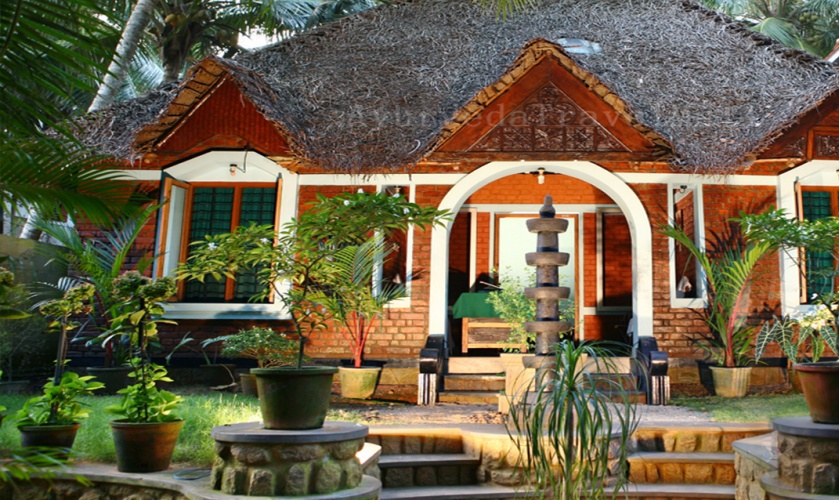
Dr Franklins Panchakarma Institute and Research Centre
India/Kerala/Kovalam
Starting Rate Per Night: ₹ 11,912

Dr Franklin’s Panchakarma Institute and Research Centre is an Ayurveda-focused treatment and residential centre situated at Chowara, South Kovalam, Thiruvananthapuram, Kerala – 695501, approximately 18 km from...

When the Pain Won't Leave: An Ayurvedic Path to Chronic Headache Relief and Lasting Recovery
Chronic Headache is one of the most disabling and underestimated conditions in clinical medicine, affecting an estimated 3 to 5 percent of the global population with daily or near-daily headache and substantially affecting work, relationships, sleep, and overall quality of life in ways that those without chronic headache often struggle to appreciate. Unlike episodic headache where the pain comes and goes leaving the person whole between attacks, chronic headache becomes a constant or near-constant background presence — the headache that is there on waking, that persists through the day, that complicates every activity, that disturbs sleep, that erodes patience and emotional reserve, that progressively narrows the person's life as the cognitive cost of functioning through pain becomes overwhelming. For the person living with chronic headache, the experience is qualitatively different from intermittent severe attacks — it is the wearing-down quality of pain that does not relent, the loss of headache-free time as reference point, the gradual normalisation of suffering, and the eventual question of whether life without daily headache is even possible to remember or imagine.
The clinical patterns are distinct and well-characterised. Chronic migraine is defined as headache occurring on 15 or more days per month for more than 3 months, with at least 8 days fulfilling migraine criteria — typically representing transformation from episodic migraine over months or years, often with medication overuse contribution. Chronic tension-type headache is defined as tension-type headache (typically bilateral, pressing or tightening quality, mild to moderate intensity, not aggravated by routine physical activity) occurring on 15 or more days per month for more than 3 months — often associated with chronic stress, poor posture, muscle tension, and underlying anxiety or depression. Chronic post-traumatic headache persists more than 3 months after head injury, often combining migrainous and tension-type features and frequently associated with broader post-concussion features including cognitive symptoms, sleep disturbance, and mood symptoms. Hemicrania continua is a strictly unilateral continuous headache with autonomic features and complete response to indomethacin (which is itself diagnostic). New daily persistent headache is a distinctive entity where headache begins suddenly and persists continuously from a remembered specific day, often without prior headache history. Medication-overuse headache complicates many chronic headache patterns where acute headache medications used more than 10-15 days per month perpetuate and worsen the headache pattern, creating a vicious cycle requiring structured withdrawal. Chronic cluster headache involves recurrent cluster periods without remission. Various other chronic headache disorders complete the spectrum.
The cause of chronic headache is fundamentally about transformation — the process by which acute or episodic headache becomes chronic. The factors driving this transformation include central sensitisation in which the nervous system becomes progressively more sensitive to pain signals over time, medication overuse where the very treatments intended to relieve pain perpetuate it through complex mechanisms, inadequately treated underlying primary headache (most commonly episodic migraine) progressing to chronic forms, chronic stress and psychological factors including depression and anxiety which both contribute to and result from chronic headache, sleep disturbance which is both feature and driver of chronic headache, musculoskeletal factors including cervical spine pathology, postural patterns, and chronic muscle tension, chronic inflammation and the broader neuroinflammatory processes increasingly recognised in chronic pain, substance use including alcohol and caffeine excess or withdrawal, hormonal factors particularly in women, and comorbid medical conditions including obesity, sleep apnea, and various others. The transformation typically occurs over months to years rather than abruptly, with progressive worsening of headache frequency and severity until the chronic pattern is established.
Modern management has advanced substantially over recent decades but remains challenging for the chronic forms. Identification and treatment of any underlying primary headache (most commonly chronic migraine emerging from episodic migraine) is foundational, with preventive medications including beta-blockers, antidepressants, anti-epileptics, calcium channel blockers, and the newer CGRP monoclonal antibodies and gepants providing genuine benefit for many patients. Structured medication-overuse withdrawal is essential for patients with significant acute medication overuse, typically improving headache pattern substantially over weeks to months once medication overuse is interrupted. Botulinum toxin injections are FDA-approved for chronic migraine. Lifestyle modifications including regular sleep, regular meals, hydration, identified trigger avoidance, regular exercise, stress management, and weight management for those with obesity. Treatment of comorbid conditions including sleep apnea, depression, anxiety, and other contributing conditions. Physical therapy and treatment of cervical pathology for tension-type and cervicogenic components. Psychological therapies including cognitive-behavioural therapy and biofeedback. Acute treatment with appropriate medications used judiciously to avoid medication overuse.
These approaches are essential, often substantially effective, and the foundation of chronic headache management.
Yet despite these approaches, real therapeutic gaps remain for many chronic headache patients. The patient with chronic migraine on multiple preventives still experiencing daily pain. The patient who has successfully completed medication-overuse withdrawal but whose chronic headache persists. The patient experiencing side effects from preventive medications. The patient whose chronic post-traumatic headache has not responded to standard approaches. The patient with chronic tension-type headache where stress, posture, and muscle tension have created a self-perpetuating pattern. The deeper questions — what is driving the chronic central sensitisation, why has my pain become persistent, how do I rebuild the underlying nervous-system resilience that has been depleted by years of chronic pain — remain substantially beyond what standard headache treatments can address.
This is where Ayurvedic care offers a thoughtful, clinically grounded supportive contribution that integrates particularly well with modern headache medicine. Classical Ayurveda addresses chronic headache patterns through several interconnected frameworks: chronic Shirashoola (chronic head pain) with its detailed classification by doshic predominance; Ardhavabhedaka (the classical migraine analog) when chronic migraine is the underlying pattern; Shankhaka (a specific severe headache pattern); Anantavata (chronic head and neck pain involving Marma dimensions); and the broader framework of chronic Vata-Pitta vitiation affecting head channels. The classical recognition that chronic head pain represents transformation from acute patterns, that it involves substantial nervous-system depletion (Ojas Kshaya), that medication overuse or substance dependence can perpetuate the pattern, and that comprehensive constitutional rebuilding alongside head-specific therapy is required, aligns conceptually with modern understanding of chronic headache transformation. By identifying the underlying doshic pattern, providing direct head therapies through Shirodhara as cornerstone alongside Nasya, Shirolepa, Shirobasti, Pichu, and Greeva Basti as clinically indicated, addressing the systemic and Pitta-Rakta dimensions through Virechana particularly where inflammatory or Pitta-dominant patterns predominate, addressing musculoskeletal contributions through Greeva Basti and structured Abhyanga, supporting nervous-system recovery and resilience through sustained Medhya Rasayana with Brahmi, Mandukaparni, Jatamansi, and Ashwagandha, providing structured medication-overuse withdrawal support where applicable, and rebuilding the constitutional resilience that determines long-term outcomes, Ayurvedic care offers genuine integrative depth for chronic headache that has plateaued under conventional treatment alone.
A Chronic Headache treatment retreat is best understood as a comprehensive integrative care program — undertaken after appropriate neurological evaluation has clarified the diagnosis and excluded sinister causes, alongside continued neurological care including any preventive medications, for patients with chronic headache patterns seeking to address the deeper underlying patterns that medication alone has not reached.
What is Chronic Headache?
Chronic Headache is a clinical category encompassing several distinct headache disorders unified by the chronicity criterion of headache occurring on 15 or more days per month for more than 3 months. The category is fundamentally a description of pattern rather than a single diagnosis — accurate identification of the specific underlying chronic headache disorder guides treatment, with very different approaches required for chronic migraine versus chronic tension-type headache versus medication-overuse headache versus hemicrania continua versus other chronic patterns.
Principal chronic headache subtypes:
Chronic Migraine — Headache occurring on 15 or more days per month for more than 3 months, with at least 8 days fulfilling migraine criteria (or treated and relieved by migraine-specific medication before features fully develop). Most cases represent transformation from episodic migraine, with the transformation often associated with medication overuse, inadequately treated episodic migraine, stress, sleep disturbance, and other contributing factors. Chronic migraine is among the most disabling of chronic headache patterns and the most well-defined in terms of evidence-based treatment.
Chronic Tension-Type Headache — Tension-type headache (bilateral, pressing or tightening quality, mild to moderate intensity, not aggravated by routine physical activity, without significant nausea but possibly with mild photophobia or phonophobia) occurring on 15 or more days per month for more than 3 months. Often associated with chronic stress, anxiety, depression, poor posture, muscle tension, and cervical spine pathology. The "tension" in the name reflects both the historical assumption of muscle tension origin and the broader psychological tension contribution, though the underlying mechanism is more complex than the name suggests.
Medication-Overuse Headache (MOH) — Headache occurring on 15 or more days per month, developing or worsening in association with regular overuse of acute headache medications for more than 3 months. Different medication classes have different overuse thresholds: triptans, ergots, opioids, and combination analgesics overuse defined as 10 or more days per month; simple analgesics defined as 15 or more days per month. Medication-overuse headache complicates many chronic headache patterns and substantially improves with structured medication withdrawal — though the withdrawal phase is challenging and requires structured support.
Chronic Post-Traumatic Headache — Headache persisting more than 3 months after head injury (which may be mild including concussion or more severe). Often combines features of multiple headache types and is frequently associated with broader post-concussion features including cognitive symptoms, sleep disturbance, mood symptoms, dizziness, and autonomic dysfunction. May persist for many months or years, particularly in patients with broader post-concussion syndrome.
Hemicrania Continua — A distinctive primary headache disorder characterised by strictly unilateral continuous headache (sometimes with exacerbations) and complete response to indomethacin (which is itself diagnostic). Often misdiagnosed as chronic migraine or chronic tension-type headache before the diagnosis is recognised. Requires neurological evaluation for proper identification.
New Daily Persistent Headache (NDPH) — A distinctive entity where daily headache begins suddenly from a remembered specific day, persisting continuously without prior headache history. Often follows viral illness, surgery, or stressful life event. Can be migrainous or tension-type in features. Often resistant to standard treatments and can be particularly frustrating for patients given the clear onset point and the contrast with prior headache-free state.
Chronic Cluster Headache — Cluster headache without remission periods or with remission periods less than 3 months. Severe debilitating headache requiring specialist management.
Chronic Daily Headache from Other Causes — Including chronic headache from cervical pathology, temporomandibular joint disorders, sleep apnea, chronic substance use (caffeine, alcohol), various medical conditions, and other contributing factors.
Symptoms vary by underlying type but common features across chronic headaches include: persistent or near-constant head pain often present on waking and continuing through the day, fluctuation in intensity through the day but without complete headache-free periods, associated features depending on subtype (migrainous features for chronic migraine, pressing tightening quality for chronic tension-type), sleep disturbance both as feature and contributing factor, fatigue and reduced energy, cognitive impact including difficulty concentrating, irritability and mood impact, neck and shoulder tension, substantial functional impact on work and daily activities, and the broader quality-of-life impact of constant pain.
Risk factors and contributing factors include episodic headache history (chronic forms typically emerge from episodic forms), medication overuse, stress and psychological factors, sleep disturbance, obesity, sleep apnea, cervical spine pathology, hormonal factors particularly in women, certain medications, and various medical comorbidities.
Diagnosis is fundamentally clinical, based on detailed history covering headache pattern, frequency, characteristics, current and previous medication use (particularly for screening medication overuse), prior episodic headache history, associated features, triggers, sleep, mood, and broader medical context. Examination including neurological assessment and cervical spine evaluation. Imaging (MRI typically) is more commonly indicated in chronic headache than episodic headache, both to exclude sinister causes and to evaluate cervical and structural contributions, particularly for new-onset chronic headache, atypical features, neurological signs, or significant change in pattern. Headache diary with structured tracking of headache days, intensity, medications used, and triggers — essential for both diagnosis and monitoring response.
Understanding Chronic Shirashoola: The Ayurvedic Root of Chronic Headache
The Ayurvedic understanding of chronic head pain sits within the broader framework of Shirashoola (head pain) but with specific recognition of chronicity, transformation from acute to chronic patterns, and the deeper constitutional dimensions that distinguish chronic headache from episodic headache. Classical Ayurvedic texts including Charaka Samhita, Sushruta Samhita, Madhava Nidana, and Ashtanga Hridaya describe both general Shirashoola and specific chronic head pain patterns with surprising clinical sophistication, recognising that chronic head pain represents a qualitatively different clinical entity from acute or recurrent acute patterns and requires correspondingly different therapeutic approach.
The classical framework identifies several key dimensions:
Doshic Classification of Chronic Shirashoola — The classical 11 sub-types of Shirashoola described in Madhava Nidana provide framework for clinical differentiation:
- Vataja Shirashoola — Predominantly Vata-driven chronic head pain with characteristics of throbbing, variable intensity, worse with cold, worse with stress and exertion, often associated with anxiety and sleep disturbance. Common pattern in chronic tension-type headache with prominent anxiety component and chronic migraine with significant nervous-system reactivity.
- Pittaja Shirashoola — Predominantly Pitta-driven chronic head pain with burning quality, photophobia, irritability, often worse in heat or with anger, associated with inflammatory or vascular features. Common pattern in chronic migraine with strong inflammatory dimensions.
- Kaphaja Shirashoola — Predominantly Kapha-driven chronic head pain with heaviness, dullness, congestion features, worse in cold damp weather, associated with sinus involvement or chronic congestion. Common pattern in chronic tension-type headache with sinus contribution.
- Sannipataja Shirashoola — Tridoshic chronic head pain with complex mixed features.
- Raktaja Shirashoola — Blood-driven head pain with vascular features.
- Kshayaja Shirashoola — Depletion-driven head pain in chronically depleted patients with substantial Ojas Kshaya — a critical category for understanding chronic headache where progressive constitutional depletion has occurred.
- Krimija Shirashoola — Infection-related head pain.
- Suryavarta — Headache with diurnal pattern.
- Anantavata — Severe head and neck pain involving Marma dimensions.
- Ardhavabhedaka — Hemicranial pain (the migraine analog) which when chronic represents chronic migraine.
- Shankhaka — Specific severe headache pattern.
Transformation from Acute to Chronic — The Pathophysiology of Chronicity — Classical Ayurveda recognises that acute and chronic conditions involve different pathological processes, with chronic conditions reflecting deeper, more entrenched doshic vitiation, accumulated Ama, progressive Dhatu Kshaya, and substantial Ojas Kshaya. For chronic headache specifically, the transformation involves: progressive Vata-Pitta vitiation in the head channels; chronic Manasika Bhava disturbance (stress, anxiety, depression — themselves both consequences and drivers of chronic pain); medication accumulation effects (corresponding to medication-overuse headache); Marma involvement (the cervical-cranial Marma points that become progressively dysfunctional in chronic patterns); and overall constitutional depletion through years of chronic pain.
Ojas Kshaya in Chronic Headache — Years of chronic pain, disturbed sleep, medication burden, and the constant nervous-system reactivity produce substantial Ojas Kshaya. This is qualitatively different from acute headache and explains the constitutional fragility, fatigue, reduced resilience, and broader systemic effects chronic headache patients experience. The classical Rasayana approach to chronic depletion provides essential framework for the integrative care chronic headache requires.
Manovaha Srotas and Manasika Bhava Dimensions — Substantial mental-emotional dimensions of chronic headache including chronic stress, anxiety, depression, and the bidirectional relationship where chronic pain produces psychological effects and psychological factors perpetuate chronic pain. Classical recognition of these dimensions through Manovaha Srotas Dushti and Manasika Bhava provides framework for the comprehensive approach chronic headache requires.
Cervical Marma and Greeva Involvement — Classical recognition of cervical-cranial Marma points and the role of cervical pathology in chronic head pain, aligning with modern understanding of cervicogenic contributions to chronic headache and the trigeminocervical complex.
Substance-Related Dimensions — Classical understanding of how various substances (corresponding to medication overuse in modern terms, plus alcohol, tobacco, caffeine excess) can perpetuate head pain through their effects on doshic balance and channel function — providing conceptual framework for medication-overuse headache.
Specific Predisposing Nidana for Chronic Shirashoola — Classical texts identify factors producing chronic head pain: chronic dietary indiscretions; chronic suppression of natural urges; chronic emotional stress and Manasika strain; chronic sleep disturbance; exposure to wind, sun, and environmental factors over time; chronic eye strain and screen exposure (modern relevance); excessive sexual activity; alcohol and intoxicant use; certain medications; cervical posture problems; and the constitutional predisposition that determines chronic pattern vulnerability. The substantial overlap with modern chronic headache risk factor identification supports the clinical relevance of classical lifestyle guidance.
This comprehensive understanding shapes the Ayurvedic approach to chronic headache: identify the predominant doshic pattern and any sub-type predominance among the classical 11 Shirashoola types; provide direct head and nervous-system therapy through Shirodhara as cornerstone with appropriate doshic-specific preparations, alongside Nasya, Shirolepa, Shirobasti, Pichu, and Greeva Basti as clinically indicated; address the systemic and Pitta-Rakta dimensions through Virechana particularly where inflammatory patterns predominate; address musculoskeletal and cervical contributions through Greeva Basti, focused Abhyanga, and posture work; address Ojas Kshaya and constitutional depletion through sustained Rasayana with Ashwagandha, Chyawanprash, and the classical Rasayana preparations — recognising this as central to chronic headache care; support nervous-system recovery and resilience through sustained Medhya Rasayana with Brahmi, Mandukaparni, Jatamansi, and Ashwagandha; support structured medication-overuse withdrawal where applicable through gradual taper with appropriate Ayurvedic supportive measures; address Manasika Bhava through Manasika Chikitsa, meditation, pranayama, and structured stress management; establish supportive Dinacharya with attention to the factors that perpetuate chronic headache; family education and support; integrative coordination with continued neurological care — always alongside continued conventional care including preventive medications, acute treatment regimens, and any specialised treatments including CGRP antibodies or Botox.
The 3 Stages of Ayurvedic Treatment for Chronic Headache
Ayurvedic care for Chronic Headache follows a carefully sequenced three-stage approach, adapted at every step to the specific chronic headache subtype, identified contributing factors particularly medication-overuse contribution if present, current preventive medications, associated conditions including sleep, mood, and cervical pathology, and overall constitutional state. The approach is consistently integrative — undertaken after appropriate neurological evaluation has clarified the diagnosis, alongside continued conventional care.
1. Preparation (Purva Karma) The preparatory stage begins with comprehensive assessment: detailed headache history with attention to chronicity transformation (when did the chronic pattern begin, what triggered transformation if identifiable, what has been tried), current preventive medications and response, complete acute medication history with structured screening for medication-overuse contribution (often the most clinically important factor identified during assessment), identified triggers, sleep status, mood status with screening for depression and anxiety, cervical assessment, associated conditions, and constitutional profile. Deepana-Pachana addresses metabolic background and any gut-brain axis contributions. Internal Snehana (oleation) with appropriate medicated ghees: Brahmi Ghrita for foundational Vata-Pitta balance and Medhya support; Kalyanaka Ghrita for broad neurological balance; Mahatiktaka Ghrita for Pitta-dominant patterns; Mahakalyanaka Ghrita for chronic refractory presentations with substantial constitutional depletion; Triphala Ghrita for general supportive effect. Gentle external Abhyanga with attention to head, neck, shoulders, and upper back addresses the cervical contribution and Vata pacification.
Structured planning for medication-overuse withdrawal where applicable — For patients with significant medication overuse, the preparation stage includes structured planning for the medication withdrawal that core treatment will support: gradual taper protocol coordinated with the patient's neurologist, anticipation of the temporary worsening that typically occurs during withdrawal, structured supportive measures including bridging medications where appropriate, and clear timeline expectations.
Foundational lifestyle measures established during preparation include regular sleep schedule, regular meal timing, adequate hydration, identification of obvious triggers, structured stress management beginning, posture and ergonomic correction work, and gentle physical activity matched to current tolerance.
2. Core Treatment (Pradhana Karma) Primary therapies focus on three coordinated lines: direct head-and-nervous-system therapy with Shirodhara as cornerstone, systemic clearance through Virechana addressing the Pitta-Rakta dimensions, and sustained Medhya Rasayana with constitutional rebuilding.
Shirodhara is the cornerstone therapy for chronic headache — the continuous rhythmic pouring of medicated oil over the forehead at precise temperature and rate produces profound nervous-system regulation directly addressing the chronic central sensitisation, autonomic dysregulation, and nervous-system hyperreactivity underlying chronic headache. Oil selection is doshic-specific based on Shirashoola sub-type: Ksheerabala Taila for Vata-Pitta presentations particularly when anxiety, sleep disturbance, and chronic tension-type features predominate; Brahmi Taila for chronic refractory patterns with significant cognitive components; Chandanadi Taila for Pittaja Shirashoola with marked heat, burning, photophobia; Mahanarayana Taila for cases with significant cervical-musculoskeletal contribution typical of chronic tension-type and post-traumatic headache. Course typically 14 sessions during the retreat, each 30 to 45 minutes. The therapy progressively recalibrates the chronic hyperreactive nervous-system state and provides the deep regulation that is foundational to long-term chronic headache outcomes.
Virechana (therapeutic purgation) is particularly valuable in chronic headache with Pitta-Rakta or inflammatory dimensions. The procedure clears systemic Pitta from gut, liver, and circulation; addresses the inflammatory mediator burden contributing to neurogenic inflammation and central sensitisation; addresses gut-brain axis dimensions important in many chronic headache patterns; and creates an optimised systemic background for subsequent therapy. Particularly indicated for chronic migraine with Pitta-dominant features and chronic headache with significant inflammatory components.
Direct head therapies beyond Shirodhara:
Nasya with Anu Taila, Shadbindu Taila, or specific paediatric ghee preparations provides direct access to head channels. Course typically 7 to 14 days during retreat.
Shirolepa with cooling medicated pastes (sandalwood, Manjistha, Yashtimadhu, Chandana, Mukta Shukti combinations) particularly valuable for Pittaja Shirashoola.
Shirobasti — Retention of medicated oil on the scalp within a contained ring, particularly valuable for refractory chronic headache and Kshayaja Shirashoola (depletion-driven head pain) where deep sustained therapy is required.
Pichu — Medicated oil-soaked cotton applications to specific head Marma points, particularly Bhruh Madhya.
Greeva Basti — Retention of medicated oil on the cervical spine, particularly valuable for chronic tension-type headache, chronic post-traumatic headache, and any chronic headache with significant cervical contribution.
Sustained Medhya Rasayana with constitutional rebuilding is the foundational pharmacological backbone for chronic headache integrative care, addressing both the chronic nervous-system reactivity and the substantial Ojas Kshaya characterising chronic patterns:
Brahmi (Bacopa monnieri) — Premier nervous-system support.
Mandukaparni (Centella asiatica) — Nervous-system regenerative properties.
Shankhpushpi (Convolvulus pluricaulis) — Sleep and Medhya support.
Jatamansi (Nardostachys jatamansi) — Premier anxiolytic herb for the substantial stress dimensions.
Ashwagandha (Withania somnifera) — Adaptogenic and Ojas-building herb particularly important for the constitutional depletion characteristic of chronic headache. The substantial Ojas Kshaya in chronic headache patients makes Ashwagandha-based therapy particularly valuable.
Yashtimadhu — Cooling Pitta-pacifying support.
Chronic headache-specific additional herbs: Pippali for Vata pacification; Vacha for nervous-system support; Mukta Shukti Pishti for Pittaja patterns; Godanti Bhasma for specific head pain indication; Pathyadi Kashayam as classical Shirashoola formulation; Vyaghri Haritaki for combined gut-Medhya effect; Triphala for general support and antioxidant action.
Classical formulations: Saraswatarishtam, Brahmi Ghrita, Kalyanaka Ghrita, Mahakalyanaka Ghrita, Mahatiktaka Ghrita, Sutshekhar Rasa (specifically formulated for Pitta-driven head pain), Pathyadi Kashayam, Chyawanprash (for sustained Rasayana addressing Ojas Kshaya), and Brahma Rasayana. Prescribed individually based on doshic profile and the specific chronic headache pattern.
Structured medication-overuse withdrawal support where applicable — For patients with medication-overuse headache, the core treatment includes structured support for the medication withdrawal: gradual taper coordinated with neurologist, Ayurvedic supportive measures during withdrawal including enhanced Shirodhara, Pitta-pacifying preparations, sleep support, and stress management, recognition that headache typically worsens temporarily during withdrawal before improving, and clear support through this challenging phase.
Cervical and musculoskeletal work for patients with chronic tension-type, post-traumatic, or cervicogenic components: Greeva Basti as central therapy; focused Abhyanga with attention to upper back, shoulders, neck, and occipital region; posture and ergonomic work; appropriate gentle yoga and stretching; coordination with physical therapy where ongoing.
Manasika Chikitsa and stress management with structured meditation, pranayama (Bhramari particularly valuable, Anulom Vilom, Sheetali for Pitta cooling), yoga adapted to constitutional pattern, and lifestyle restructuring addressing the chronic stress dimensions.
Throughout core treatment, the patient's current preventive medications continue unchanged unless coordinated with the neurologist for adjustment. Acute medications continue as needed for breakthrough pain, with the structured plan for medication-overuse withdrawal where applicable.
3. Rejuvenation (Paschat Karma) The final stage focuses on long-term resilience-building through sustained Medhya Rasayana and constitutional rebuilding — the deepest contribution Ayurvedic care offers for chronic headache. Continued Brahmi, Mandukaparni, Jatamansi, Ashwagandha, and Chyawanprash-based therapy over months to years addresses both the chronic nervous-system reactivity and the substantial Ojas Kshaya, meaningfully reducing chronic headache frequency and severity over time. Continued structured trigger management. Strict dietary discipline with Vata-Pitta-pacifying patterns. Sleep restoration with continued sleep hygiene as non-negotiable foundation. Structured stress management with daily meditation, pranayama, and yoga. Continued cervical and postural work for chronic tension-type and post-traumatic patterns. Continued neurological care with the neurologist on preventive medications. For successfully completed medication-overuse withdrawal, structured continuation of the avoided medication classes to prevent recurrence of medication overuse. Home maintenance regimen with prescribed Rasayana medicines designed to consolidate retreat gains over months and years — recognising that chronic headache outcomes develop over years of sustained integrative care.
The 5 Core Therapies for Chronic Headache Explained
1. Shirodhara (The Cornerstone Therapy for Chronic Headache) Shirodhara is the most clinically valuable Ayurvedic therapy for chronic headache and represents the foundational component of an integrative Chronic Headache treatment program. The continuous rhythmic pouring of medicated oil over the forehead at precise temperature and rate produces profound nervous-system regulation that directly addresses the chronic central sensitisation, autonomic dysregulation, and chronic Vata-Pitta hyperreactivity underlying chronic headache pathophysiology. Modern research has documented effects including reduction in sympathetic outflow, modulation of HPA axis and cortisol-driven physiology, deep relaxation response affecting brain-wave patterns, soothing of trigeminal-vascular and limbic circuits, and progressive recalibration of the chronic hyperreactive nervous-system state. Oil selection is clinically critical and matched to the Shirashoola sub-type: Ksheerabala Taila for Vata-Pitta presentations with anxiety and chronic tension-type features; Brahmi Taila for chronic refractory patterns with cognitive components; Chandanadi Taila for Pittaja patterns with marked heat and photophobia; Mahanarayana Taila for cervical-musculoskeletal contribution. Course typically 14 sessions over the retreat, each 30-45 minutes. Patients with chronic headache often describe Shirodhara as transformative for their underlying nervous-system state — the deep regulation reaching dimensions of the chronic pattern that medications alone cannot access.
2. Virechana and Systemic Pitta-Rakta-Ama Clearance Virechana is particularly valuable in chronic headache with Pitta-Rakta or inflammatory dimensions — common in chronic migraine, chronic headache with significant gut-brain axis contribution (the substantial IBS-chronic headache overlap), and chronic post-traumatic headache with inflammatory components. The procedure clears systemic Pitta from gut, liver, and circulation; addresses the chronic inflammatory mediator burden contributing to neurogenic inflammation and central sensitisation; addresses gut-brain axis dimensions; and creates an optimised systemic background for subsequent therapy. Performed with classical Pitta-pacifying purgatives carefully matched to constitution. The procedure provides sustained effect developing over weeks following the procedure, with many chronic headache patients experiencing substantial reduction in baseline headache severity and frequency.
3. Nasya, Shirolepa, Shirobasti, Pichu — Direct Head Channel Therapies Beyond Shirodhara, classical Ayurveda offers a range of specialised direct head therapies particularly valuable for chronic headache. Nasya with Anu Taila, Shadbindu Taila, or specific medicated preparations provides direct access to head channels and is particularly valuable for chronic headache with sinus contribution, post-nasal involvement, or broader head channel dysfunction. Shirolepa with cooling medicated pastes (sandalwood, Manjistha, Yashtimadhu, Chandana, Mukta Shukti combinations) provides direct symptomatic relief and addresses the Pitta-vascular dimension — particularly valuable for Pittaja Shirashoola with heat, throbbing, and photophobia. Shirobasti provides intensive deep therapy for refractory chronic headache and Kshayaja Shirashoola (depletion-driven head pain) where deep sustained therapy is required to reach the underlying constitutional depletion. Pichu with medicated oil-soaked cotton applications to specific head Marma points, particularly Bhruh Madhya, provides targeted Marma-based therapy. These specialised procedures require physician selection based on specific chronic headache pattern and proper performance by trained therapists. The combination of multiple direct head therapies provides the comprehensive head-channel-supportive care that chronic headache benefits from beyond what Shirodhara alone provides.
4. Greeva Basti and Cervical-Musculoskeletal Therapy For chronic tension-type headache, chronic post-traumatic headache, cervicogenic headache, and any chronic headache with significant cervical or musculoskeletal contribution, Greeva Basti (retention of medicated oil on the cervical spine within a contained ring constructed with black gram flour paste) provides direct cervical therapy addressing the trigeminocervical complex contribution. The medicated oil (Mahanarayana Taila being most commonly used, with appropriate alternatives) is retained warm on the cervical spine for 30-45 minutes per session, providing direct anti-inflammatory, muscle-relaxant, and Vata-pacifying effect on the cervical structures. Course typically 7 to 14 sessions during the retreat. Combined with focused Abhyanga addressing upper back, shoulders, neck, and occipital region; posture and ergonomic work; appropriate gentle yoga and stretching practices; and coordination with continuing physical therapy where applicable, this fourth therapeutic dimension addresses the cervical-musculoskeletal component that perpetuates many chronic headache patterns. The cervical work is particularly transformative for chronic tension-type headache and chronic post-traumatic headache where the musculoskeletal dimension is often substantial but inadequately addressed in pharmacology-focused treatment.
5. Sustained Medhya Rasayana with Constitutional Rebuilding The fifth therapeutic dimension — sustained Medhya Rasayana combined with constitutional rebuilding addressing Ojas Kshaya — is the foundational long-term intervention for chronic headache and represents the deepest contribution Ayurvedic care offers. The classical Medhya herbs work over months to modulate nervous-system function, reduce chronic stress reactivity, support quality sleep, and progressively reduce chronic headache reactivity. Brahmi (Bacopa monnieri) provides foundational nervous-system support with substantial modern evidence. Mandukaparni (Centella asiatica) supports nervous-system regeneration. Shankhpushpi (Convolvulus pluricaulis) addresses sleep disturbance. Jatamansi (Nardostachys jatamansi) is the premier anxiolytic herb addressing the substantial stress dimensions of chronic headache. Ashwagandha (Withania somnifera) addresses the substantial Ojas Kshaya characteristic of chronic headache patients — the constitutional depletion that develops over years of chronic pain, disturbed sleep, medication burden, and chronic stress reactivity. Beyond Medhya Rasayana, systemic Rasayana with Chyawanprash, Brahma Rasayana, and Amalaki Rasayana provides the broader constitutional rebuilding chronic headache requires. Classical formulations: Saraswatarishtam, Brahmi Ghrita, Kalyanaka Ghrita, Mahakalyanaka Ghrita, Mahatiktaka Ghrita, Sutshekhar Rasa, Pathyadi Kashayam, Vyaghri Haritaki, Chyawanprash, Brahma Rasayana. Prescribed individually and continued as sustained therapy over months and years — recognising that chronic headache developed over years of progressive change and that meaningful integrative reversal operates on the same timescale. This sustained Rasayana approach distinguishes integrative chronic headache care from short-term symptomatic interventions and represents the genuinely meaningful contribution Ayurveda offers to chronic headache recovery.
How Long Should an Ayurvedic Treatment Program for Chronic Headache Last?
| Duration | Therapeutic Benefit |
| 7–14 days | Initial relief, established Shirodhara course, calmer nervous system, improved sleep |
| 14–21 days | Moderate doshic clearance through Virechana, established Medhya Rasayana foundation, cervical work |
| 21–28 days | Complete treatment protocol — recommended for most chronic headache patients including medication-overuse withdrawal initiation |
| 28+ days | Severe refractory chronic headache, complex multi-comorbid presentations, substantial constitutional rebuilding, completed medication-overuse withdrawal |
The exact duration of your Chronic Headache treatment is decided after consultation with the Ayurvedic doctor, based on the specific chronic headache subtype (chronic migraine, chronic tension-type, medication-overuse, chronic post-traumatic, hemicrania continua, NDPH), severity and chronicity, current preventive medications, medication-overuse contribution if present, associated conditions including sleep, mood, cervical pathology, and constitutional state. As a general guide, 21 to 28 days supports meaningful improvement for most chronic headache patients, with longer programs of 28 to 42 days recommended for refractory chronic headache, structured medication-overuse withdrawal, and complex presentations with substantial constitutional depletion. For medication-overuse headache specifically, programs of 28 days minimum are recommended to support the structured withdrawal that is typically required, with the withdrawal phase typically involving temporary worsening before substantial improvement develops. Because chronic headache is fundamentally a chronic nervous-system pattern with substantial constitutional depletion, the home regimen of prescribed Medhya Rasayana medicines, sustained Rasayana for constitutional rebuilding, structured trigger management, dietary discipline, sleep hygiene, continued stress management, and continued cervical work after the retreat is what genuinely shifts the underlying pattern over the months and years that follow — always alongside continued neurological care including any preventive medications.
Book Consultation
Benefits of an Ayurvedic Treatment Retreat for Chronic Headache
| Physical Benefits | Chronic Headache and Nervous System Benefits | Long-Term Impact |
| Reduced daily headache severity and frequency | Calmer Vata-Pitta nervous reactivity | Sustained reduction in chronic headache pattern |
| Improved sleep quality and depth | Reduced central sensitisation | Restored Ojas and constitutional resilience |
| Better neck and shoulder muscle function | Cleared Pitta-Rakta inflammatory burden | Reduced medication-overuse risk through structured care |
| Improved gut function and reduced inflammatory burden | Improved cognitive clarity through Medhya Rasayana | Better trigger tolerance over years |
Why Kerala is the Best Place for Chronic Headache Treatment
An Ayurvedic Chronic Headache treatment retreat in Kerala, India offers the most clinically authentic environment for the integrative care chronic headache requires.
- Experienced physicians with specific expertise in chronic Shirashoola classification including the various sub-types, and the Vata-Pitta head pathology framework with substantial Ojas Kshaya component
- BAMS and MD Ayurveda-certified doctors trained in classical Shirodhara, Virechana, Nasya, Shirolepa, Shirobasti, Pichu, and Greeva Basti — the full range of head-specific and cervical therapies chronic headache management depends upon
- In-house preparation of classical chronic headache-specific formulations — Brahmi Ghrita, Kalyanaka Ghrita, Mahakalyanaka Ghrita, Mahatiktaka Ghrita, Ksheerabala Taila, Chandanadi Taila, Mahanarayana Taila, Saraswatarishtam, Sutshekhar Rasa, Pathyadi Kashayam, Mukta Shukti Pishti, Godanti Bhasma, Chyawanprash, Brahma Rasayana — using authentic methods and fresh herbs
- Proper facilities for safe head therapies with appropriate temperature control, trained therapists, and clinical monitoring
- Integrated capacity for cervical-musculoskeletal care alongside head therapy through Greeva Basti and structured Abhyanga
- Capacity for structured medication-overuse withdrawal support with appropriate clinical monitoring and Ayurvedic supportive measures
- A long-established Kerala tradition of Marma-aware head and neck care with particular depth in chronic Vata-Pitta neurological condition management
- Capacity for sustained Rasayana-based long-term care relationships extending beyond the retreat — recognising that chronic headache outcomes develop over years
- Clear understanding of indications and limitations, with appropriate willingness to coordinate with the patient's neurologist on preventive medications, acute treatment regimens, and structured medication-overuse withdrawal
Sri Lanka offers a comparable tropical healing environment with growing Ayurvedic expertise in chronic neurological conditions, while Bali provides wellness-oriented treatment retreats integrating Ayurvedic head care with holistic stress management and lifestyle restructuring. For specialised classical chronic Shirashoola expertise and the comprehensive head-cervical care chronic headache benefits from, Kerala remains the destination of choice.
Chronic Headache Treatment Retreats by Location and Recommended Centres
Kerala, India — The most clinically authentic destination for Ayurvedic Chronic Headache treatment, with experienced physicians and the rich Kerala tradition of classical head and cervical therapy including Shirodhara, Virechana, Nasya, Shirobasti, Greeva Basti, and the sustained Rasayana protocols chronic headache recovery requires. Alleppey • Kovalam • Kumarakom • Wayanad • Palakkad
Sri Lanka — Coastal Ayurveda treatment retreats offering systemic doshic clearing and head-cervical-supportive therapies in serene environment suited to chronic headache recovery. Wadduwa • Weligama • Sigiriya • Kosgoda • Bentota
Bali, Indonesia — Wellness treatment retreats integrating Ayurvedic head care with holistic stress management, meditation, and lifestyle restructuring in scenic tropical surroundings. Ubud • Nusa Dua • Candidasa • Lovina
WellnessLoka connects you with verified centres across these destinations — with particular care to match patients with centres that have genuine chronic Shirashoola expertise, capacity for the full range of head and cervical therapies, structured medication-overuse withdrawal support where applicable, and clear understanding of the integrative role alongside neurological care.
Who Should Consider an Ayurvedic Chronic Headache Treatment Retreat
Chronic migraine patients — Those with 15 or more headache days per month meeting chronic migraine criteria, seeking comprehensive integrative care addressing the transformed pattern and the underlying constitutional dimensions that medications alone have not reached.
Chronic tension-type headache patients — Those with chronic bilateral pressing-tightening headache on 15 or more days per month, often with prominent stress, anxiety, and cervical-postural components, seeking integrative care addressing these multiple dimensions through Shirodhara, Greeva Basti, structured stress management, and posture work.
Medication-overuse headache patients — Those caught in chronic daily headache from acute migraine or analgesic medication overuse, seeking structured withdrawal support through integrative Ayurvedic care during the medication taper, recognising that this is one of the most clinically important applications of integrative chronic headache care.
Chronic post-traumatic headache patients — Those with chronic headache persisting more than 3 months after head injury, often with broader post-concussion features, seeking integrative care for the combined headache, cognitive, sleep, and mood dimensions through Shirodhara, Greeva Basti, Medhya Rasayana, and constitutional rebuilding.
New daily persistent headache (NDPH) patients — Those with continuous daily headache from a remembered specific onset day, often resistant to standard treatments, seeking integrative approaches for this difficult-to-treat pattern.
Hemicrania continua patients — Those with diagnosed hemicrania continua on indomethacin or other treatment, seeking integrative care for the broader dimensions including constitutional support.
Chronic cluster headache patients — Those with chronic cluster pattern seeking integrative supportive care alongside continued specialist neurological treatment.
Patients with substantial Ojas Kshaya from chronic headache — Those experiencing constitutional depletion, fatigue, reduced resilience, and broader systemic effects of years of chronic pain, seeking sustained Rasayana-based constitutional rebuilding alongside continued headache treatment.
Patients with complex comorbidities — Those with chronic headache plus depression, anxiety, sleep disorder, IBS, fibromyalgia, or other comorbid conditions benefiting from comprehensive integrative care.
Patients experiencing significant side effects from preventive medications — Those on beta-blockers, antidepressants, anti-epileptics, or other preventives experiencing limiting side effects, seeking integrative complementary approaches in coordination with the neurologist.
Patients on CGRP antibodies or gepants seeking integrative support — Those on newer preventive therapies seeking additional integrative care addressing the broader nervous-system and constitutional dimensions.
Patients seeking long-term constitutional and Medhya Rasayana-based chronic headache care — Those drawn to classical Ayurvedic depth, wanting to anchor long-term recovery through sustained Brahmi, Jatamansi, Ashwagandha, and Chyawanprash-based therapy.
Who Should Approach Treatment with Caution
Ayurvedic care for chronic headache is genuinely valuable for the various chronic headache patterns, but appropriate neurological evaluation and continued conventional care are essential. A thorough consultation is essential, and Ayurvedic retreat-based care should be deferred or replaced by neurological evaluation in cases involving:
New chronic headache pattern without neurological evaluation — Chronic daily headache requires neurological evaluation before assuming the pattern is a recognised chronic primary headache disorder. Secondary causes must be excluded, particularly when chronic headache is of new onset.
Headache with red-flag features — Sudden severe "thunderclap" onset, new chronic headache after age 50, neurological symptoms (weakness, numbness, dysarthria, visual changes, confusion), fever, immunocompromise, head trauma, severe persistent vomiting, papilledema — these require urgent medical evaluation, not retreat-based care.
Suspected secondary chronic headache — Where the diagnosis of primary chronic headache has not been established or features suggest secondary cause requiring further evaluation.
Patients without recent neuroimaging where indicated — Chronic headache often warrants MRI evaluation; patients without recent imaging should have appropriate evaluation before retreat-based care.
Active medication overuse without coordinated withdrawal plan — Medication-overuse withdrawal is best undertaken with coordination with the patient's neurologist and clear withdrawal protocol; ad-hoc unsupported withdrawal can be challenging.
Patients with severe untreated depression or active suicidal ideation — Require psychiatric care taking precedence over retreat-based headache care.
Pregnancy with chronic headache — Pregnant women require obstetric and neurological co-management; specific Ayurvedic herbs and procedures are deferred or modified in pregnancy.
Patients with significant cardiovascular comorbidity — Particularly relevant for chronic migraine with aura where cardiovascular risk factors interact with treatment considerations.
Patients on complex preventive medication regimens — Multiple preventives including CGRP antibodies, oral preventives, and Botox combinations require careful coordination of any Ayurvedic herbs with prescribing neurologist.
Patients with chronic headache and substance use disorders — Particularly opioid use disorder where chronic pain and substance use intertwine, requiring integrated specialist care.
Patients with unrealistic expectations — Those expecting complete cure or rapid dramatic improvement may benefit from clear pre-treatment counselling about realistic timelines and the long-term nature of chronic headache recovery.
Patients unwilling to address contributing factors — Continued smoking, excessive caffeine, alcohol use, severely irregular sleep, or other significant contributing factors substantially limit treatment outcomes; honest counselling about these dimensions is essential.
Choosing the Right Treatment Retreat for Chronic Headache
Qualified physicians with chronic Shirashoola expertise — BAMS or MD Ayurveda-credentialed doctors with demonstrated experience in chronic headache and the specific Vata-Pitta head-pathology framework with constitutional depletion component.
Capacity for sub-type differentiated protocols — The Vataja, Pittaja, Kaphaja, Sannipataja, and Kshayaja Shirashoola distinctions are clinically important and centres whose physicians clearly differentiate produce better outcomes.
Proper facilities for the full range of head and cervical therapies — Shirodhara, Virechana, Nasya, Shirolepa, Shirobasti, Pichu, Greeva Basti — with appropriate equipment, trained therapists, and clinical monitoring.
Capacity for structured medication-overuse withdrawal support — For patients with medication-overuse headache, the structured withdrawal support is clinically essential and requires centres with the experience and clinical infrastructure to support patients through this challenging phase.
Authentic in-house herbal preparations — Including the chronic headache-specific classical formulations and the sustained Rasayana preparations chronic headache integrative care requires.
Integrated cervical-musculoskeletal capability — Particularly important for chronic tension-type and post-traumatic chronic headache where the musculoskeletal dimension is substantial.
Clear understanding of indications and contraindications — Centres whose physicians clearly understand which chronic headache presentations are appropriate for retreat-based care.
Stress and sleep management integration — Centres taking the chronic stress and sleep dimensions seriously with proper Shirodhara, structured meditation and pranayama, and sleep restoration as integrated components.
Willingness to coordinate with the patient's neurologist — Particularly for patients on preventive medications, CGRP antibodies, Botox, or in structured medication-overuse withdrawal.
Capacity for sustained long-term care relationships — Recognising that chronic headache outcomes develop over years and that periodic retreat visits, continued home regimens, and ongoing engagement support sustained recovery.
Clear continuity-of-care planning — Centres providing detailed written guidance on continued Medhya Rasayana and constitutional Rasayana, trigger management, dietary protocols, sleep hygiene, cervical work, pranayama practice, and lifestyle measures for the post-retreat period — recognising that long-term outcomes depend substantially on what continues after.
Begin Your Healing Journey
Chronic headache is one of the most disabling and underestimated conditions in clinical medicine — the daily or near-daily pain that wears down patience, erodes joy, complicates every activity, and progressively narrows the life of the person living with it. Unlike episodic headache where the pain comes and goes leaving the person whole between attacks, chronic headache becomes a constant background that the person must learn to live around — often after years of progressive transformation from episodic patterns, often with medication-overuse contribution that perpetuates the very condition the medications were intended to treat, often with substantial constitutional depletion developing over years of disturbed sleep, chronic stress reactivity, and the broader systemic burden of persistent pain. The modern advances in headache medicine have provided genuine progress — CGRP monoclonal antibodies and gepants for chronic migraine, Botox for chronic migraine, structured medication-overuse withdrawal protocols, and the broader specialty neurological care that provides foundation for chronic headache management. Yet for many patients, real therapeutic gaps remain after these approaches have been exhausted — the chronic central sensitisation, the autonomic dysregulation, the substantial Ojas Kshaya, the chronic stress reactivity, and the constitutional depletion that determine long-term chronic headache trajectory remain substantially beyond what medications alone can reach.
Gentle, restorative Ayurvedic care offers what may be a meaningful contribution to this deeper picture: identifying the predominant chronic Shirashoola sub-type through classical clinical assessment; providing direct head-and-nervous-system therapy through the cornerstone Shirodhara with appropriate doshic-specific preparations, alongside Nasya, Shirolepa, Shirobasti, Pichu, and Greeva Basti as clinically indicated; addressing the systemic Pitta-Rakta dimensions through Virechana where inflammatory patterns predominate; providing structured medication-overuse withdrawal support where applicable through the difficult but essential withdrawal phase; addressing the substantial cervical-musculoskeletal dimensions through Greeva Basti and focused Abhyanga particularly important for chronic tension-type and post-traumatic patterns; building long-term nervous-system resilience through sustained Medhya Rasayana with Brahmi, Jatamansi, Ashwagandha, and Mandukaparni; addressing the substantial Ojas Kshaya characteristic of chronic headache through systematic constitutional rebuilding with Ashwagandha, Chyawanprash, and Brahma Rasayana over months and years; supporting Manasika Bhava through structured stress management; and providing the comprehensive constitutional rebuilding that determines long-term chronic headache trajectory. Whether you choose a treatment retreat in Kerala, Sri Lanka, or Bali, Ayurvedic care for Chronic Headache offers a thoughtful, deeply personalised path to reduced daily headache, restored constitutional resilience, and the genuine recovery from the chronic pattern that defines successful long-term outcomes — always alongside the neurological care that remains the foundation of modern chronic headache management.


