
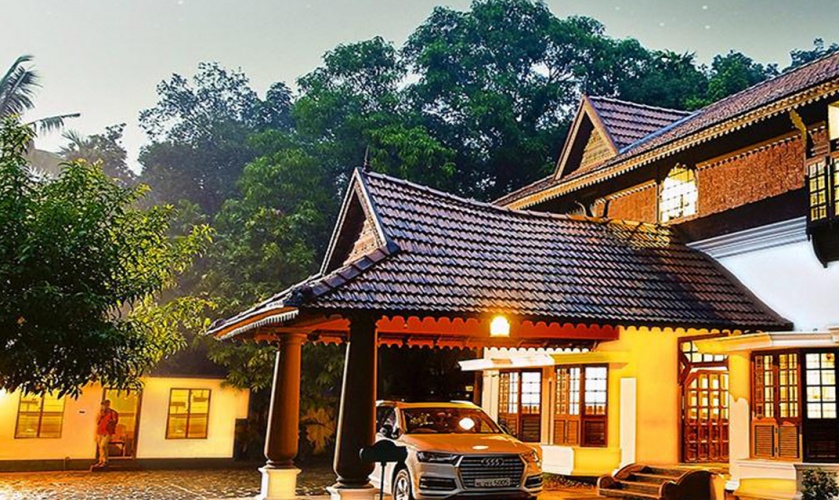
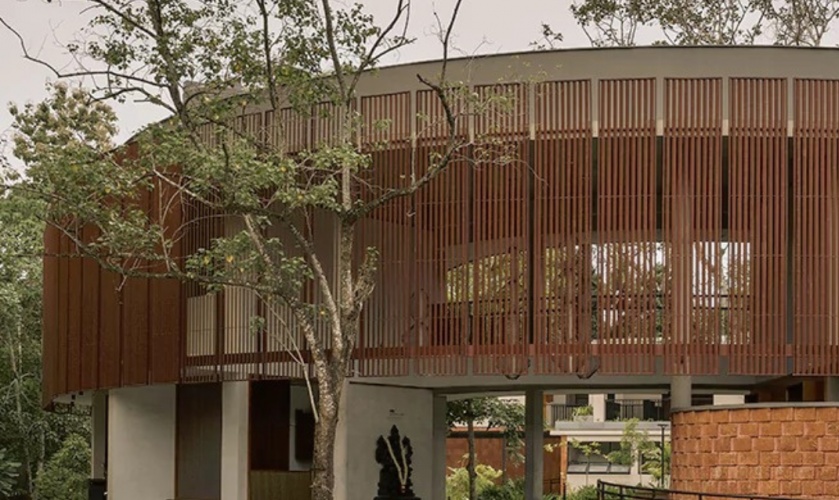
Nirava Holistic Centre
India/Kerala/Alleppey
Starting Rate Per Night: ₹ 10,300
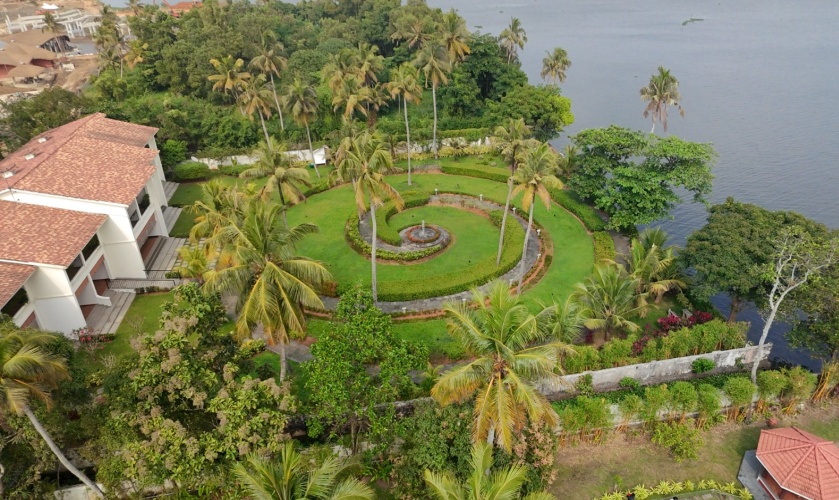
Nirava Holistic Centre is the premium inpatient and residential wellness wing associated with Chingoli Ayurveda Hospital, located at Chingoli, Karthikappally, Alappuzha, Kerala. The institution traces its Ayurvedic lineage to...
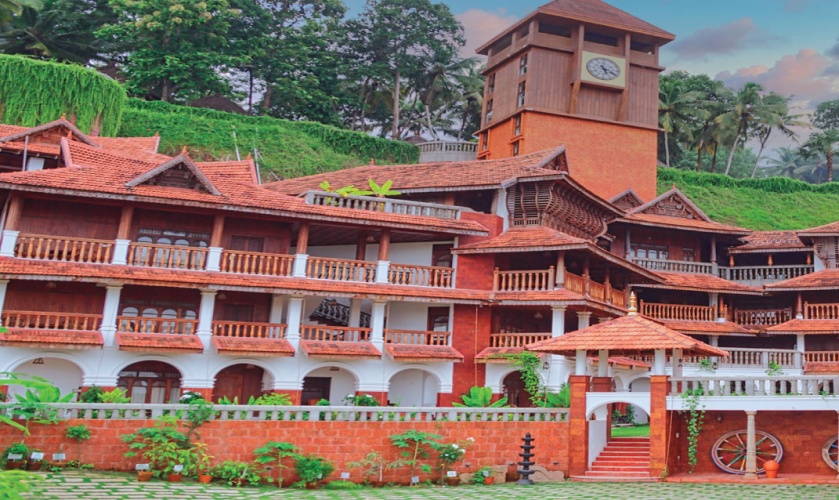
AyurSoma Ayurveda Royal Retreat
India/Kerala/Kovalam
Starting Rate Per Night: ₹ 22,868
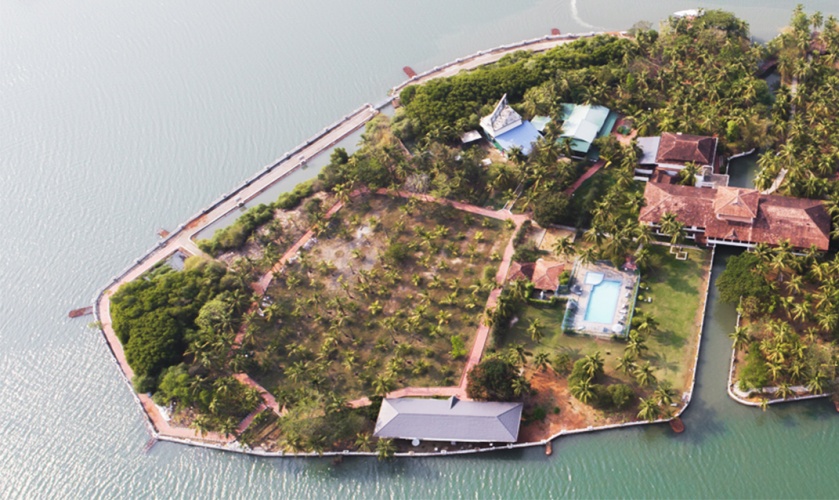
AyurSoma Ayurveda Royal Retreat is an Ayurvedic hospital and wellness retreat located at Chowara, south of Kovalam, Thiruvananthapuram, Kerala, overlooking the Arabian Sea. Operated under the Somatheeram Ayurveda Group, it is...
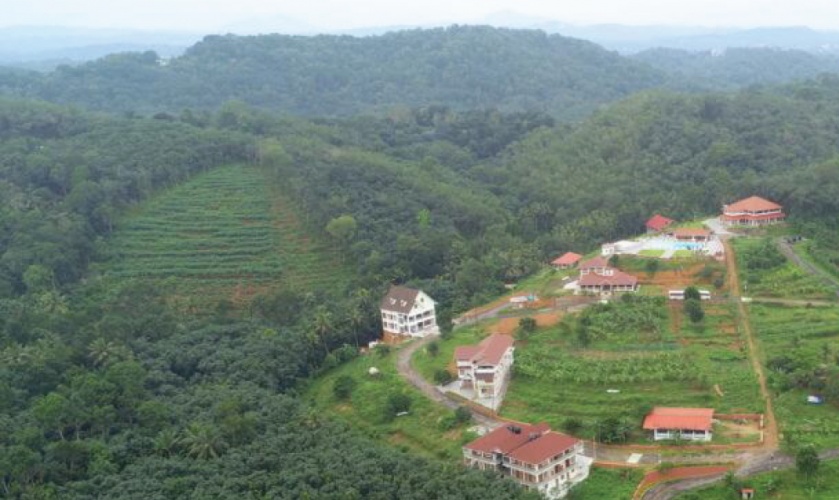
Indimasi Healing Village
India/Kerala/Trivandrum
Starting Rate Per Night: ₹ 15,191
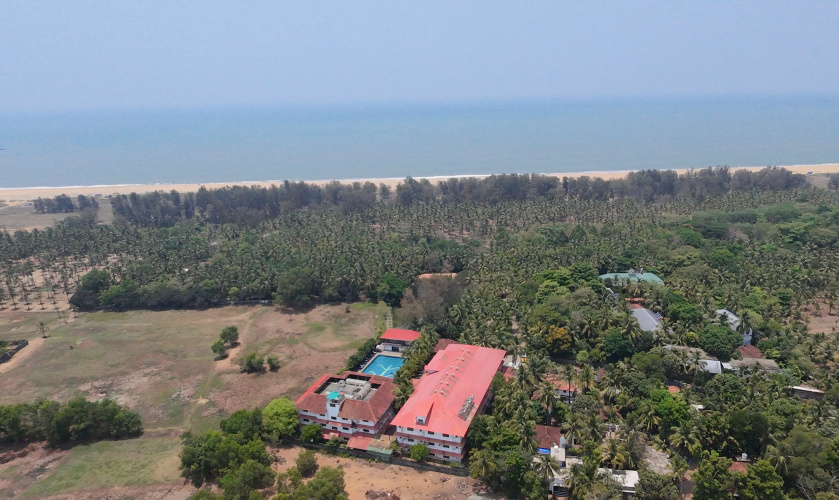
Indimasi Healing Village is an Ayurveda and Siddha healing centre in Poovathoor, Nedumangad, Thiruvananthapuram, Kerala, India, developed as a nature-integrated wellness environment combining traditional healthcare,...

When the Spine Stiffens: An Ayurvedic Path to Pain Relief and Mobility Support
Ankylosing Spondylitis (AS) represents one of the most clinically significant chronic inflammatory autoimmune conditions, affecting an estimated 0.1-1.4% of the population with substantial gender disparity (men 2-3 times more affected though women increasingly recognized), peak onset in late adolescence and young adulthood (typically 17-45 years), and substantial impact on quality of life through chronic pain, progressive stiffness, postural changes, fatigue, and broader systemic effects. The condition is a chronic inflammatory autoimmune disease primarily affecting the axial skeleton (spine and sacroiliac joints) with characteristic enthesitis (inflammation at sites where tendons and ligaments attach to bone), progressive spinal stiffness, and potential progression to spinal fusion (ankylosis) producing the characteristic "bamboo spine" appearance in advanced disease.
The clinical presentation typically begins with chronic inflammatory back pain with distinguishing features — gradual onset (rather than sudden), age of onset typically before 40, pain improving with exercise rather than rest, morning stiffness lasting more than 30 minutes, alternating buttock pain (suggesting sacroiliac involvement), nocturnal pain particularly second half of night. Progression patterns: progressive spinal stiffness; reduced spinal mobility; characteristic postural changes including loss of lumbar lordosis, increased thoracic kyphosis, forward head position; reduced chest expansion from costovertebral involvement; peripheral joint involvement in some patients particularly hips, shoulders, knees; enthesitis at various sites (Achilles, plantar fascia, others); broader systemic manifestations.
Extra-articular manifestations:
- Anterior uveitis (eye inflammation) — affects 25-40%
- Inflammatory bowel disease — 5-10% develop IBD
- Psoriasis — increased association
- Cardiovascular involvement — aortitis, conduction abnormalities
- Pulmonary involvement — restrictive disease from chest wall, apical fibrosis
- Osteoporosis — increased risk paradoxically despite new bone formation
- Renal involvement — secondary amyloidosis (now rare with treatment)
Modern medical management has been revolutionized by biologic therapies. NSAIDs as foundational symptomatic treatment with continuous use considered for some patients. Disease-modifying anti-rheumatic drugs (DMARDs) — sulfasalazine and methotrexate primarily for peripheral disease (limited efficacy for axial). Biologic therapies representing major advance: TNF inhibitors (infliximab, adalimumab, etanercept, golimumab, certolizumab) with substantial efficacy; IL-17 inhibitors (secukinumab, ixekizumab) particularly effective; JAK inhibitors as newer oral options. Physical therapy and exercise essential foundation throughout. Surgery for severe complications including hip replacement, spinal surgery for severe deformities.
While conventional treatment with biologics has substantially improved outcomes, therapeutic gaps and complementary roles exist where Ayurveda offers genuine value:
Patients on biologics seeking integrative support — Comprehensive complementary approach.
Patients with continued symptoms despite treatment — Pain, stiffness, fatigue persisting.
Patients with NSAID intolerance or contraindications — Comprehensive alternatives.
Patients seeking comprehensive symptom management — Beyond pharmacological approaches.
Patients with associated chronic pain dimensions — Holistic approach.
Patients with substantial fatigue dimensions — Comprehensive constitutional support.
Patients seeking constitutional approach — Comprehensive Ayurvedic framework.
Patients with mild disease seeking integrative primary approach — Alongside continued rheumatology monitoring.
Patients with significant comorbidities affecting biologic eligibility — Alternative comprehensive approach.
Patients with associated anxiety and depression — Comprehensive integrative care.
Classical Ayurveda addresses AS within the framework of Asthi-Majja Gata Vata (Vata affecting bone and marrow tissues) with substantial Ama (toxic metabolic residue) involvement producing Amavata patterns and broader autoimmune-inflammatory dimensions. The classical understanding provides comprehensive supportive framework. The therapeutic approach includes comprehensive Vata-Ama pacifying therapy; Ama digestion (Ama Pachana) as foundational therapeutic principle; anti-inflammatory herbs including Shallaki, Guduchi, Turmeric; Abhyanga with specific musculoskeletal oils; Kati Basti and other localized therapies; Basti therapy for Vata-related autoimmune conditions; specific yoga and exercise integration; comprehensive lifestyle integration; coordination with continued rheumatology care essential.
A AS treatment retreat is best understood as comprehensive supportive integrative care complementing continued rheumatology management — providing pain relief, mobility support, constitutional rebuilding, and quality of life enhancement. Honest framing: Ayurveda does not replace biologics or DMARDs for active AS but provides meaningful supportive role.
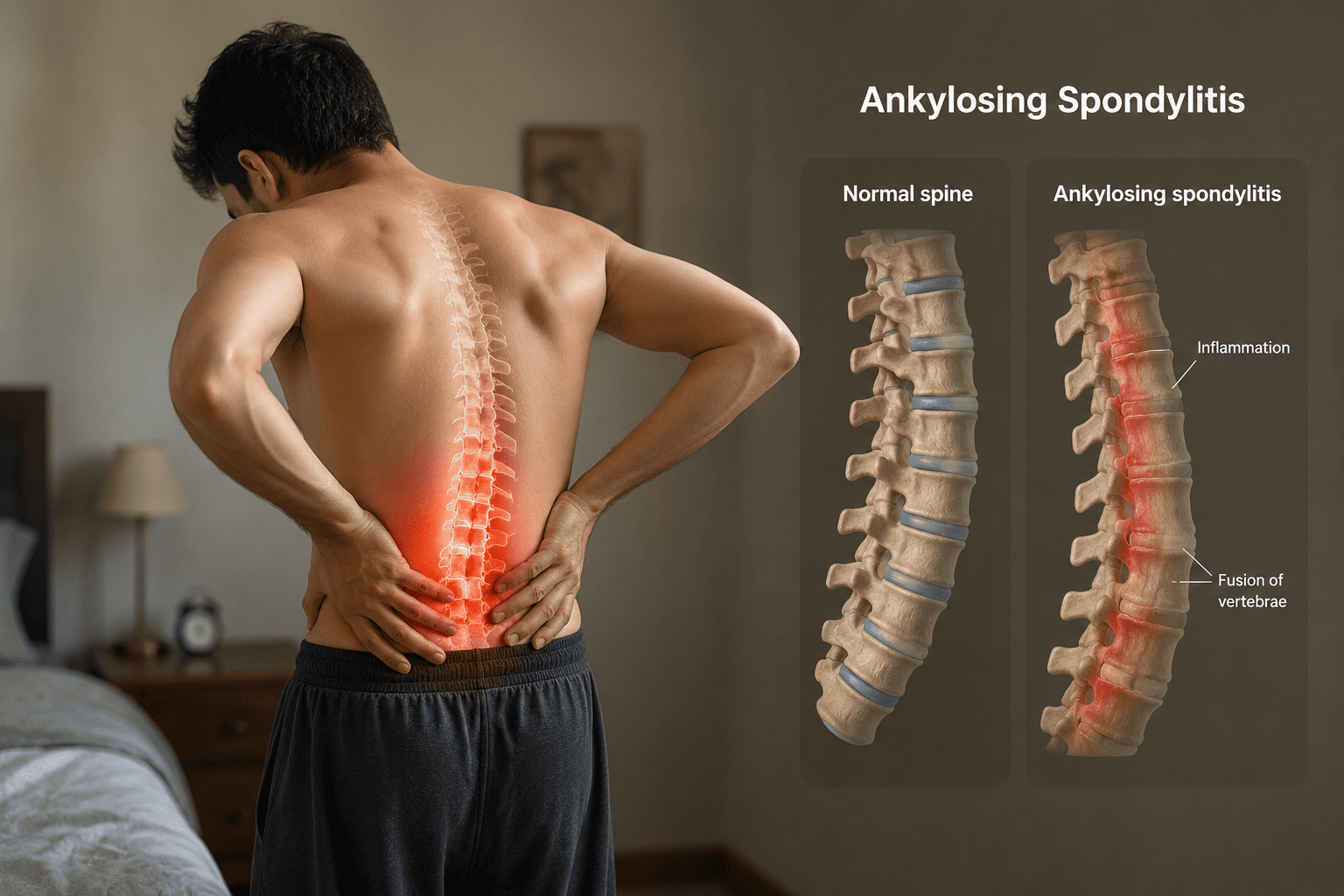
What is Ankylosing Spondylitis?
Ankylosing Spondylitis is a chronic inflammatory autoimmune disease primarily affecting the axial skeleton with characteristic enthesitis and progressive spinal involvement.
Definition and characteristics:
- Chronic inflammatory arthritis affecting axial skeleton
- HLA-B27 association in 85-95% of cases
- Peak onset 17-45 years
- Progressive course with substantial variability
- Part of spondyloarthritis family
Common symptoms:
- Chronic inflammatory back pain
- Morning stiffness >30 minutes
- Improvement with exercise, worse with rest
- Progressive spinal stiffness
- Postural changes
- Peripheral joint involvement (some patients)
- Enthesitis
- Fatigue
- Extra-articular manifestations
Progression:
- Variable across patients
- Some with mild course
- Others with progressive spinal fusion
- "Bamboo spine" in advanced disease
Risk factors:
- HLA-B27 positivity
- Family history
- Male gender (though women increasingly recognized)
- Specific environmental triggers
Diagnosis:
- Clinical features
- HLA-B27 testing
- Imaging: X-ray (later disease), MRI (early disease)
- Inflammatory markers
- Modified New York criteria, ASAS criteria
Modern management:
- NSAIDs
- DMARDs (peripheral disease)
- Biologics (TNF inhibitors, IL-17 inhibitors)
- JAK inhibitors
- Physical therapy/exercise
- Surgery for complications
Understanding Asthi-Majja Gata Vata with Ama: The Ayurvedic Root of Ankylosing Spondylitis
The Ayurvedic understanding of AS sits within the framework of Asthi-Majja Gata Vata (Vata affecting bone and marrow tissues) with substantial Ama involvement producing Amavata patterns.
Core concepts:
Asthi-Majja Gata Vata — Vata in bone-marrow:
- Direct involvement of bone tissue
- Marrow/nervous tissue involvement
- Anatomical correspondence to AS pathology
Ama Considerations:
- Substantial toxic metabolic residue
- Autoimmune-inflammatory dimensions
- Foundational therapeutic principle: Ama Pachana
Amavata Patterns:
- Classical inflammatory arthritis framework
- Combined Vata and Ama pathology
- Comprehensive therapeutic approach
Sandhi-Asthi Considerations:
- Joint and bone involvement
- Specific therapeutic implications
Manasika Bhava Dimensions:
- Substantial psychological impact
- Chronic pain dimensions
Predisposing factors:
- Constitutional Vata predominance
- Genetic factors (Beejadushti) — anticipates HLA-B27
- Ama-producing factors (poor digestion, improper food combinations)
- Various contributing factors
This shapes the Ayurvedic approach: comprehensive Vata-Ama pacification; Ama Pachana as foundational; Asthi-Majja support through appropriate Rasayana; comprehensive Abhyanga and external therapies; Basti therapy; specific yoga; honest framing; coordination with continued rheumatology care.
The 3 Stages of Ayurvedic Treatment for Ankylosing Spondylitis
1. Preparation (Purva Karma) Comprehensive assessment, rheumatology coordination essential, initial Vata-Ama pacifying approach, initial dietary modifications, foundational lifestyle measures.
2. Core Treatment (Pradhana Karma) Five coordinated lines:
Comprehensive Vata-Ama Pacifying Constitutional Approach: Warm easily digestible foods, adequate ghee, anti-inflammatory dietary patterns, Ama-reducing approach with light easily digestible meals, avoiding heavy/cold/raw foods, regular meal timing, specific spices (turmeric, ginger, cumin).
Comprehensive Herbal Therapy:
Anti-inflammatory and AS-specific herbs:
- Shallaki (Boswellia serrata) — Substantial anti-inflammatory evidence
- Turmeric (Haridra) — Comprehensive anti-inflammatory
- Guduchi — Anti-inflammatory and immunomodulatory (particularly valuable for autoimmune)
- Ashwagandha — Adaptogenic and musculoskeletal
- Rasna — Vata-pacifying anti-inflammatory
- Eranda (Castor) — Specific applications
Classical formulations:
- Yogaraja Guggulu — Comprehensive musculoskeletal
- Trayodashanga Guggulu — Specific applications
- Simhanada Guggulu — Specifically valuable for Amavata
- Maharasnadi Kashayam — Vata-pacifying decoction
- Dashamoolarishtam — Comprehensive support
- Rasnadi Kashayam
- Punarnavadi Kashayam — For chronic inflammatory dimensions
Comprehensive Abhyanga and External Therapies:
Daily Abhyanga with:
- Mahanarayana Taila
- Ksheerabala Taila
- Sahacharadi Taila
- Pinda Taila (anti-inflammatory)
Specific techniques for AS:
- Comprehensive spinal Abhyanga
- Kati Basti for lumbosacral involvement
- Greeva Basti for cervical involvement
- Pizhichil for intensive therapy
- Patra Pinda Sweda (herbal leaf bolus) — particularly valuable for AS
Basti Therapy — Particularly valuable for Vata-related autoimmune-inflammatory conditions:
- Anuvasana Basti for Vata pacification
- Niruha Basti for specific situations
Specific Yoga and Exercise Integration:
- Essential foundation
- Spinal mobility exercises
- Postural exercises
- Breathing exercises for chest expansion
- Strengthening exercises
- Avoiding high-impact activities during active phase
- Specific yoga adapted to AS (gentle backbends, side-bends, twists)
Coordination with Continued Rheumatology Care:
- Continued biologics or DMARDs essential throughout integrative care
- Continued monitoring
- Coordination for any treatment changes
3. Rejuvenation (Paschat Karma) Sustained constitutional support, continued lifestyle modifications, continued exercise programs, periodic clinical follow-up, continued rheumatology coordination.
The 5 Core Therapies for Ankylosing Spondylitis Explained
1. Comprehensive Vata-Ama Pacifying Therapy with Ama Pachana Focus Comprehensive Vata-Ama pacifying therapy with substantial emphasis on Ama Pachana (toxic metabolic residue digestion) addresses the central pathological feature of AS within Ayurvedic framework. Foundational Ama-digesting herbs: Guduchi (Tinospora cordifolia) with substantial classical and modern evidence for autoimmune-inflammatory conditions including immune modulation; Turmeric (Haridra) with comprehensive anti-inflammatory mechanisms; Shallaki (Boswellia serrata) with documented effects on inflammatory pathways particularly relevant to AS; Trikatu for Ama digestion; Punarnava for anti-inflammatory effects. Classical formulations: Simhanada Guggulu specifically formulated for Amavata patterns; Yogaraja Guggulu comprehensive musculoskeletal; Trayodashanga Guggulu specific applications; Maharasnadi Kashayam for Vata pacification; Punarnavadi Kashayam for chronic inflammatory dimensions; Dashamoolarishtam for sustained support; Rasnasaptaka Kashayam. Dietary Ama-reducing approach: Light easily digestible meals; avoiding heavy oily fried foods, cold raw foods, excessive dairy in Ama states; warm cooked vegetables; appropriate spices supporting digestion; regular meal timing essential. Sustained therapy over months providing meaningful benefits.
2. Comprehensive Abhyanga, Kati Basti, and Patra Pinda Sweda for Spinal Symptoms Comprehensive Abhyanga and specific external therapies provide substantial supportive benefit for AS patients through pain relief, stiffness reduction, mobility improvement, and broader constitutional benefits. Daily Abhyanga with Vata-pacifying anti-inflammatory oils: Mahanarayana Taila as foundational; Ksheerabala Taila for nervous system support; Sahacharadi Taila for specific musculoskeletal applications; Pinda Taila for anti-inflammatory effects; Bala Taila for strength-building. Specific techniques for AS: Comprehensive spinal Abhyanga with attention to entire vertebral column; Kati Basti (localized oil retention on lumbar region) particularly valuable for sacroiliac and lumbar symptoms — dough ring holds warm medicated oil for 30-45 minutes; Greeva Basti for cervical involvement; Pizhichil for intensive comprehensive therapy. Patra Pinda Sweda (PPS) — herbal leaf bolus sudation therapy particularly valuable for AS — heated leaves of specific plants (Eranda, Nirgundi, Arka, Karanja, Dattura, etc.) tied into boluses, dipped in warm medicated oil, and applied with rhythmic pressure to affected areas providing substantial pain relief, stiffness reduction, and mobility improvement; typically 7-14 sessions with cumulative benefits. Sustained therapy over weeks providing comprehensive supportive value.
3. Basti Therapy and Specific Vata-Ama Vyadhi Interventions Basti (medicated enema) therapy provides powerful classical intervention for Vata-related autoimmune-inflammatory conditions including AS with substantial classical experience. Anuvasana Basti (oil enema) providing Vata pacification; Niruha Basti (decoction enema) for specific situations; Yoga Basti sequence for intensive intervention; Kala Basti for extended treatment. Therapeutic applications for AS: Substantial classical use for Amavata and Asthi-Majja Gata Vata; particularly valuable for chronic AS patients, AS with substantial Vata dimensions, refractory pain patterns. Performed during retreat with appropriate medical supervision and specific protocols. Specific adjunctive therapies: Nasya for upper spine/cervical involvement; Shirodhara for stress and pain dimensions; specific external applications.
4. Specific Yoga, Exercise Integration, and Spinal Mobility Programs Specific yoga and exercise integration provides substantial value for AS management with substantial modern evidence demonstrating exercise as essential foundation alongside any pharmacological treatment. AS-specific exercise principles: Spinal mobility exercises maintaining range of motion; postural exercises counteracting forward stooped posture characteristic of AS; strengthening exercises for back extensors, core, postural muscles; breathing exercises for chest expansion (substantially important given costovertebral involvement); stretching particularly hip flexors, hamstrings, chest. AS-specific yoga: Gentle backbends (Cobra, Bridge, Camel with modifications) opening chest and counteracting kyphosis; spinal twists maintaining rotational mobility; side-bends maintaining lateral mobility; chest opening practices; avoiding excessive forward folds during active inflammation. Pranayama for chest expansion: deep diaphragmatic breathing with chest expansion emphasis; specific breathing exercises; avoiding excessive Kapalabhati during severe inflammation. Aquatic exercise particularly valuable — warm water swimming/exercise providing low-impact movement. Daily practice essential — exercise is not optional in AS but fundamental treatment requiring sustained commitment. Integration with physical therapy through specialized AS-experienced practitioners. WellnessLoka programs integrate appropriate exercise protocols.
5. Comprehensive Lifestyle Integration and Coordination with Continued Rheumatology Care Comprehensive lifestyle integration with coordination with continued rheumatology care provides foundation for sustained AS management. Smoking cessation absolutely essential — smoking substantially worsens AS outcomes, accelerates spinal damage, reduces biologic effectiveness, increases cardiovascular complications. Stress management — chronic stress affects autoimmune disease activity through HPA axis and immune effects. Sleep optimization — quality sleep essential for recovery; appropriate mattress and sleep position considerations; addressing nocturnal pain. Diet optimization: anti-inflammatory dietary pattern (Mediterranean-style); appropriate weight management; avoiding individual triggers; adequate hydration. Posture awareness: throughout daily activities; ergonomic considerations; avoiding prolonged static postures. Coordination with Continued Rheumatology Care: Continued biologics or DMARDs throughout integrative care essential — never discontinued without rheumatology guidance; continued monitoring of disease activity (BASDAI, ASDAS); continued imaging surveillance as appropriate; coordination for any treatment changes; continued ophthalmology surveillance for uveitis risk; cardiovascular risk monitoring; bone density monitoring; continued screening for inflammatory bowel disease, psoriasis, other associations. Recognition that AS is chronic lifelong condition requiring sustained comprehensive management with integrative care providing meaningful supportive role alongside continued conventional treatment.
How Long Should an Ayurvedic Treatment Program for Ankylosing Spondylitis Last?
| Duration | Therapeutic Benefit |
| 7–14 days | Initial protocols, Abhyanga course, Kati Basti, foundational lifestyle integration |
| 14–21 days | Comprehensive constitutional support, Pizhichil, Patra Pinda Sweda course |
| 21–28 days | Extended program for substantial constitutional rebuilding including Basti therapy |
| Continued home regimen | Sustained therapy throughout chronic disease management |
Initial intensive retreat 14-28 days. Continued home regimen essential with sustained exercise program, continued herbal therapy, ongoing lifestyle integration. Periodic retreat visits annually or biannually. Recognition that AS management is lifelong.
Book Consultation
Benefits of an Ayurvedic Treatment Retreat for Ankylosing Spondylitis
| Physical Benefits | Functional Benefits | Long-Term Impact | ||||
|
Improved spinal mobility | Sustained constitutional support | ||||
| Better posture and chest expansion | Better functional capacity | Foundation for sustained autoimmune wellness | ||||
| Reduced inflammation markers (some patients) | Better quality of sleep | Better long-term disease management | ||||
| Better overall vitality |
|
Comprehensive integrative care framework |
Why Kerala is the Best Place for Ankylosing Spondylitis Treatment
Kerala offers experienced physicians with Amavata and autoimmune Ayurveda expertise, specialised practitioners trained in Pizhichil, Kati Basti, Greeva Basti, Patra Pinda Sweda, and Basti therapy, authentic in-house preparation of classical formulations (Simhanada Guggulu, Yogaraja Guggulu, Trayodashanga Guggulu, Maharasnadi Kashayam, Punarnavadi Kashayam, Rasnasaptaka Kashayam), authentic musculoskeletal oils, comprehensive Panchakarma capability, coordination capability with continued rheumatology care, and long-established tradition of comprehensive musculoskeletal autoimmune Ayurveda. Sri Lanka and Bali offer complementary options.
Ankylosing Spondylitis Treatment Retreats by Location
Kerala, India — The most clinically authentic destination for classical musculoskeletal autoimmune Ayurvedic care with established Amavata tradition including Pizhichil, Kati Basti, Greeva Basti, Patra Pinda Sweda, and Basti therapy capability, authentic preparation of Simhanada Guggulu and classical formulations, and the deepest tradition of comprehensive Vata-Ama management. Alleppey • Kovalam • Kumarakom • Wayanad • Palakkad
Sri Lanka — Coastal Ayurveda treatment retreats with comprehensive supportive care for chronic inflammatory musculoskeletal conditions in serene tropical environment suited to extended treatment programs. Wadduwa • Weligama • Sigiriya • Kosgoda • Bentota
Bali, Indonesia — Wellness treatment retreats integrating Ayurvedic care with holistic wellness restructuring, particularly valuable for chronic disease constitutional rebuilding phases and broader lifestyle integration. Ubud • Nusa Dua • Candidasa • Lovina
WellnessLoka connects you with verified centres across these destinations offering genuine musculoskeletal autoimmune Ayurveda expertise, comprehensive Vata Vyadhi and Amavata capability including Pizhichil, Kati Basti, Patra Pinda Sweda, and Basti therapy, authentic preparation of Simhanada Guggulu and classical AS-supportive formulations, willingness to coordinate with continued rheumatology care including biologic therapy, and clear understanding of the integrative supportive role alongside continued conventional management.
Who Should Consider an Ayurvedic Ankylosing Spondylitis Treatment Retreat
Patients on biologics seeking integrative support, patients with continued symptoms despite treatment, patients with NSAID intolerance, patients seeking comprehensive symptom management, patients with substantial fatigue, patients seeking constitutional approach, patients with mild disease, patients with significant comorbidities, patients with anxiety/depression dimensions.
Who Should Approach Treatment with Caution
Patients with severe active disease requiring biologic initiation should not delay; patients with severe uveitis flare requiring urgent ophthalmology; patients with suspected complications; patients planning to discontinue biologics without rheumatology guidance; patients with significant comorbidities requiring coordination; patients with unrealistic expectations regarding cure.
Choosing the Right Treatment Retreat for Ankylosing Spondylitis
Qualified physicians with autoimmune Ayurveda expertise, specialised practitioners in Kati Basti/Greeva Basti/Patra Pinda Sweda/Pizhichil/Basti, authentic in-house herbal preparations including Simhanada Guggulu and AS-specific formulations, authentic Vata-pacifying oils, proper infrastructure for Panchakarma, capacity for exercise/yoga integration, coordination capability with continued rheumatology care, honest framing.
How WellnessLoka Helps You Choose the Right Ayurveda Treatment Retreat for Ankylosing Spondylitis
Choosing the right treatment retreat for Ankylosing Spondylitis benefits enormously from genuine guidance. AS is a complex chronic autoimmune-inflammatory condition with substantial individual variation in disease activity, joint involvement patterns, extra-articular manifestations, and response to treatment — and the right program depends on accurate identification of the specific Amavata and Asthi-Majja Gata Vata pattern and matching to centres with genuine autoimmune-inflammatory Ayurveda expertise. WellnessLoka exists to ensure that patients can make this decision with full information, genuine guidance, and complete confidence.
Access to Verified Retreat Centres Every centre listed on WellnessLoka for Ankylosing Spondylitis treatment has been independently assessed for physician credentials, clinical experience with chronic autoimmune-inflammatory arthritis and Amavata, depth of expertise in the full range of spinal and joint-specific therapies including Pizhichil, Kati Basti, Greeva Basti, Patra Pinda Sweda, and Basti therapy, authentic preparation of Simhanada Guggulu and classical AS-supportive formulations, capacity for AS-specific exercise and yoga integration, integrated comorbidity management capability including ophthalmology surveillance for uveitis, and clear understanding of the integrative role alongside continued rheumatology care including biologic therapy management. We list only centres where chronic autoimmune-inflammatory arthritis protocols are genuinely practised with classical depth.
Free Pre-Retreat Consultation with Our Ayurvedic Doctor Before you choose a retreat, WellnessLoka offers a complimentary consultation with our in-house Ayurvedic consultant. This consultation reviews your specific Ankylosing Spondylitis pattern (axial involvement, peripheral joint involvement, enthesitis, current disease activity, extra-articular manifestations particularly uveitis or IBD), prior rheumatology evaluation, current biologic or DMARD therapy, NSAID requirements and tolerance, previous treatments including any corticosteroid use, exercise and physiotherapy context, contributing systemic factors including comorbidities, doshic profile with attention to Vata-Ama patterns, and overall health. A critical part of this consultation is screening for any features warranting urgent rheumatology evaluation or coordination before retreat-based care. Based on the assessment, we match you with the retreat centre and program duration best suited for your specific presentation. It is purely a guidance consultation to help you make an informed decision before you travel.
Transparent Centre Comparison WellnessLoka provides clear, honest information about each listed centre — physician qualifications, therapy protocols, program structure, monitoring capabilities, accommodation, and pricing — allowing you to compare options across Kerala, Sri Lanka, and Bali with full clarity and confidence.
Best Price Guarantee Through our strong, long-standing relationships with partner centres, you benefit from exclusive partner pricing that is always lower than booking directly. You receive the most authentic care for your Ankylosing Spondylitis treatment program without paying more for it.
Retreats for Every Budget From luxury wellness resorts to affordable, authentic healing centres, WellnessLoka helps you find an Ankylosing Spondylitis treatment retreat that aligns perfectly with your comfort level and budget — without ever compromising on the specialised Amavata and autoimmune-inflammatory Ayurveda expertise this condition benefits from.
Treatment is in Expert Hands Once you arrive at your chosen retreat, your Ankylosing Spondylitis treatment program is fully designed and managed by the qualified Ayurvedic physicians at that centre. From your first in-person consultation onwards, all clinical decisions, daily monitoring, therapeutic adaptation, and medical management are guided by experienced doctors on the ground — physicians with deep training in Amavata and Asthi-Majja Gata Vata management and direct, hands-on familiarity with the specialised classical musculoskeletal autoimmune therapies your program involves. Your treatment unfolds under continuous, qualified supervision.
Local Support Team Our on-ground experts assist you at every step, from your first enquiry through to the completion of your retreat — resolving any issues that arise and ensuring your entire Ankylosing Spondylitis healing journey runs smoothly and safely.
End-to-End Booking Support From your first enquiry to confirmed booking, WellnessLoka provides full administrative and logistical support — ensuring a smooth, stress-free process so that you can focus entirely on preparing for your healing program.
Why Travellers Trust WellnessLoka WellnessLoka is rated 4.9? on Google, with verified reviews from wellness travellers who have experienced authentic Ayurveda healing through us. We are trusted by hundreds of travellers from 28+ countries across Europe, the Americas, Asia, Australia, and Africa, backed by over a decade of expertise in curating authentic Ayurveda retreats across trusted centres. Our dedicated support team is available 24×7 to assist you before, during, and after your Ankylosing Spondylitis treatment retreat.
Begin Your Healing Journey
Ankylosing Spondylitis represents a chronic inflammatory autoimmune condition substantially transformed by biologic therapies in recent decades. Within this transformed clinical landscape, classical Ayurvedic care offers genuinely meaningful supportive contributions through the Asthi-Majja Gata Vata with Ama framework. The therapeutic framework includes comprehensive Vata-Ama pacifying therapy with Ama Pachana focus including Guduchi, Shallaki, Turmeric, and Simhanada Guggulu; comprehensive Abhyanga with Kati Basti, Greeva Basti, and Patra Pinda Sweda; Basti therapy; specific yoga and exercise integration essential alongside pharmacological treatment; comprehensive lifestyle integration. Honest framing: integrative care provides supportive value alongside continued biologics/DMARDs which remain essential for active disease management.


